“The race-neutral casting of Nolan’s Odyssey was inevitably deplored in some quarters. But there is nothing progressive about it. Most of the non-white actors – Zendaya, Lupita Nyong’o, Himesh Patel, Corey Antonio Hawkins, Travis Scott – play versions of the Black best friend, whose only role in the drama is to provide aid to the white protagonist. Scott, as the Ithacan bard, Phemius, yells a few words and pounds a stick, but does not get to sing, tell a story or play the lyre: the most melodic note in the percussive soundtrack comes from the plucking of Odysseus’ bow (a beautiful sonic image of the archer as musician, borrowed from the poem). Nyong’o’s double part as Helen and Clytemnestra is hugely underwritten; she is given only a few minutes of screen time to perform a set of brief tableaux of female victims (the outraged bereaved mother, the abused wife, the repentant adulteress).
There are more female characters than in most Nolan movies, thanks to the source material. But none of them has much to say, in contrast to the characterisations in the poem. Homer’s Calypso has a wonderfully outraged, operatic speech about divine double standards: male gods can kidnap and rape any mortal woman they desire, but when a goddess tries it, Zeus and his cronies scupper her chances. It’s a clever and comical distortion of the mythological ‘facts’: the poem’s listeners know that it is primarily Athena (a female deity) who is taking Calypso’s mortal victim away from her (Hermes, whom she’s complaining to, is merely the messenger) – and Eos, goddess of the dawn, as we’ve been reminded only a few lines earlier, has not been prohibited by the divine patriarchy from holding on to Tithonus. Charlize Theron’s Calypso looks gorgeous, but she is never angry, never funny, not skilled in rhetoric, and never consumed by lust for her scraggly mortal victim. She’s an unpaid therapist, soothing the soul of the bedraggled, PTSD-ridden Odysseus with drugs, and graciously listening to his disjointed tale of woe.
…
It’s a challenge to represent deities on film without veering into Clash of the Titans silliness, so Nolan may have been sensible to leave them out. Even Zendaya’s underwritten Athena turns out to be a vulnerable victim of war, or perhaps a projection of Odysseus’ conscience – not a scheming and bloodthirsty war goddess. Other goddesses appear in cameo – Calypso, the seal-lady Sirens, Circe, Scylla and Charybdis – but there is no sign that we are supposed to realise they are goddesses. Poseidon, Hermes and Helius do not appear in person, although there are some scary storms and shipwrecks. One of my favourite moments was when Zendaya assures Damon that gods are not hard for mortals to understand: ‘Who doesn’t understand thunder? Fire?’ But the film wants to have it both ways. There are no gods, and yet shipwrecks and death are presented as the inevitable consequence of blinding the son of Poseidon and devouring the Cattle of the Sun. Zeus’ law is portrayed as being crucially important, and yet there is no Zeus. Nolan’s vision of the world is not quite big enough to include either real gods or real people who might be different from us.
…
The most obvious new spin that Nolan brings to the source material is a subplot based on a story from the Aeneid, describing the way the Trojans were tricked into taking the Trojan Horse (an invention of ‘cruel Ulysses’) into the city, thanks to the machinations of a Greek double agent called Sinon (his name means ‘harmful’). In contrast to the relatively positive representation of cunning intelligence in Homer’s Odyssey, Virgil makes Ulysses cruel and predatory; Sinon is his deceitful accomplice.
In Nolan’s movie, Sinon is played by Elliot Page, and far from being a bad guy he’s the film’s moral centre. He is recruited to the Trojan War as a plucky youngster, thanks to the evil machinations of a teenage draft-dodger, Antinous (played in adulthood by a charismatically slimy Robert Pattinson). The main emotional arc of the film concerns Odysseus’ belated realisation that he is complicit in Sinon’s exploitation because he failed to tell him the truth about the Trojan Horse plot. Once he recovers his memory, Odysseus is racked by guilt. The film doesn’t address the moral dilemmas raised by its own narrative invention, such as why it matters so much whether Batman told the whole truth to valiant Robin, given that he would be killed instantly either way – or why the sinless Sinon wants in on the scheme, if the sack of Troy was as bad as the movie wants to suggest. Odysseus’ lie to Sinon doesn’t start the Trojan War, and the Trojans would presumably have taken the horse into the city anyway – as they do in Homer’s Odyssey. This muddled subplot is foisted on the film in order to make Nolan’s relentlessly didactic point about the contemporary Anglophone world: that the lies and xenophobia of the war on terror and Brexit began a cultural decline that is now destroying the values ‘we’ hold most dear.”
[Via]
 ‘As the critic and classicist Daniel Mendelsohn puts it in the introduction to his recent translation, “The ‘Odyssey’ bequeathed to the West entire genres,” from science fiction to romantic comedy. In that spirit, we offer this guide, confident that whatever kind of story you’re looking for, you’ll find it in Homer.’
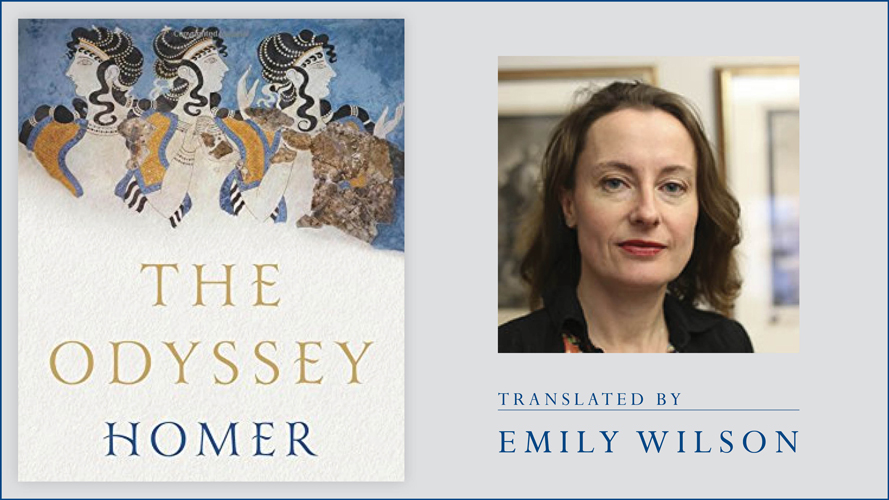 ‘The notion that Homeric epic must be rendered in grand, ornate, rhetorically elevated English has been with us since the time of Alexander Pope. It is past time, I believe, to reject this assumption. Homer’s language is markedly rhythmical, but it is not difficult or ostentatious. The Odyssey relies on coordinated, not subordinated syntax (“and then this, and then this, and then this,” rather than “although this, because of that, when this, which was this, on account of that”). I have frequently aimed for a certain level of simplicity, often using fairly ordinary, straightforward, and readable English. In using language that is largely simple, my goal is not to make Homer sound “primitive,” but to mark the fact that stylistic pomposity is entirely un-Homeric. I also hope to invite readers to respond more actively with the text. Impressive displays of rhetoric and linguistic force are a good way to seem important an invite a particular kind of admiration, but they tend to silence dissent and discourage deeper modes of engagement. A consistently elevated style can make it harder for readers to keep track of what is at stake in the story. My translation is, I hope, recognizable as an epic poem, but it is one that avoids trumpeting its own status with bright, noisy linguistic fireworks, in order to invite a more thoughtful consideration of what the narrative means, and they ways it matters.