March, April, May CIRCO blog roundup: JUNE BUG

Have we really not rounded up our monthly posts for three months? Oh my. Let’s head ’em up, move ’em out.

We changed our Tweets of the Week to be more other social-network friendly. It’s now going to be officially called Social Medea.  Pun intended.

We posted a video on The World’s Greatest Internet Troll.

[The Author added commentary on Victoria E. Schwab’s statement on writing/creativity in the current publishing industry]

As always, Gabbler had things to recommend–like The Unbreakable Kimmy Schmidt season 2 and the children’s book I Am Pan!

Sexism in YA was discussed. 

Our Throwback Thursday posts included a progression of Beardless Hipster Songs that we thought was funny.

Ursula K. Le Guin needs to get with the times. 

BLA took back what s/he said about The Jungle Book 2016 movie.

The Magicians TV show ended. 

BLA went on a rant about the representation of gods in our stories. 

J.K. Rowling wrote about Native American Wizards and shit hit the fan.

Anomalisa was weird af.

Gabbler had some thoughts on Daredevil season 2. 

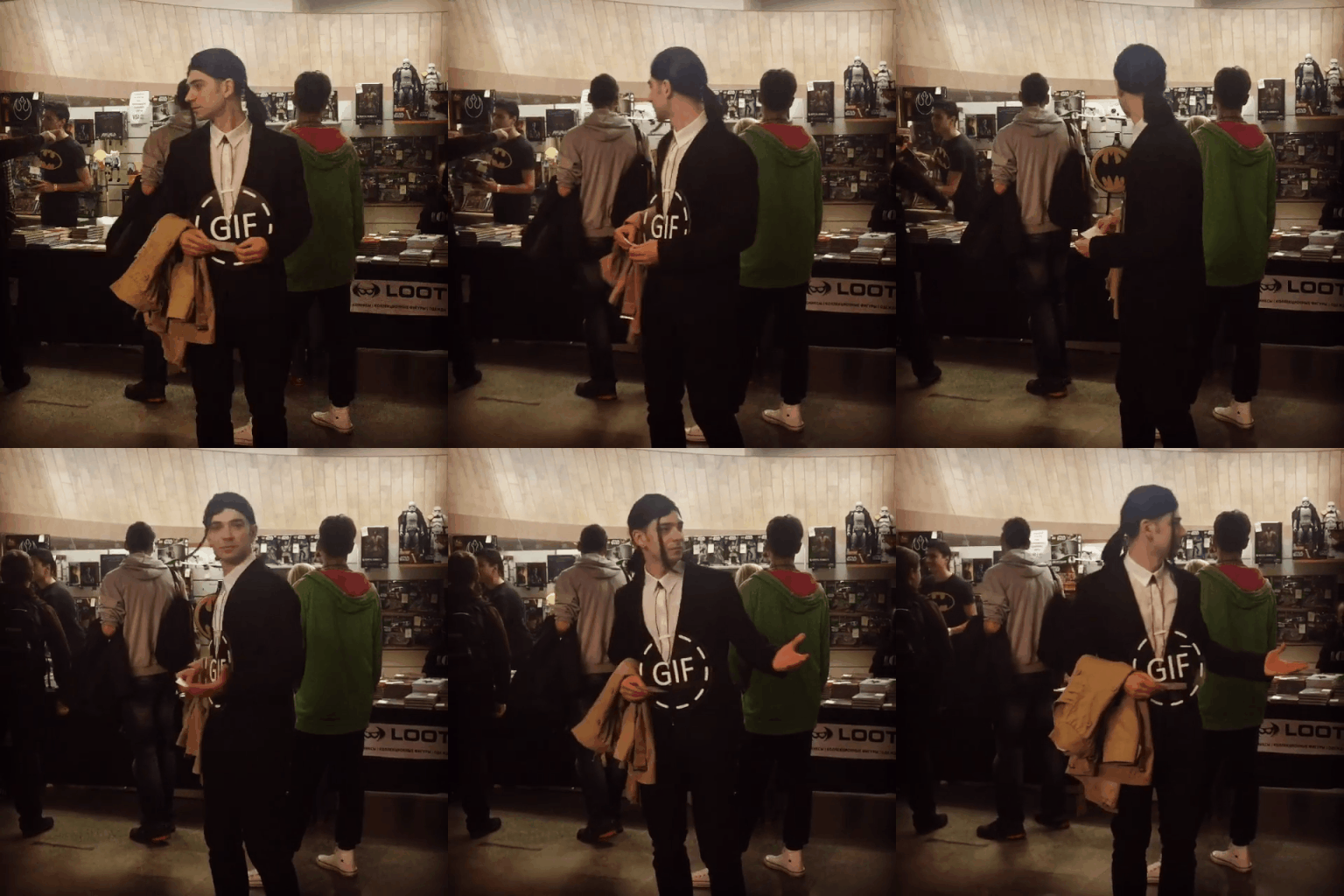
Our GIF of the Month from our GIF of the day is:


On Kafkaesque:

“Kafka is not the only author to lend his name to an adjective – Merriam-Webster also points to Dickensian and Byronic, but there are many. Proustian. Joycean. Miltonic. Chaucerian. Pinteresque. Woolfian. Faulknerian.

Perhaps almost as abused as Kafkaesque is Orwellian. The OED defines it as “characteristic of Orwell’s writings, esp. the totalitarian state in his dystopian account of the future, Nineteen Eighty-Four”. But the New York Times says its use “reduces Orwell’s palette to a single shade of noir. It brings to mind only sordid regimes of surveillance and thought control and the distortions of language that make them possible”, while an excellent Daily Mash article argues that the word has “nothing to do with having to put your recycling out” and that “similarly, speed cameras are not ‘Orwellian’”, because “Winston Smith does not spend Nineteen Eighty-Four trying to weasel out of a £75 fine for doing 70 on the A12”.

But back to The Vegetarian, and how Kafkaesque it is, whatever that actually means to us. Tonkin also compared the novel to Ovid’s Metamorphoses, and to The Bell Jar and The Yellow Wallpaper, making it, I suppose, Ovidian, Plathian, and Perkins Gilmanesque, as well (although I’m not sure if that’ll make it into the blurb).”

[Via]


[“BLA and GB Gabbler” (really just a pen name – singular) are the Editor and Narrator behind THE AUTOMATION, vol. 1 of the Circo del Herrero series. They are on facebook, twitter, tumblr, goodreads, and Vulcan’s shit list.]
all yellowB&N | Amazon | Etc.

World’s greatest internet troll explains his craft


[“BLA and GB Gabbler” (really just a pen name – singular) are the Editor and Narrator behind THE AUTOMATION, vol. 1 of the Circo del Herrero series. They are on facebook, twitter, tumblr, goodreads, and Vulcan’s shit list.]

all yellowB&N | Amazon | Etc.

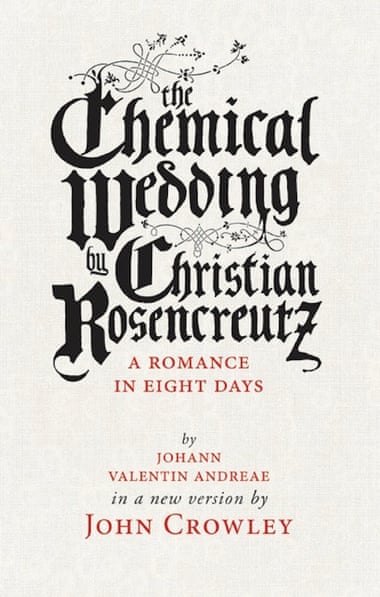
TBR: The Chemical Wedding

‘Published in 1616, The Chemical Wedding predates Johannes Kepler’s novel Somnium, which was written in 1608 but not published until 1634 and “which usually gets the nod” as the first science fiction story. But as Crowley writes in his introduction to The Chemical Wedding, Somnium “is more of an illustrated example or thought-experiment than a real story,” and while “the astronomy underlying it is new … it doesn’t carry the thrill of wild but just-around-the-corner possibilities that SF ought to”.

He says that the science of The Chemical Wedding “is late Renaissance alchemy, which had the same fascination for readers of the time as the scientific possibilities of classic SF did in its last-century heyday”. Crowley admits that “alchemy is not science if by science we mean only what is now included in that accretion of tested knowledge that still holds up as true even if primitive or inadequate”. Nonetheless, he argues, “alchemy is science … in the sense that it had a general picture of the material world and a rational scheme for formulating hypotheses and proceeding with investigations of it”.

“So that’s why The Chemical Wedding is the first science fiction novel: unlike other contenders, it’s fiction; it’s about the possibilities of a science; and it’s a novel, a marvellous adventure rather than simply a parable or an allegory or a skit or a thought experiment,” writes the author, adding that “like SF, it probably appealed to a self-selected readership of geeks and enthusiasts”.

Experts in the field were delighted at the news of the book’s reissue – but are not entirely convinced by Crowley’s claim. “If the modern novel as such is 17th century and is a ‘thing’, then it cannot qualify as the first SF novel. If, on the other hand, any lengthy tale is a novel, surely Utopia [published in 1516] is the first SF novel,” said professor Farah Mendlesohn, a science fiction academic. “But that doesn’t mean it’s not fascinating.”’

[Via]


[“BLA and GB Gabbler” (really just a pen name – singular) are the Editor and Narrator behind THE AUTOMATION, vol. 1 of the Circo del Herrero series. They are on facebook, twitter, tumblr, goodreads, and Vulcan’s shit list.]

all yellowB&N | Amazon | Etc.

On being a girl; “Girls” in book titles

“There are, of course, circumstances in which “girl” seems plainly derogatory (e.g., calling Hillary Clinton a girl) or plainly risible (e.g., Hillary calling herself one). A thoroughly unscientific survey of my woman card-carrying friends suggests that they find the term acceptable—if not always accurate—when they apply it to themselves, but intolerable coming from a man. “I find it irritating when used as a way to belittle women for performing their femininity, or when a man—especially an older man—uses it,” M. says. “I feel the exact same way about ‘ladies,’ actually. I’ve never heard it used in a way that doesn’t somehow imply we’re a coven coming for their testicles.”

In her twenties, C. regularly called herself a girl, but she no longer feels the term applies. “The year I turned thirty also happened to be the year that I gave birth. So I think that probably also had something to do with the transition: You can’t be a girl if you’re a girl’s mother.”

If there is a thematic message encoded in the “girl” narratives, I think this is its key: the transition from girlhood to womanhood, from being someone to being someone’s wife, someone’s mother. Girl attunes us to what might be gained and lost in the transformation, and raises a possibility of reversion. To be called “just a girl” may be diminishment, but to call yourself “still a girl,” can be empowerment, laying claim to the unencumbered liberties of youth. As Gloria Steinem likes to remind us, women lose power as they age. The persistence of girlhood can be a battle cry.

* * * *

Case Study: Hannah Horvath

If you don’t hate Hannah Horvath, you know someone who does. Self-centered, self-absorbed, financially and sexually reckless, aggressively responsible to no one but herself, the protagonist of Girls is—at least for a vocal segment of the internet commentariat—female “adultescence” pushed to nightmare extreme. (Emphasis on female; we love to love the dysfunctional boys of Girls.) In fairness, the girls are dysfunctional narcissists whose efforts to impersonate grown-up women—via romantic commitment, child nurturing, professional advancement—inevitably blow up, occasionally with mass casualties. Admission of bias: I love them all. I love Hannah the most.

Judd Apatow made his name as the patron saint of overgrown lost boys, and he’s now using it to help women like Lena Dunham create her female Peter Pans. Shockingly, audiences prefer their charming schlubs to look like Seth Rogen; schlubby women are another story. Especially schlubby women who have lots of sex and show no inclination to take care of anyone but themselves.

In the pilot episode, Hannah’s parents cut her off financially, a moment often mustered as evidence of the character’s childishness. Instead, it’s the opposite, catalyst for a series about how to live as a grown-up, without losing the best parts of yourself. It’s this insistence on the latter—admittedly sometimes to the exclusion of etiquette or basic human decency—that mandates the title of the show. The girls aren’t Girls simply because they’re immature, but because they’re still walking question marks. They’re still busy, as Hannah says in the pilot, trying to become who they are.

* * * *

Here’s how Louis CK draws the distinction between girl and woman:

[22-year old girls] might say, I’m 22, I’m totally a woman… Not to me, sorry. To me you’re not a woman until you’ve had a couple of kids and your life is in the toilet… when you become a woman is when people come out of your vagina and step on your dreams.

If it’s easy to see how the girl label attaches to unmoored millennials, it’s less evident how it applies to women firmly rooted in the adult phase of life. But it makes sense if we read the “girl” narratives as corrective to the Louis CK threshold, the “girls” as women who refuse to let a little thing like people coming out of their vaginas ruin their dreams.

All the Single Ladies, journalist Rebecca Traister’s recent take on the rise of the single woman, opens with her childhood conviction that the marriage plot was less fairy tale than Shakespearean tragedy. “It was supposed to be romantic, but it felt bleak,” she writes of the nuptial trajectories of her girlhood literary heroes. “Paths that were once wide and dotted with naughty friends and conspiratorial sisters and malevolent cousins, with scrapes and adventures and hopes and passions, had narrowed and now seemed to lead only to the tending of dull husbands and the rearing of insipid children to whom the stories would be turned over.”

The girl books crowding the nonfiction shelf are written by and about women who insist on sticking to that wide path, women who refuse to Jo March themselves into a supporting role in their own life: girlhood as a state of mind.”

[Via]

[“BLA and GB Gabbler” (really just a pen name – singular) are the Editor and Narrator behind THE AUTOMATION, vol. 1 of the Circo del Herrero series. They are on facebook, twitter, tumblr, goodreads, and Vulcan’s shit list.]

all yellowB&N | Amazon | Etc.