
Courtesy of: The Write Life
[a website for the Editor and Narrator of the Circo del Herrero series]
‘The process of creation followed by production was very important to Blake, bearing in mind that he created a concept, for which there had to be a balance between writing and illustrations. The entire work had to be his, as he envisioned a concept and not a mere book. His name on the frontispiece functioned as a signature, similar to a painter signing his work. He was printer and author, thus explicitly stating he was sole creator of this work. William Blake produced his books as a form of art, very luxurious pieces, they were not intended for the book market.’
As a nine year old, William Blake claimed he saw a “tree filled with angels”, moreover, he never outgrew or denounced these visions. His favourite artists were those unappreciated in their time, such as Michelangelo. So it is rather obvious that William Blake was not one likely to conform to the norm. William Blake was a true artistic rebel, commenting on contemporary society and placing himself deliberately outside of the literary scene. In the eighteenth century, most authors had very little control of their works as they were printed and sold. William Blake, however, decided to create his own illustrations and print his own works, as a result he kept full control.
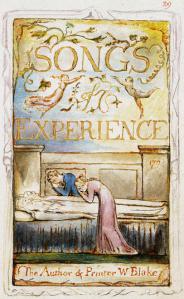
The process of creation followed by production was very important to Blake, bearing in mind that he created a concept, for which there had to be a balance between writing and illustrations. The entire work had to be…
View original post 1,690 more words
[“BLA and GB Gabbler” (really just a pen name) are the Editor and Narrator behind THE AUTOMATION, vol. 1 of the Circo del Herrero series. They are on facebook, twitter, tumblr, and goodreads.]

We love distant villains. Especially those whose villainous power reaches beyond any need to be physically present. #Leeland
-Gabbler
Some movies are so well-constructed, they don’t even need their hero and villain to be anywhere close to each other to create lots of suspense and conflict. They might talk with each other over the phone, but they never have a face-to-face encounter.
Let’s get right to the point and explore 10 movies whose hero and villain never actually meet!
View original post 973 more words
Quote:
‘Do we really need all these labels, all these punks? We probably don’t need them. But because of them, certain writers and works are talked about. So they enable us to have conversations we did not have before. They allow us to notice writers we might have overlooked. And they allow those writers to speak and say, “This is what I am. Or am not.”’
I’ve been wanting to write about Mythpunk since JoSelle Vanderhooft’s interview of Catherynne M. Valente came out.
But I didn’t have time. And then a week later there was a Mythpunk Roundtable with Amal El-Mohtar, Rose Lemberg, Alex Dally MacFarlane, and Shweta Narayan, moderated by JoSelle.
And at some point I found Niall Harrison’s blog posts: Mythpunk and amimythpunkornot.com. All on Strange Horizons.
It was interesting to see that several of the above mentioned me. I also ended up in the Wikipedia definition of mythpunk:
“Described as a subgenre of mythic fiction, Catherynne M. Valente uses the term ‘mythpunk’ to define a brand of speculative fiction which starts in folklore and myth and adds elements of postmodern fantastic techniques: urban fantasy, confessional poetry, non-linear storytelling, linguistic calisthenics, worldbuilding, and academic fantasy. Writers whose works would fall under the mythpunk label are Catherynne M. Valente, Ekaterina Sedia, Theodora Goss, and…
View original post 1,097 more words


