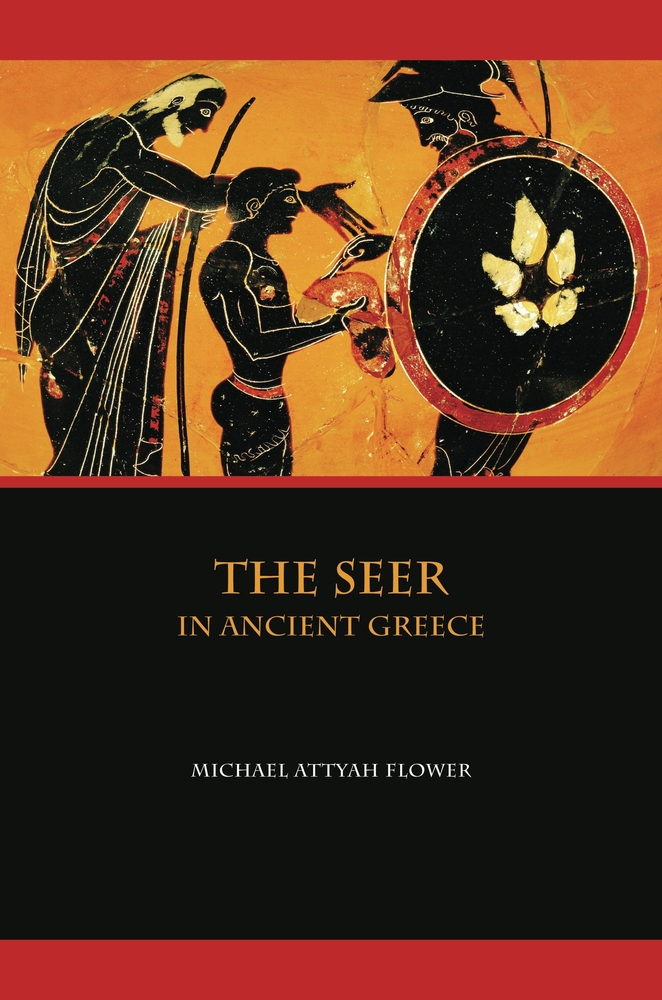
What the gods specifically desire from mortals via sacrifice is “honor, prerogatives, and gratitude.”

‘What the gods specifically desire from mortals via sacrifice is “honor, prerogatives, and gratitude.” Thus those priests and seers who attempt to bind the gods practice a perversion of religion, and in his Laws Plato specifies the death penalty as the punishment for an mantis who attempts to harm someone through spells and incantations. Plato’s formulation is problematic, however, because his religious beliefs were not necessarily those of the average Greek, or even Athenian, and his distinction between religion and magic is surely far more narrow than the popular one, insofar as most Greeks even thought about the distinction at all.

In actual experience, the distinction between magic and religion is fluid, and both can coexist within the same body of ritual acts. Both religion and magic rely on prayer, sacrifice, and incantation to achieve their ends. But whereas religious practices tend to be under control of the polis, magical practices are beyond public control and therefore are perceived as being dangerous. Yet the difference between magic and religion is also one of context and social approval. Magic is activity meant to achieve the goals of prevailing religion in ways disapproved of by that religion. Thus both magic and religion are goal-oriented, but the relationship of each to the supernatural, at least in Greek eyes, was different.’

– Michael Attyah Flower, The Seer in Ancient Greece 

Read it for free on Goodreads:

Download it for free on Goodreads.

Ursula K. Le Guin didn’t like Neil Gaiman’s representation of gods

“What finally left me feeling dissatisfied is, paradoxically, the pleasant, ingratiating way in which he tells it. These gods are not only mortal, they’re a bit banal. They talk a great deal, in a conversational tone that descends sometimes to smart-ass repartee. This chattiness will be familiar to an audience accustomed to animated film and graphic narrative, which have grown heavy with dialogue, and in which disrespect is generally treated as a virtue. But it trivialises, and I felt sometimes that this vigorous, robust, good-natured version of the mythos gives us everything but the very essence of it, the heart.

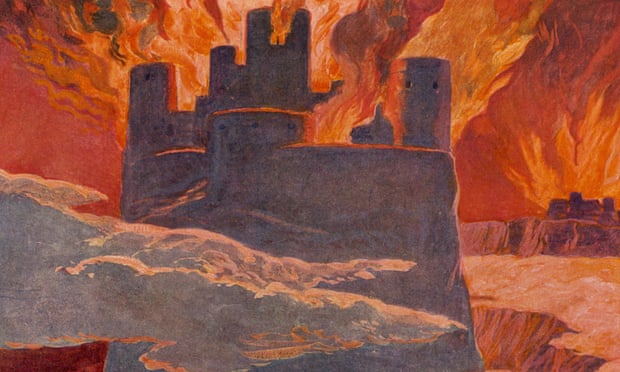
The Norse myths were narrative expressions of a religion deeply strange to us. Judaism, Christianity and Islam are divine comedies: there may be punishment for the wicked, but the promise of salvation holds. What we have from the Norse is a fragment of a divine tragedy. Vague promises of a better world after the Fimbulwinter and the final apocalypse are unconvincing; that’s not where this story goes. It goes inexorably from nothingness into night. You just can’t make pals of these brutal giants and self-destructive gods. They are tragic to the bone.” -Ursula K. Le Guin reviewing Norse Mythology by Neil Gaiman.

[Via]

[“BLA and GB Gabbler” (really just a pen name – singular) are the Editor and Narrator behind THE AUTOMATION, vol. 1 of the Circo del Herrero series. They are on facebook, twitter, tumblr, goodreads, and Vulcan’s shit list.]

all yellowB&N | Amazon | Etc.

Mythpunk

Quote:
‘Do we really need all these labels, all these punks? We probably don’t need them. But because of them, certain writers and works are talked about. So they enable us to have conversations we did not have before. They allow us to notice writers we might have overlooked. And they allow those writers to speak and say, “This is what I am. Or am not.”’

Theodora Goss's avatarTheodora Goss

I’ve been wanting to write about Mythpunk since JoSelle Vanderhooft’s interview of Catherynne M. Valente came out.

But I didn’t have time. And then a week later there was a Mythpunk Roundtable with Amal El-Mohtar, Rose Lemberg, Alex Dally MacFarlane, and Shweta Narayan, moderated by JoSelle.

And at some point I found Niall Harrison’s blog posts: Mythpunk and amimythpunkornot.com. All on Strange Horizons.

It was interesting to see that several of the above mentioned me. I also ended up in the Wikipedia definition of mythpunk:

“Described as a subgenre of mythic fiction, Catherynne M. Valente uses the term ‘mythpunk’ to define a brand of speculative fiction which starts in folklore and myth and adds elements of postmodern fantastic techniques: urban fantasy, confessional poetry, non-linear storytelling, linguistic calisthenics, worldbuilding, and academic fantasy. Writers whose works would fall under the mythpunk label are Catherynne M. Valente, Ekaterina Sedia, Theodora Goss, and…

View original post 1,097 more words