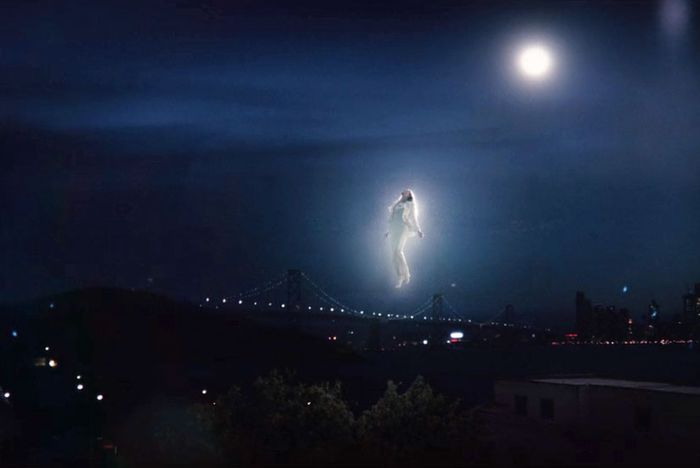
The facts, such as they are, about the god are first that he was beautiful, in an androgynous way, to both men and women. Euripides describes him with “long curls…cascading close over [his] cheeks, most seductively.” Cross-dressing was part of Dionysian worship in some locales. Although he had occasional liaisons with women, like the Cretan princess Ariadne, he is usually portrayed as “detached and unconcerned with sex.” In vase paintings he is never shown “involved in the satyrs sexual shenanigans. He may dance, he may drink, but he is never shown paired with…any of the female companions.
As one of the few Greek gods with a specific following, he had a special relationship to humans. They could evoke him by their dancing, and it was he who “possessed” them in their frenzy. He is, in other words, difficult to separate from the form that his worship took, and this may explain his rage at those who refused to join in his revels, for Dionysus cannot fully exist without his rites. Other gods demanded animal sacrifice, but the sacrifice was an act of obedience or propitiation, not the hallmark of the god himself. Dionysus, in contrast, was not worshipped for ulterior reasons (to increase the crops or win the war) but for the sheer joy of his rite itself. Not only does he demand and instigate; he is the ecstatic experience that, according to Durkheim, defines the sacred and sets it apart from daily life.
So it may make more sense to explain the anthropomorphized persona of the god in terms of his rituals, rather than the other way around. The fact that he is asexual may embody the Greeks’ understanding that collective ecstasy is not fundamentally sexual in nature, in contrast to the imaginings of later Europeans. Besides, men would hardly have stood by while their wives ran off to orgies of a sexual nature; the god’s well-known indifference guarantees their chastity on the mountaintops. The fact that he is sometimes violent may reflect Greek ambivalence toward his rites: On the one hand, for an elite male perspective, the communal ecstasy of underlings (women in this case) is threatening to the entire social order. On the other hand, the god’s potential cruelty serves to help justify each woman’s participation, since the most terrible madness and violence are always inflicted on those who abstain from his worship. The god may have been invented, then, to explain and justify preexisting rites.
If so, the Dionysian rites may have originated in some “nonreligious” practice, assuming that it is even possible to distinguish the “religious” from other aspects of a distant culture….
No doubt the Roman male elite had reason to worry about unsupervised ecstatic gatherings. Their wealth had been gained at sword point, their comforts were provided by slaves, their households managed by women who chafed—much more noisily than their sisters in Greece—against the restrictions imposed by a perpetually male political leadership. Two centuries after the repression of Dionysian worship in Italy, in 19 CE, the Roman authorities cracked down on another “oriental” religion featuring ecstatic rites: the cult of Isis. Again there was a scandal involving the use of a cult for nefarious purposes, though this time the victim was a woman, reportedly tricked by a rejected lover, into having sex with him in the goddess’s temple….
So it is tempting to divide the ancient temperament into a realm of Dionysus and a realm of Yahweh—hedonism and egalitarianism versus hierarch and ward. On the one hand, a willingness to seek delight in the here and now, on the other, a determination to prepare for future danger. A feminine, or androgynous, spirit of playfulness versus the cold principle of patriarchal authority. This is in fact how Robert Graves, Joseph Campbell, and many since them have understood the emergence of a distinctly Western culture: As the triumph of masculinism and militarism over the anarchic traditions of a simpler agrarian age, of the patriarchal “sky-gods” like Yahweh and Zeus over the great goddess and her consorts. The old deities were accessible to all through ritually induced ecstasy. The new gods spoke only through their priests or prophets, and then in terrifying tones of warning and command.
But this entire dichotomy breaks down with the arrival of Jesus, whose followers claimed him as the son of Yahweh. Jesus gave the implacable Yahweh a human face, making him more accessible and forgiving. At the same time, though—and less often noted—Jesus was, or was portrayed by his followers as, a continuation of the quintessentially pagan Dionysus.
Ch. 3
In what has been called “one of the most haunting passages in Western literature,” the Greek historian Plutarch tells the story of how passengers on a Greek merchant ship, sometime during the reign of Tiberius (14-37 BCE), heard a loud cry coming from the island of Paxos. The voice instructed the ship’s pilot to call out, when he sailed past Palodes, “The Great God Pan is dead.” As soon as he did so, the passengers heard, floating back to them from across the waters, “a great cry of lamentation, not of one person, but of many.”
It’s a strange story: one disembodied voice after another issuing from over the water. Early Christian writers seemed only to hear the first voice, which signaled to them the collapse of paganism in the face of nascent Christianity. Pan, the honed god who overlapped Dionysus as a deity of dance and ecstatic states, had to die to make room for the stately and sober Jesus. Only centuries later did Plutarch’s readers full attend to the answering voices of lamentation and begin to grasp what was lost with the rise of monotheism. In a world without Dionysus/Pan/Bacchus/Sabazios, nature would be dead, joy would be postponed to an afterlife, and the forests would no longer ring with the sound of pipes and flutes.
…
The general parallels between Jesus and various pagan gods were laid out long ago by James Frazer in The Golden Bough. Like the Egyptian god Osiris and Attis, who derived from Asia Minor, Jesus was a “dying god,” or victim god, whose death redounded to the benefit of humankind. Dionysus, too, had endured a kind of martyrdom. His divine persecutor was Hera, the matronly consort of Zeus, whose anger stemmed from the fact that it was Zeus who fathered Dionysus with a mortal woman, Semele. Hera ordered the baby Dionysus torn to shred but he was reassembled by his grandmother. Later Hera tracked down the grown Dionysus and afflicted him with the divine madness that caused him to roam the world, spreading viniculture and revelry. In this story, we can discern a theme found in the mythologies of many apparently unrelated cultures: that of the primordial god whose suffering, and often dismemberment, comprise, or are necessary elements of, his gifts to humankind.
The obvious parallel between the Christ story and that of pagan victim gods was a source of great chagrin to second-century Church fathers. Surely their own precious savior god could not have been copied, or plagiarized, from disreputable pagan cults. So they ingeniously explained the parallel as a result of “diabolical mimicry”: Anticipating the arrival of Jesus Christ many centuries later, the pagans had cleverly designed their gods to resemble him. Never mind that this explanation attributed supernatural, almost godlike powers of prophecy to the pagan inventors of Osiris, Attis, and Dionysus.
…In at least one significant respect, Jesus far more resembles Dionysus than Attis. Attis was a fertility god who died and was reborn again each year along with the earth’s vegetation, while Jesus, like Dionysus, was markedly indifferent to the entire business of reproduction. For example, we know that Jewish women in the Old Testament were devastated by infertility. But although Jesus could cure just about anything, to the point of reviving the dead, he is never said to have “cured” a childless woman—a surprising omission if he were somehow derived from a pagan god of fertility.
…
Considering the “popularity of the cult of Dionysus in Palestine” as well as the material evidence from coins, funerary objects, and building ornaments showing that Yahweh and Dionysus were often elided or confused, Smith concluded that “these factors taken together make it incredible that these symbols were meaningless to the Jews who used them. The history of their use shows a persistent association with Yahweh of attributes of the wine god.”
….
Could there have been any actual overlap between the cults of Jesus and Dionysus, or fraternal mixing of the two? In support of that possibility, Timothy Freke and Peter Grandy, in their somewhat sensationalist book The Jesus Mysteries, offer a number of cases, from the second and third centuries, in which Dionysus—who is identified by name—is depicted hanging from a cross.
…
Christian solidarity stemmed in part from Jesus’ sweet and spontaneous form of socialism, but it had a dark, apocalyptic side too. He had preached that the existing social order was soon to give way to the kingdom of heaven, hence the irrelevance of the old social ties of family and tribe. Since the final days were imminent, it was no longer necessary to have children or to even cleave to one’s (unbelieving) spouse or kin—a feature of their religion that “pro-family” Christians in our own time conveniently ignore.
…
But were the fascist rallies of the 1930s really examples of collective ecstasy, akin to Dionysian rituals? And if so, does the threat of uncontrollable violence stain every gathering, every ritual and festivity, in which people experience transcendence and self-loss?
We begin with an important distinction: The mass fascist rallies were not festivals or ecstatic rituals, they were spectacles, designed by a small group of leaders for the edification of the many. Such spectacles have a venerable history, going back at least to the Roman Empire, whose leaders relied on circuses and triumphal marches to keep the citizenry loyal. The medieval Catholic Church used colorful rituals and holiday processions to achieve the same effect, parading statues of saints through the streets, accompanied by gorgeously dressed Church officials. In a mass spectacle, the objects of attention – the marchers or, in the Roman case, chained captive sand exotic animals in cages—are only part of the attraction. Central to the experience is the knowledge that hundreds or thousands of other people are attending the same spectacle—just as, in the age of television, the announcer may solemnly remind us that a billion or so other people are also tuned in to the same soccer came or Academy Awards presentation.
…c
An audience is very different from a crowd, festive or otherwise. In a crowd, people are aware of one another’s presence, and, as Le Bon correctly intuited, sometimes emboldened by their numbers to do things they would never venture on their own. In an audience, by contrast, each individual is, ideally, unaware of other spectators except as a mass. He or she is caught up in the speech, the spectacle, the performance—and often further isolated from fellow spectators by the darkness of the setting and admonitions against talking to one’s neighbors. Fascist spectacles were meant to encourage a sense of solidarity or belonging, but in the way that they were performed, and in the fact they were performed, the reduced whole nations to the status of audience.
-Dancing in the Streets: A History of Collective Joy by Barbara Ehrenreich