[Read the entire novel for free.]
[a website for the Editor and Narrator of the Circo del Herrero series]

Have we really not rounded up our monthly posts for three months? Oh my. Let’s head ’em up, move ’em out.
We changed our Tweets of the Week to be more other social-network friendly. It’s now going to be officially called Social Medea. Pun intended.
We posted a video on The World’s Greatest Internet Troll.
[The Author added commentary on Victoria E. Schwab’s statement on writing/creativity in the current publishing industry]
As always, Gabbler had things to recommend–like The Unbreakable Kimmy Schmidt season 2 and the children’s book I Am Pan!
Our Throwback Thursday posts included a progression of Beardless Hipster Songs that we thought was funny.
Ursula K. Le Guin needs to get with the times.
BLA took back what s/he said about The Jungle Book 2016 movie.
BLA went on a rant about the representation of gods in our stories.
J.K. Rowling wrote about Native American Wizards and shit hit the fan.
Gabbler had some thoughts on Daredevil season 2.
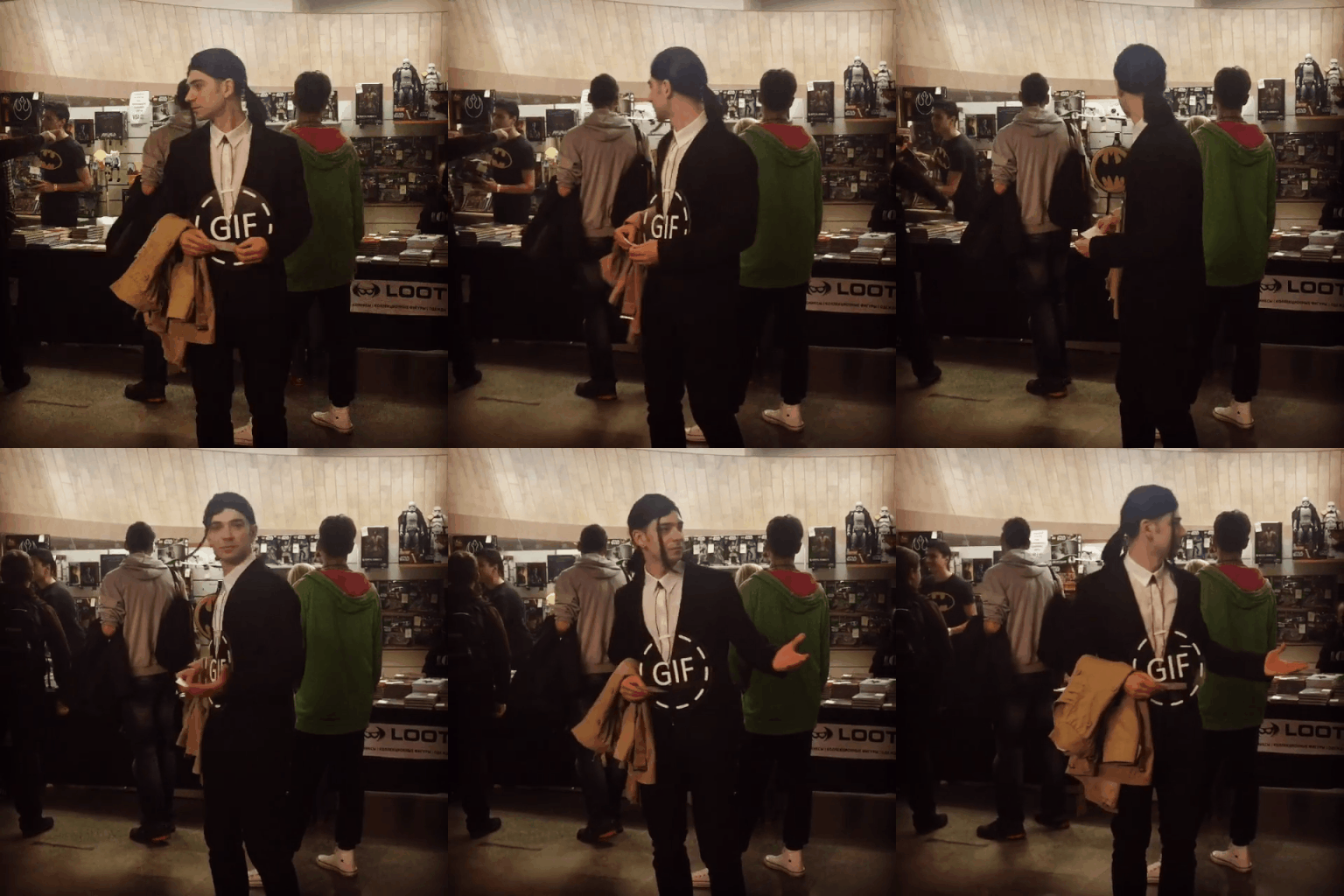
Our GIF of the Month from our GIF of the day is:

“Kafka is not the only author to lend his name to an adjective – Merriam-Webster also points to Dickensian and Byronic, but there are many. Proustian. Joycean. Miltonic. Chaucerian. Pinteresque. Woolfian. Faulknerian.
Perhaps almost as abused as Kafkaesque is Orwellian. The OED defines it as “characteristic of Orwell’s writings, esp. the totalitarian state in his dystopian account of the future, Nineteen Eighty-Four”. But the New York Times says its use “reduces Orwell’s palette to a single shade of noir. It brings to mind only sordid regimes of surveillance and thought control and the distortions of language that make them possible”, while an excellent Daily Mash article argues that the word has “nothing to do with having to put your recycling out” and that “similarly, speed cameras are not ‘Orwellian’”, because “Winston Smith does not spend Nineteen Eighty-Four trying to weasel out of a £75 fine for doing 70 on the A12”.
But back to The Vegetarian, and how Kafkaesque it is, whatever that actually means to us. Tonkin also compared the novel to Ovid’s Metamorphoses, and to The Bell Jar and The Yellow Wallpaper, making it, I suppose, Ovidian, Plathian, and Perkins Gilmanesque, as well (although I’m not sure if that’ll make it into the blurb).”
[Via]
[“BLA and GB Gabbler” (really just a pen name – singular) are the Editor and Narrator behind THE AUTOMATION, vol. 1 of the Circo del Herrero series. They are on facebook, twitter, tumblr, goodreads, and Vulcan’s shit list.]
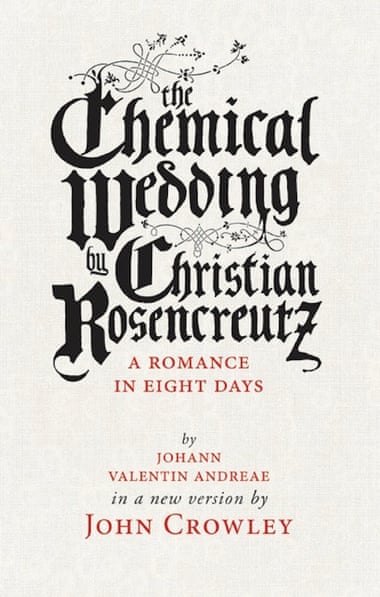 ‘Published in 1616, The Chemical Wedding predates Johannes Kepler’s novel Somnium, which was written in 1608 but not published until 1634 and “which usually gets the nod” as the first science fiction story. But as Crowley writes in his introduction to The Chemical Wedding, Somnium “is more of an illustrated example or thought-experiment than a real story,” and while “the astronomy underlying it is new … it doesn’t carry the thrill of wild but just-around-the-corner possibilities that SF ought to”.
He says that the science of The Chemical Wedding “is late Renaissance alchemy, which had the same fascination for readers of the time as the scientific possibilities of classic SF did in its last-century heyday”. Crowley admits that “alchemy is not science if by science we mean only what is now included in that accretion of tested knowledge that still holds up as true even if primitive or inadequate”. Nonetheless, he argues, “alchemy is science … in the sense that it had a general picture of the material world and a rational scheme for formulating hypotheses and proceeding with investigations of it”.
“So that’s why The Chemical Wedding is the first science fiction novel: unlike other contenders, it’s fiction; it’s about the possibilities of a science; and it’s a novel, a marvellous adventure rather than simply a parable or an allegory or a skit or a thought experiment,” writes the author, adding that “like SF, it probably appealed to a self-selected readership of geeks and enthusiasts”.
Experts in the field were delighted at the news of the book’s reissue – but are not entirely convinced by Crowley’s claim. “If the modern novel as such is 17th century and is a ‘thing’, then it cannot qualify as the first SF novel. If, on the other hand, any lengthy tale is a novel, surely Utopia [published in 1516] is the first SF novel,” said professor Farah Mendlesohn, a science fiction academic. “But that doesn’t mean it’s not fascinating.”’
[Via]
[“BLA and GB Gabbler” (really just a pen name – singular) are the Editor and Narrator behind THE AUTOMATION, vol. 1 of the Circo del Herrero series. They are on facebook, twitter, tumblr, goodreads, and Vulcan’s shit list.]