But of course the affairs male gods have with mortal women are often best described as rape, a term that likewise fits Calypso’s sexual domination of Odysseus as she replicates the very system with which she finds fault.
…
As Mary Beard has ably demonstrated, “We have no template for what a powerful woman looks like, except that she looks rather like a man.” This is exceedingly true of Calypso in the Odyssey, who uses her divine authority in ways that replicate the nastiest aspects of patriarchal power, such as sexual domination and enslavement. As long as Calypso’s island mirrors Zeus’s own hierarchical structure, as long as she occupies the masculinized position of power, there are no feminist lessons to be learned here, only new iterations of the same ancient forms of male domination.
…
Like its hero, Homer’s epic cannot imagine its way into a new paradigm even as it recognizes the precarious positions that women and the oppressed too often find themselves in. Though it fails to offer better solutions, it does have lessons to teach about the damaging ways authority gets wielded and about those who unjustly get to wield it — and perhaps that is why we should all read it, for its negative rather than positive representations of power so that we can be on guard against them.
…
Or, to quote Mary Beard, “You cannot easily fit women into a structure that is already coded as male; you have to change the structure. That means thinking about power differently.” Calypso offers not a hopeful possibility for women but a warning to any woman who climbs the tiers of power without questioning or transforming the asymmetrical system that keeps women as a whole in check. If the structure is not changed, in can waltz Hermes, armed with Zeus’s authoritative command, to overpower you in turn. As long as it is built upon the oppression of others, the same hierarchy that at one moment works for you can now work against you. Unlike Odysseus, we can choose to really see ourselves in the disempowered and by doing so change who we are for the better. That is the challenge for anyone reading the Odyssey today.
[Via]
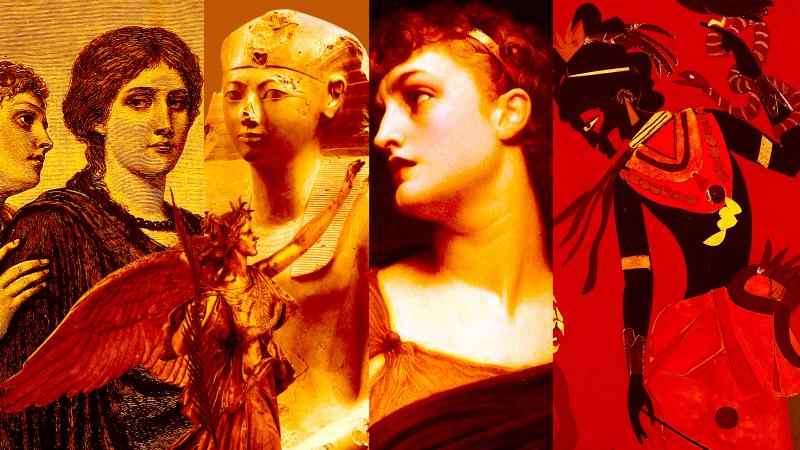 “I think women are held to the impossible standard of having to be perfect, not being allowed to make mistakes,” Miller said of her giving more voice to the inner life of Circe. “The ancient Greek heroes made horrendous mistakes all the time — Odysseus and Achilles are full of flaws, as much as they’re full of virtues and strengths. So I wanted Circe to make mistakes, and be flawed, and to not have the answers. Women should be allowed to be just as messy and complicated as the male heroes have been by right for centuries.”
 The dream of building minds is an old one. How old? You may be surprised to learn that the ancient Greeks had myths about robots. In “Gods and Robots,” Stanford science historian Adrienne Mayor describes how, more than 2,500 years before the modern computer, people told tales of autonomous machines that could labor, entertain, kill and seduce.
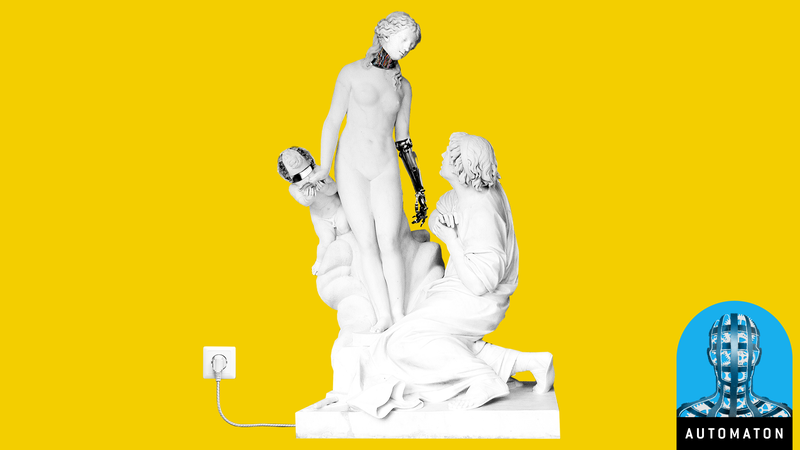 Although the Pygmalion myth is often presented in modern times as a romantic love story, the tale is an unsettling description of one of the first female android sex partners in Western history. It is not clear that Pygmalion’s passive, nameless living doll possesses consciousness, a voice, or agency, despite her “blushes.” Has Aphrodite transformed the perfect female statue into a real live woman, with her own independent mind—or is she now “just a better simulation?” The statue is described as an idealized woman, more perfect than any real female. So Pygmalion’s replica “surpasses human limits,” much like the sex replicants in the Blade Runner films that are advertised as “more human than human.” Ovid, notably, does not describe her skin and body as feeling lifelike. Instead Ovid compares her flesh to wax that becomes warm, soft, and malleable the more it is handled—in his words, her body “becomes useful by being used.”