GABBLER RECOMMENDS: ‘Snapture vs. Rapture: Where Avengers: Infinity War Sticks With Biblical Lore, And Where It Departs’ by Leah Schnelbach

“Why the obsession with the end? Christianity began life as an apocalyptic cult, and people believed that the world was going to end any moment. A lot (like a lot) of early Christian writing is about living a pure life in order to be ready for the end. There were also (probably) at least a few waves of persecution, which led to writings like The Revelation of John, which was (probably) a coded account of the Emperor Domitian and/or Nero, and many of the earliest Church writings and oral culture in general revolving around public torture and executions. (I’m adding all of these ‘probablies’ because it’s extremely hard to confirm what really went on in those centuries, as the intervening histories have all been written by the winner, Christianity.) As the decades rolled on, though, the young religion had to find ways to fold itself into ordinary life, which necessarily meant losing some of its initial urgency. This in turn meant that every few years a reform movement would rise with the intention of taking Christianity back to its roots. Over the centuries this has happened on giant scales and tiny—the one you’ve probably heard of is the Protestant Reformation. But even that Reformation has since inspired wave after wave of groups who have decided that Protestantism needs to be reformed all over again—which is why if you look Protestantism up online you’ll find roughly 12 billion different denominations.

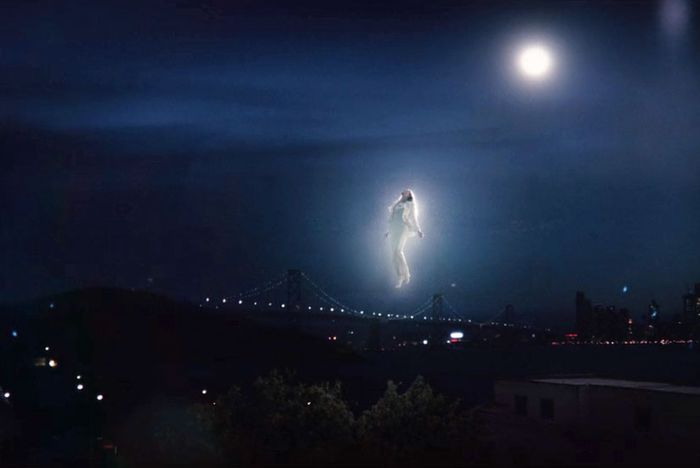
The emotional core of the Snapture is the same as its religious counterpart: people we love vanish because of the actions of an almighty being. Morally, however, things get far knottier. Where The Rapture is based solidly in a predetermined system of judgment, the Snapture is random. Thanos has no personal grudge or favor toward any of them, and they didn’t break any rules he set—that would be his minion Ronan’s bag. The Mad Titan just wants to dust 50% of the population, and in his mind it’s a benevolent act. Where the people of The Leftovers have no idea why the mass disappearance has happened (at least at first) we spend the entirety of the MCU’s arc watching the Avengers, the Guardians of the Galaxy, and assorted other heroes work to hide the Infinity Stones from Thanos, knowing all the while exactly what will happen if they fail. Infinity War is a Rapture movie where we watch humanity fight against the god rather than accepting its will. And where in a Rapture film (and even in The Leftovers) there is some solace in the thought that those who have been Raptured are, or might be, better off, in Infinity War we have no idea what’s happened to them.”

[Via]

See also:
WHAT WE TALK ABOUT WHEN WE TALK ABOUT POST-APOCALYPTIC STORIES; WHEN THE APOCALYPSE IS SOLVED THROUGH NATALIST TROPES 

GABBLER RECOMMENDS: The OA: Part II

“It’s not surprising that The OA: Part II ends by making another new beginning. What is shocking is that it does so by referencing its own existence as a work of art. It’s a move that seems a little cynical and earthbound within the context of The OA’s earnest sensibility and fantastical yet sincere world-building. But if, as Eliot’s poem suggests, the end of The OA: Part II is meant to “arrive where we started and know the place for the first time,” I have to think the series, which Marling and Batmanglij say they’ve mapped out for five seasons, may eventually take us back to an altered version of the dimension where things began in season one.

That meta twist seems like an important step on that circular path. Based on what little we see of the TV show at the end of the finale — the fictional TV show in the third universe, that is — it’s completely unclear what story is being told, how it syncs with the actual series we’re watching, how many other characters will appear in this metafictional dimension.”

[Via Vulture ]

GABBLER RECOMMENDS: On the Cult of Originality: What Byzantine Literary Culture Can Tell Us About Fanfiction by Arkady Martine

“And yet: we are surrounded by literature which is not original and which is successful, enjoyed, and persistent.

This literature is described as flawed, insufficient, not morally improving nor useful to the scholar; self-indulgent, archaizing, written by un-scholarly or un-imaginative persons, or worse yet, by members of marginalized groups; literature which is full of tropes, of expected emotional beats, of Happy-For-Ever endings; literature written using someone else’s characters, for no monetary gain, merely social pleasure and social currency. Literature which insists on being unavoidably present: produced by both the most-educated and the least-privileged—and unequivocally enjoyed (and reproduced, traded, invoked) by both these groups?

You think I’m talking about transformative fanwork here. And I am. But I’m also talking about Byzantine literature from the 9th-12th centuries. What’s interesting is how similar the problems are in evaluating whether some piece of writing is good if we use the criteria of originality to make that determination … both for Byzantine literature and for modern transformative works.”

[Via]

GABBLER RECOMMENDS: ‘A Quiet Hero’s Journey: Processing Trauma in Fantasy’ by Leah Schnelbach

‘The more I thought about these two books the more I saw how unique they were in their approach to storytelling. Rather than a typical quest arc, or bildungsroman, or boarding school tale, or even picaresque, what struck me about both books is that they center trauma and grief as their true subjects. Each novel mines the inner life of an introvert who has been forced into a terrible situation, and then each protagonist is given the page space to quietly, honestly, process their trauma and begin to recover.

In much the same way, Among Others uses its structure to tell a shadow story of Mori’s recovery. Walton’s story unfolds as a series of dated diary entries, so we know that the book’s prologue shows us a healthy and comparatively happy pair of twins in 1975, before skipping up to 1976 and reintroducing us to an older, shattered Mori, alone and furious. The entries cover the first three years of Mori’s new life, from 1976 until 1980, and the thing that comes through constantly is pain.

Among Others could have been a book about a girl fighting her evil mother with magic, and it could have been a standard, “nerdy girl finds unlikely friendships at boarding school”-type story. Instead, it’s about pain. It’s about what constant physical pain does to the human mind, and how to build up defenses against it.

…A book that could have just been a boarding school story has become a true bildungsroman, as Mori has to decide who she is, and who she wants to become.

These two novels show a different path for fantasy writing than the usual quest or heist tale. Instead they focus on tiny, quiet pockets of time—moments spent with a book, or in meditation—and look at how those moments can ripple out into a personality. They give us two very different characters who are, in the end, defined by their desire for quiet and stillness, defined by their own choices rather than the violence that was done to them. Rather than following their expected paths to become Vengeful Emperor or Murderous Witch, they draw on their inner lives to grow into real complex adults, and use their experience of trauma to embrace lives of empathy.

[Via]

See also:

TO REGENDER THE MONOMYTH

LAURIE PENNY ON THE MONOMYTH 

THE BASIC THEME OF ALL MYTHOLOGY

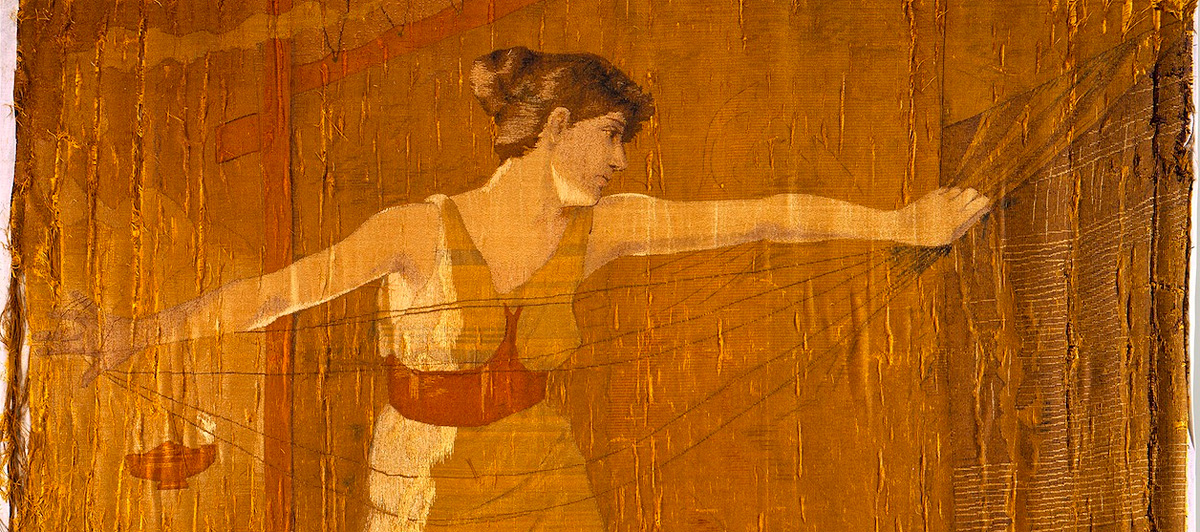
GABBLER RECOMMENDS: ‘FROM PENELOPE TO PUSSYHATS, THE ANCIENT ORIGINS OF FEMINIST CRAFTIVISM’ by STEPHANIE MCCARTER

Homer is of course no feminist. Penelope’s cunning intelligence offers her a means of resisting her suitors, but it also makes her a good match for her husband’s own mental agility. She complements rather than challenges him. The dangerous potential of her craft is neutralized by her use of it to reinforce Odysseus’s patriarchal authority. Odysseus in fact remains skeptical of his wife as he cautiously reintegrates himself into his house. His beggar’s disguise allows him to put her through a series of tests; only when he is certain no other man has been in his bed does he finally reveal himself to her. Even in faithful Penelope there is the lurking danger that she may outcraft him.

Ovid’s most famous weaver is Arachne, who surpasses all women in wool-work. She boldly challenges Minerva, herself intent on demonstrating her fearsome power, to a contest of skill. Arachne’s tapestry is the work of an artist in her prime, and it finds a parallel in Ovid’s own “fine-spun” epic song. Like Ovid’s poem, it depicts the rapes of women, especially those perpetrated by gods. Minerva’s tapestry, however, also evokes Ovid’s text; it shows us, just as Ovid has, the might of the gods and the sufferings of those who challenge them. The story puts into competition two opposing views of art: one subverts established power and the other enforces it.

Ovid makes it clear that Arachne is the superior artist: “The golden virago, incensed at Arachne’s spectacular success, ripped the fabric apart with all its embroidery of celestial crimes.” Minerva violently strikes Arachne, then transforms her into a voiceless spider whose webs no longer have the power to articulate resistance. Outmaneuvered by such craft, the powerful have recourse only to brute force, but they cannot quell speech entirely: “All of Lydia buzzed with the story, which spread through Phrygia, too, and filled the world with talk.”

Ovid does not tell us how these talkers interpret the story, whether they draw the lesson of Arachne’s tapestry or Minerva’s. But the final act of defiance is achieved whenever anyone grants the win to Arachne; artist, object, and interpreter join together in an unruly alliance of which we can still be a part.

[Via]