Some real talk: most writing isn’t worth consuming. That includes cereal boxes and New York Times wedding announcements. More real talk: most people urging you to read widely probably have a hard time ranging outside their comfort zones. There’s no doubt that, in the political realm, we need more connection with those we disagree with. But for the most part, “read widely” belongs to a class of expression that’s good to be heard saying (as in: we need “more dialogue” or we need “to have a national conversation about sheet cake”). In my experience, only a minority of writers like to chase their Leslie Jamison with some Conrad Black, or their Yvor Winters with some Roxane Gay. Many can barely metabolize a Stephen Marche tweet without declaring a stomach ache, and Marche is a reasonable guy who can write a good sentence.
The real problem with telling young writers to fan out across genres and forms is that it doesn’t help them find a voice. If anything, it’s antivoice. Learning the craft of writing isn’t about hopping texts like hyperlinks. It’s about devotion and obsession. It’s about lingering too long in some beloved book’s language, about steeping yourself in someone else’s style until your consciousness changes colour. It’s Tolkien phases and Plath crushes. It’s going embarrassingly, unfashionably all in. (And, eventually, all out.)
…
The call to “read widely” is a failure to make judgments. It disperses our attention across an ever-increasing black hole of mostly undeserving books. Whatever else you do, you should not be reading the many, many new releases of middling poetry and fiction that will be vying for your attention over the next year or so out of some obligation to submit your ear to a variety of voices. Leave that to the editors of Canada’s few newspaper book sections, which often resemble arm’s-length marketing departments for publishers. Leave that to the dubious figure of the “arts journalist.”
[Via]
 “I wanted to engage with the archetypes and iconography of ghost films and haunted house movies, without ever crossing over into actually being a horror film,” says writer-director David Lowery, who made A Ghost Story with the proceeds of his previous movie, a remake of Disney’s Pete’s Dragon. “Look at any horror film and you can trace it back to a particular social or personal anxiety, and this film is no different in that regard: I was having a big-picture existential crisis about my place in the universe, and at the same time I was having a very personal conflict with my wife about where we were going to move to. And wrapped up in all of that was my longstanding desire to make a movie with a guy in a sheet.”
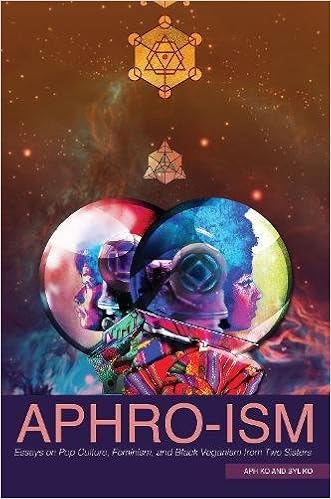 ‘Caribbean scholar and cultural theorist Sylvia Wynter notes that our current conception of the human/humanity is a Eurocentric invention. Although there have been countless ways of expressing human activity throughout history, the model we take for humankind is the one devised by colonial Western Europe. On this model, there is the human (white, Western male with the ideal human counterpart: the white, Western female) and “its human Others—that is, Indians, Negroes, Natives [and, I would add, Jews and Muslims].”