Theistic conceptions of artificial intelligence


Other scholars recognise elements of theism in the discourse around AI and its potential impact on our future. Robert Geraci suggests in his 2010 book, Apocalyptic AI: Visions of Heaven in Robotics, Artificial Intelligence, and Virtual Reality, that AI can fulfil the same role in apocalyptic imaginings as a singular theistic god. Bearing in mind that the biblical apocalypse is an optimistic cosmic transformation, he also draws out parallels with the aims of AI, which often describe hopeful aspirations for a world-yet-to-come, an AI eschatology. In an early part of this particular work, Geraci draws on Rudolph Otto’s 1917 description of god as mysterium tremendum et fascinans (Otto 1917), using it to identify a type of awe-inspiring and fearsome being that at different times in our history can be a god, or in our contemporary modern world, AI. Elsewhere, Geraci’s work has engaged with virtual worlds, drawing attention to the role of transhumanists, including Giulio Prisco, discussed below, in claiming new potential spaces to practice and evolve religion towards transhumanist ends. In such spaces, including Second Life and the World of Warcraft (the MMORPG-a massively multiplayer online role-playing game), Geraci argues a step closer to the fulfilment of transhumanist salvation is being made- “a heavenly realm to inhabit” (Geraci 2014 177). Twitter is another virtual space, but one dominated by discourse rather than aesthetics and virtual embodiment like Second Life and World of Warcraft. However, this article proposes that the expressions of religious metaphor, parody, and tropes on Twitter as in the BBtA tweets represent continuities of theism, continuities enabled by new technological spaces as well as uncertainties about the nature and the volition of ‘the algorithm’.

However, the ‘AI fits into the god-space’ argument can be in danger of supporting a rather strict version of the Secularisation Thesis, and this idea’s historical veracity has been debated by anthropologists and sociologists of religion (see Ward and Hoelzl 2008). This article, and connected research, seeks to add to this debate in by drawing attention to continuities of religiosity and enchantment in super-agential concepts of AI and AI NRMs. Second, this god-space argument can suggest that religion is spurred on by ‘need’ only, a pathology interpretation of religion that ignores other elements of religious inspiration and innovation such as desire, culture, aesthetics, and, often in the online environment, affective virality.

Theistic interpretations of AI do undeniably owe a lot to older cultural conceptions of a singular god. Randall Reed pares this kind of god down to three theological characteristics (with long historical and philosophical roots) that often map easily onto our conceptions of AI superintelligences. These are omnipotence, omniscience, and omnipresence (Reed 2018, 7). Reed also raises the question of omnibenevolence. He notes that AI philosophers such as Nick Bostrom of the Future of Humanity Institute have focussed on the issues of malevolence through “perverse instantiation”, a failure of value alignment leading to unforeseen damage from a superintelligent AI, such as in Bostrom’s famous Paperclip Maximiser thought experiment (Bostrom 2003). Bostrom’s Orthogonality Thesis from his 2012 paper ‘Superintelligent Will’ is also relevant; the argument that intelligence is not intrinsically linked to ‘goodness’, and that an AI could have any number of combination of degrees of both characteristics (Bostrom 2012).

– “Blessed by the algorithm”: Theistic conceptions of artificial intelligence in online discourse by Beth Singler
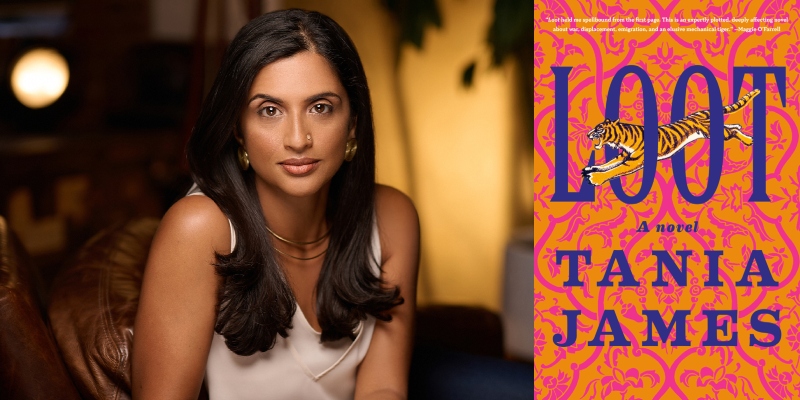
 

GABBLER RECOMMENDS: “Tania James on Trust, Truth, and the Desire to Create Something That Lasts”

From the podcast:

Tania James: Yeah, I don’t think he actually commissioned the elephant clock. I kind of created this moment. But I think he would’ve really responded to that object that was created and designed by a 12th-century Muslim polymath. His name was Al-Jazari and he is well known in the Arab world. I don’t know. But when I discovered this thing, this was a whole other world of automatons that I had not read about.

I had only associated automatons with Europe, but here he was doing it in the 1100s. And I think that Tipu Sultan would’ve been really attracted to this idea behind the elephant clock, which is that each part of it represents a certain part of civilization, but none of those civilizations he’s mentioning are European. So I felt that he would really have been attracted to that, but I didn’t find that anywhere in the historical record. I just made up that he had that commission.

[Via]

Mentioned in the podcast is Tipu’s Tiger automaton:

GABBLER RECOMMENDS: A World Ordered Only By Search The Convivial Society: Vol. 2, No. 17

This kind of reading was grounded not just in the book generically, but in a particular book. Remember, of course, that books were relatively scarce artifacts and that reproducing them was a laborious task, although often one lovingly undertaken. This much is well known. What might not be as well known is that many features that we take for granted when we read a book had not yet been invented. These include, for example, page numbers, chapter headings, paragraph breaks, and alphabetical indexes. These are some of the dozen or so textual innovations that Illich had in mind when he talks about the transformation of the experience of reading in the 12th century. What they provide are multiple paths into a book. If we imagine the book as an information storage technology (something we can do only on the other side of this revolution) then what these new tools do is solve the problems of sorting and access. They help organize the information in such a way that readers can now dip in and out of what now can be imagined as a text independent of the book.

I’ve found it helpful to think about this development by recalling how Katherine Hayles phrased one of the themes of How We Became Posthuman. She sought to show, in her words, “how information lost its body.” Illich is here doing something very similar. The text is information that has lost its body, i.e. the book. According to Illich, until these textual innovations took hold in the 12th century, it was very hard to imagine a text apart from its particular embodiment in a book, a book that would’ve born the marks of its long history—in the form, for example, of marginalia accruing around the main text.

I’ve also thought about this claim by analogy to the photograph. The photograph is to the book as the image is to the text. This will likely make more sense if you are over 35 or thereabouts. Today, one can have images that live in various devices: a phone, a laptop, a tablet, a digital picture frame, the cloud, an external drive, etc. Before digital photography, we did not think in terms of images but rather of specific photographs, which changed with age and could be damaged or lost altogether. Consequently, our relationship to the artifact has changed. Roland Barthes couldn’t be brought to include the lone photograph he possessed of his mother in his famous study of photography, Camera Lucida published in 1980. The photograph was too private, his relationship to it too intimate. This attitude toward a photographic image is practically unintelligible today. Or, alternatively, imagine the emotional distance between tearing a photograph and deleting an image. This is an important point to grasp because Illich is going to suggest that there’s another analogous operation happening in the 12th century as the individual detaches from their community. But we’ll come back to that in the last section.

[Via]