Tag: mythology
Coin toss: Take a chance on THE AUTOMATION
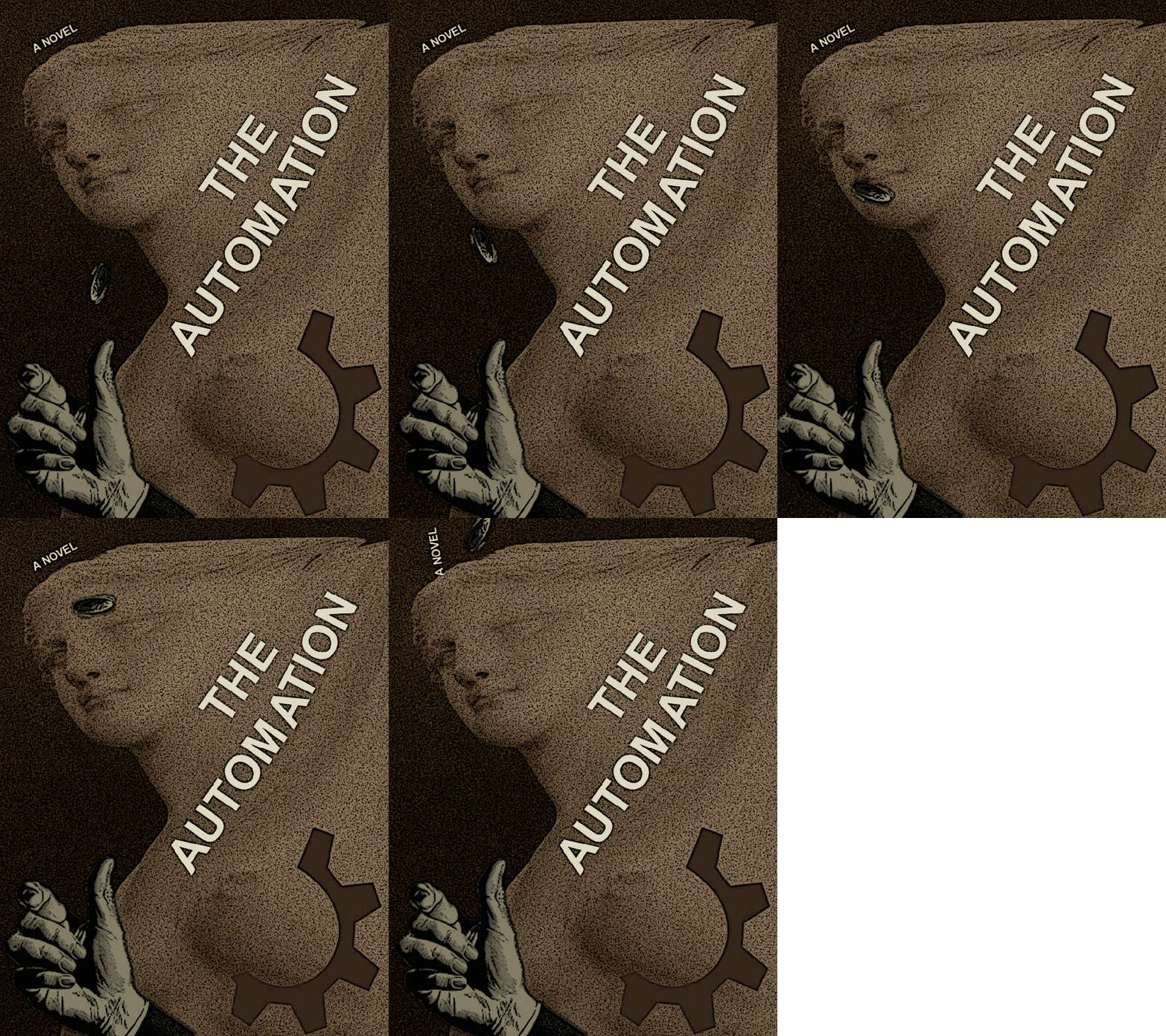
Get a manuscript here.
Why I’m already concerned about the Starz TV adaptation of Neil Gaiman’s American Gods

Hi. BLA here. Coming to remind you of what Neil Gaiman said back in 2010 about not setting one of his books in “America”:
“The great thing about having an English cemetery is I could go back a very, very, very long way. And in America, you go back 250 years (in a cemetery), and then suddenly you’ve got a few dead Indians, and then you don’t have anybody at all, unless you decide to set it up in Maine or somewhere and sneak in some Vikings.” [Via]
A “few dead Indians” is what you’re supposed to pay attention to here. Now, surpassing debates on what he meant or didn’t intend to do in that interview, we can look at his colonial mentality in his work itself. Take this statement about American Gods:
And perhaps most offensive, we’ll get the book’s Big Statement About America, which is bizarrely insulting to Native Americans. Near the end of the novel, a Native American with magical powers named Whiskey Jack tells Shadow he’s not a god, but rather a “culture hero,” because the land we call America “is not a good country for gods.” [Via]
Neil Gaiman consistently glazes over Native Americans/Indigenous peoples and their cultures. Something I’m sure he has learned to correct by this point, but it was something I had hoped the creators of the new TV show adaptation would rethink in the story. However, it doesn’t seem likely. Sure, sure, they can update Technology Boy to not be so technologically illiterate, but this recent EW article doesn’t give me hope for the story’s cultural literacy:
“Neil created this wonderfully stuffed toy box filled with all sorts of cultural points of view on how American operates as a system, and that was so fascinating and mythological in and of itself,” says Fuller. “It’s really much more of an immigration story than it is a god story.” Green adds, “One of the biggest challenges was stripping the idea of gods as X-Men or giant empowered creatures who stomp on cities and throw the oceans. We wanted them to be people with problems. It’s not about lightning bolts – it’s about the question of day-to-day survival.”
So, we’re still talking about immigrants? Colonizer problems? Nothing has changed. Dear Hollywood and Neil Gaiman, just because your story doesn’t whitewash doesn’t mean it’s not racist.
See also, The Gods Don’t Need Your Worship.
[“BLA and GB Gabbler” (really just a pen name – singular) are the Editor and Narrator behind THE AUTOMATION, vol. 1 of the Circo del Herrero series. They are on facebook, twitter, tumblr, goodreads, and Vulcan’s shit list.]
Theodora Goss on why she writes:
“This movement to separate fantasy and reality, but also realism and fairy tale, continued into the nineteenth century, and by the end of the century it was very clear that there were the respectable novel and short story, and the considerably less respectable forms of fairy tale, myth, romance (in the old sense of an adventure story), ghost story, etc. By the twentieth century, they occupied different publishing niches, different shelves in the bookstore. As they still do….
Here’s the thing: talking about conservation will not save the badgers of England. If anything will save them, it will be the way people feel about Mr. Badger. We are human beings, and we make decisions based not on logic or rationality, however much we may think we do (deluded as we are about ourselves), but on emotion. And what creates emotion? Story.”
[Via]
BookTuber Tuesday – Karen Armstrong, on violence and religion
Check out other book vlogs we’ve featured here.
Have a book vlog video you want us to check out? Submit a link below in the comments and it could make the CIRCO blog.
[“BLA and GB Gabbler” (really just a pen name – singular) are the Editor and Narrator behind THE AUTOMATION, vol. 1 of the Circo del Herrero series. They are on facebook, twitter, tumblr, goodreads, and Vulcan’s shit list.]