Ursula K. Le Guin, on being a man:

‘I am a man. Now you may think I’ve made some kind of silly mistake about gender, or maybe that I’m trying to fool you, because my first name ends in a, and I own three bras, and I’ve been pregnant five times, and other things like that that you might have noticed, little details. But details don’t matter… I predate the invention of women by decades. Well, if you insist on pedantic accuracy, women have been invented several times in widely varying localities, but the inventors just didn’t know how to sell the product. Their distribution techniques were rudimentary and their market research was nil, and so of course the concept just didn’t get off the ground. Even with a genius behind it an invention has to find its market, and it seemed like for a long time the idea of women just didn’t make it to the bottom line. Models like the Austen and the Brontë were too complicated, and people just laughed at the Suffragette, and the Woolf was way too far ahead of its time.

That’s who I am. I am the generic he, as in, “If anybody needs an abortion he will have to go to another state,” or “A writer knows which side his bread is buttered on.” That’s me, the writer, him. I am a man. Not maybe a first-rate man. I’m perfectly willing to admit that I may be in fact a kind of second-rate or imitation man, a Pretend-a-Him. As a him, I am to a genuine male him as a microwaved fish stick is to a whole grilled Chinook salmon.’

[Via]

[“BLA and GB Gabbler” (really just a pen name – singular) are the Editor and Narrator behind THE AUTOMATION, vol. 1 of the Circo del Herrero series. They are on facebook, twitter, tumblr, goodreads, and Vulcan’s shit list.]
all yellowB&N | Amazon | Etc.

GABBLER RECOMMENDS: Naughty Words by Rebecca Roache

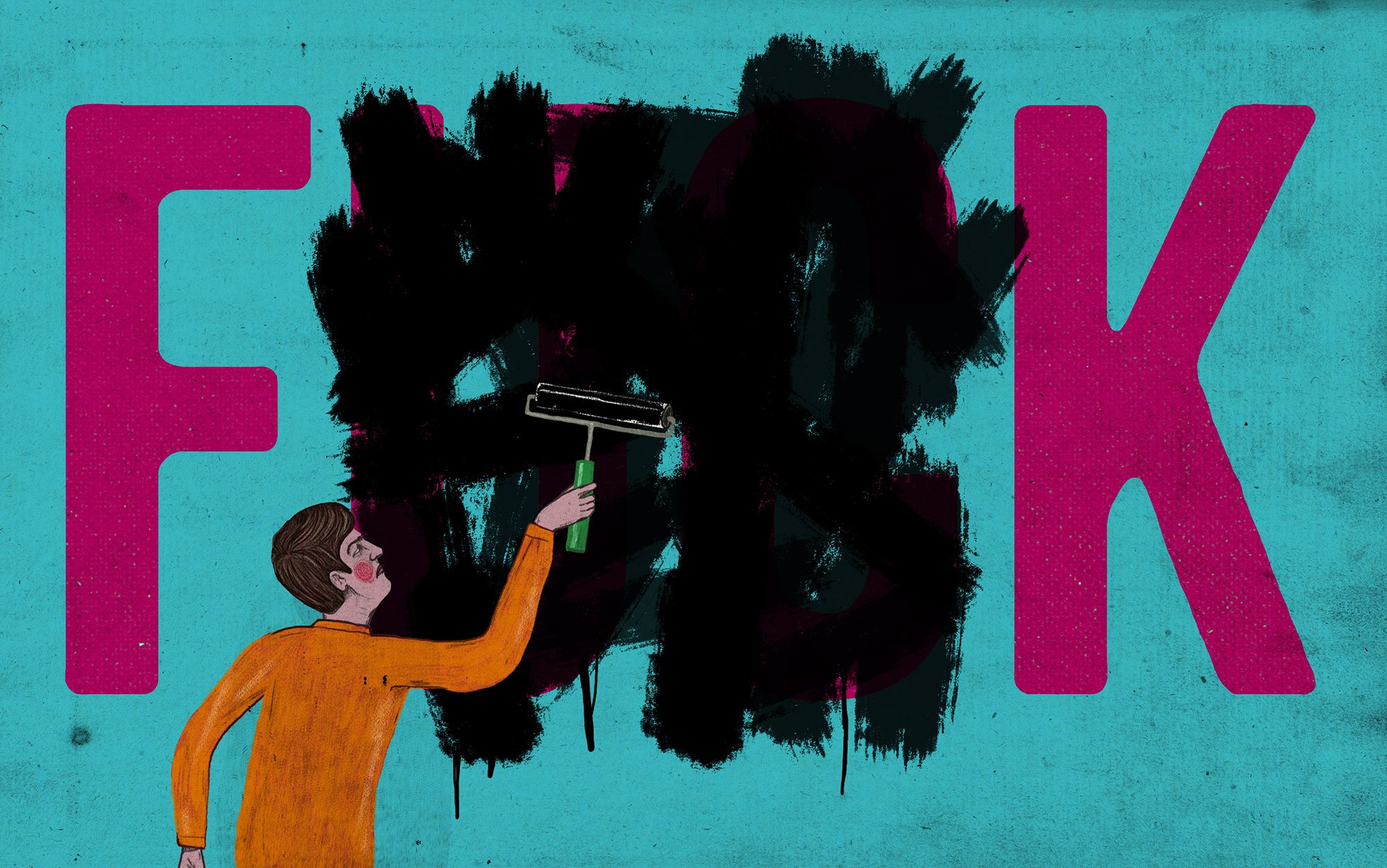
“This unique psychological role gives swearing a unique linguistic role, too. Suppose we overhear somebody exclaim ‘Fuck it!’ when he accidentally spills tea in his lap. We can’t grasp the meaning of this exclamation by reflecting on the literal meanings of the words, as we’d do if the speaker had said ‘Eat it!’ or ‘Wash it!’ Someone who says ‘Fuck it!’ after slopping tea in his lap is not expressing a desire to fuck something, nor is he instructing anyone else to fuck something. To understand this exclamation, we need to consider not what the speaker is referring to or talking about, but what he aims to indicate about his emotions. This makes swearing, in such circumstances, more like a scream than an utterance: just like a scream, it expresses emotion without being about anything.”
[Via]

[“BLA and GB Gabbler” (really just a pen name – singular) are the Editor and Narrator behind THE AUTOMATION, vol. 1 of the Circo del Herrero series. They are on facebook, twitter, tumblr, goodreads, and Vulcan’s shit list.]

all yellowB&N | Amazon | Etc.

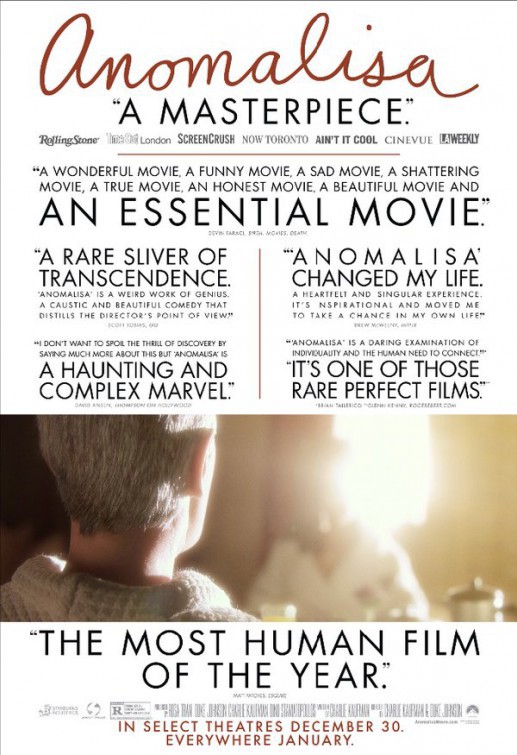
#BLAThoughtOfTheDay: Was Anomalisa a good movie?

We saw this back in January, and it was surprisingly better than I thought it was going to be.

But, here is the thought(s)/questions I’m left wondering [spoilers]:

1. Was the Japanese automaton a symbol for the woman he truly wants? The automaton’s voice at the end was the only distinct non-Tom Noonan voice left. Was the automaton the only true Anomalisa? Or maybe the anomalisa was himself–that he can never find someone as original as his own person?

2. Was the glitchy dream really necessary? Indeed, are any dream sequences necessary? While it reminded the audience that they were dealing with puppet-dolls (which is ironic because part of the plot centers around said puppets dealing with an antique sex doll/automaton), did this add anything to the greater theme other than irony? It tired the point, for sure.

3. Also, it bothered us that all the characters were white, even though, yes, they were supposed to have the same face. Adding diversity of skin tone probably would have made it harder to notice they were all the same (which was kind of hard to notice as purposeful to begin with). But I’m sure something else could have been done to drive home that point that didn’t involve whitewashing every human being alive.

If you’ve got some thoughts on this movie, please tell us below!

[“BLA and GB Gabbler” (really just a pen name – singular) are the Editor and Narrator behind THE AUTOMATION, vol. 1 of the Circo del Herrero series. They are on facebook, twitter, tumblr, goodreads, and Vulcan’s shit list.]

all yellowB&N | Amazon | Etc.

GABBLER RECOMMENDS: How Has the MFA Changed the Contemporary Novel?

“The rise of the MFA has changed how both writers and people in general talk about creativity. The debate has shifted from whether creativity could be taught to how well it can be taught and whether it should be taught. The stakes are real: Creative writing has become a big business—it’s estimated that it currently contributes more than $200 million a year in revenue to universities in the U.S.
Whether you valorize the Romantic ideal of the lonely, humble artist or the neo-liberal belief that education can solve any problem, the MFA has become a kind of Rorschach test for how writers and critics feel about creativity, where it comes from, and how best to nurture it.

… There has to be something that makes them different, and those differences, according to the vigor and tenacity of critics’ claims, ought to be recognizable. As Mark McGurl, the author of the sweeping history of the MFA, The Program Era, writes, creative writing programs “obviously” teach writers how to become a specific “creative type.” Or as Chad Harbach has argued more recently in his popular essay “MFA vs. NYC,” “the university now rivals, if it hasn’t surpassed, New York as the economic center of the literary fiction world.” If there are indeed “two literary cultures” in Harbach’s words, we should be able to detect it.

…But when we refined our tests to look at how race factors into the results, we found the opposite to be true. We took each separate body of work—books by MFA writers and books by non-MFA writers—and compared all of the writers in each individual corpus along the metrics of diction, style, and theme we describe above. For both corpora, we expected white and non-white writers to group together in clusters, and we anticipated that non-white writers would especially group together in the MFA corpus (authors like Tayari Jones, Chieh Chieng, and Daniel Alarcon). But we found no such thing. Again, based on diction, theme, and syntax, these two groups, in both MFA and non-MFA writing, are impossible to distinguish.

So it seems to us that the MFA doesn’t merit many of the hyperbolic claims about its impact on literature. $200 million per year, after all, is a high price to pay for very little measurable impact.”

[Via]

[“BLA and GB Gabbler” (really just a pen name – singular) are the Editor and Narrator behind THE AUTOMATION, vol. 1 of the Circo del Herrero series. They are on facebook, twitter, tumblr, goodreads, and Vulcan’s shit list.]

all yellowB&N | Amazon | Etc.

“…the audience asked if she thought Lovegood is a vegan, with Lynch ultimately stating that she thought Lovegood would be”; When a character is further written.

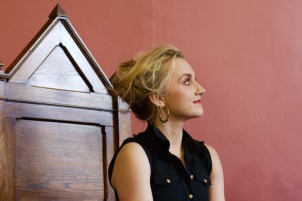
lunaWhen actress Evanna Lynch, who played the wonderfully whimsical Luna Lovegood in the Harry Potter series, walked into the room, you could feel the excitement building in the crowd. “It feels like I’m on trial, damn. What’s my crime?”, the actress joked as she walked past the eager crowd. Lynch immediately appeared comfortable and approachable, setting the tone for the remainder of the session…

She explained that the environment is not the reason she made the decision to cut meat and animal products from her diet. Instead, simply put, she believes that “killing and eating animals is a betrayal of our own core humanity” and that “killing an innocent goes against our nature”. From this point, her argument looked at history, evolution and the reasons consuming meat and animal products continue to be the norm in our society. Finally, she urged the audience to “check [that their] practices align with [their] principles”.

At the end of her speech, she half-jokingly mentioned that her father warned her that she would probably be heckled and booed when speaking on this topic. This was not the case, as the crowd listened cautiously and subsequently asked insightful questions during the Q&A session.

The inevitable shift from a focus on Lynch’s beliefs on veganism to her role in the Harry Potter series came when a fan asked: “Shifting from animal fears to human fears, did you have any fears about playing that role in Harry Potter?”. The audience as well as Lynch immediately broke into laughter, and Lynch responded with saying that “there was no right way to make that transition, was there?”, well aware that the crowd was interested in hearing about her role as Lovegood.

She answered several questions regarding Lovegood and the Harry Potter series with a fan wondering if she would rather be Lovegood or act as Lovegood. Lynch stated that said she would rather act as Lovegood, as she is now in a place where she’s happy with herself. Another member of the audience asked if she thought Lovegood is a vegan, with Lynch ultimately stating that she thought Lovegood would be.

Lynch was also questioned regarding the newest addition to the Harry Potter franchise, the stage production of Harry Potter and the Cursed Child. The session finished with Lynch answering one final question about the positive impact Lovegood has on fans and readers in terms of being proud of who they are and accepting themselves. She ended the session by saying: “That lovely message of ‘I’m weird but I’m ok’, you know. I’m happy to spread that, and I’m glad she’s such an advocate.”

[Via]


[“BLA and GB Gabbler” (really just a pen name – singular) are the Editor and Narrator behind THE AUTOMATION, vol. 1 of the Circo del Herrero series. They are on facebook, twitter, tumblr, goodreads, and Vulcan’s shit list.]

all yellowB&N | Amazon | Etc.