Gabbler Recommends: Joanna Newsom’s interview with Tiny Mix Tapes

JN: My favorite author of all time is Nabokov. I’m really obsessed
with him, actually… all my Nabokov novels are, like, ravaged by notes crammed
into the margins of every page, from readings and re-readings. I especially like
the annotated Lolita, edited by Alfred Appel Jr., because I can just
luxuriate in his neurotic, exquisite feast of footnotes and endnotes… like a
book within a book… amazing.

My other favorite book is The Last Unicorn, by Peter S. Beagle.
Incredible. One of the greatest literary meditations on beauty, sickness,
mortality, loneliness, perfection, defection, bravery/heroism, regret, pity,
purity, magic, and power, of all time. So there. The movie is my
favorite, too, though for slightly different reasons. I actually just discovered
that Mr. Beagle lives in Oakland, which is right near me, so I’m sort of
hoping that somehow, someday, I might get to meet him…that would be so
amazing….

TMT: What music have you been listening to and enjoying as of late?

JN: Well, I honestly don’t listen to a great deal of music. I love
a great [deal] of music, both by folks working nowadays and those from a
ways back…. but I find myself tending toward silence most of the time,
especially if I’m trying to write my own music. I feel too permeable otherwise,
too afraid of being influenced, or of diluting my ideas, or of forgetting them.

[Read the rest.]

[“BLA and GB Gabbler” (really just a pen name – singular) are the Editor and Narrator behind THE AUTOMATION, vol. 1 of the Circo del Herrero series. They are on facebook, twitter, tumblr, goodreads, and Vulcan’s shit list.]
all yellowB&N | Amazon | Etc.

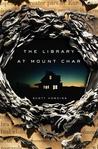
GABBLER RECOMMENDS: The Library at Mount Char

The Library at Mount CharThe Library at Mount Char by Scott Hawkins
My rating: 5 of 5 stars

Gabbler doesn’t just recommend it. Gabbler demands you read it.

View all my reviews

[“BLA and GB Gabbler” (really just a pen name – singular) are the Editor and Narrator behind THE AUTOMATION, vol. 1 of the Circo del Herrero series. They are on facebook, twitter, tumblr, goodreads, and Vulcan’s shit list.]

all yellowB&N | Amazon | Etc.

When You Loved a Problematic Book

‘Because the people who call out books and shows and movies for bad representation are not haters in that way. They’re doing what they’re doing with a desperate hope of improving our media, because art affects us on really deep, unconscious levels and so we need to understand the consequences of our art. We need to understand what it does to us, to all of us–what we might be doing to other people, through our art.’

GABBLER RECOMMENDS: Chi-Raq

A modern retelling of Lysistrata, Chicago females hold out to get their men in line–glazing over masturbation just as well as the ancient play. This idealized view of female power and ability is why it works better as a comedy than actual message–and why it works against Spike Lee’s attempt. Also, take note that the male’s name replaces the female’s in this version. Ahem.

Watch it for the poetry. Use subtitles if you can. Better than a “modernizing”/”gangsterizing” of Shakespeare, for sure.


[“BLA and GB Gabbler” (really just a pen name – singular) are the Editor and Narrator behind THE AUTOMATION, vol. 1 of the Circo del Herrero series. They are on facebook, twitter, tumblr, goodreads, and Vulcan’s shit list.]

all yellowB&N | Amazon | Etc.

GABBLER RECOMMENDS: Ethics of Reviewing BY NATALIE LUHRS

“Which is more challenging for both reviewers and authors to deal with. Reviewers must be honest about problems they find in books and while the intent may not have been to offend or upset, authors need to accept that once a book is out in the world you cannot—and you should not—control how they’re going to react. You cannot control the conversation that reviewers and readers are going to have about your book and it’s futile to even try.

So that brings me to another ethical issue: that of authors publicly responding to reviews. This is another place where the power differential must be explored and understood. I feel that in most cases, responding to a review—particularly a negative one—is not a good idea. Stating that the reviewer is interrogating the text from the wrong perspective is a recipe for hilarity, not one where everyone will suddenly bow to your superior authority as Author. The text is, in many ways, a joint creation of both author and reader, and once a book is with the reader, I believe that your job as a creator is complete. I don’t want to say that any and all reactions to a book are right: I do not believe reviewers or readers should threaten bodily harm to authors, not even in grossly hyperbolic terms. But I also believe that there must be space for reviews which are negative and which call out racism, sexism, and other oppressions for what they are.

Negative reviews are critically important to our community, in a very real sense they help us to define the boundaries of what we find acceptable in our entertainments. To uncritically accept rape scenes or persistent racial microaggressions is to be smaller and less inclusive than we are capable of being and it is the marginalized among us who are often most sensitive to these issues and best placed to speak about them. It would be unethical to use one’s greater power to attempt to silence those voices and that is often what it appears that authors are attempting to do when they respond to negative reviews. Once the work is out in the world, you are no longer in control and it is important that authors accept that.

I believe that this is a conversation that we, as a community, must have: for better or for worse, people are going to have opinions about the stories they read or watch or play and some of those people are going to want to share. Power differentials are shifting in ways they haven’t in the past and an off–hand comment can go viral astonishingly quickly—I’ve seen it happen more than once, in all sorts of directions.”

Read the rest.