GABBLER RECOMMENDS: ‘We live in a multiverse of multiverses, but what does that say about us?’ by Cassandra Landry

The multiverse as an internal salve is perhaps a new function. Where before the concept reflected new horizons brought by advances in technology, or warnings about the fragility of victory or political recklessness, one comfort of these contemporary narratives is confirmation that none of this is fixed. All we’d have to do is act, and we’d have, in essence, heralded a “new” dimension.

“How else do you notice the detail of your own life? I think that’s what great fiction does,” Day says. “Books or shows that engage with this question can really sharpen your eye to things that you might not have noticed — and those things are the best things about being a human being, I think.”

•••

In August 2017, a video was uploaded to YouTube of a small flash mob assembled before Trump International Hotel in New York City. It’s during winter, or maybe spring; the trees are bare and the dancers are in coats. The group begins to perform the Five Movements featured in Netflix’s “The OA” — movements (choreographed by this dimension’s Ryan Heffington) that have the power to open a portal into another dimension.

“Would the power of the Five Movements work to protect us all from the darker forces at work in our country and the world?” the description wondered. We want to believe it could be that simple.

The research phase of “The OA” had a similar effect, as Marling and Batmanglij met and interviewed those who have survived brushes with death. “They have gone through something that the rest of us are just asking big questions about, living with a constant, unacknowledged terror at the fragility of our bodies,” she says. “They don’t seem to have that preoccupation, or the quiet fear that comes with it.”

Does great art have the power to replicate that crossing of the proverbial River Styx?

“What I have felt in my life from really great fiction is the sense that my vulnerability is not unique. That somebody else from the void is extending me a hand in solidarity. You don’t feel alone,” Marling says.

In the multiverse, we can die, in a broader, less weighted sense, leaving our known selves behind, so that we can really live. “Whether you’re using metaphor, or you’re using math, you’re just trying to articulate some sense of things,” she says.

[Via]
GABBLER RECOMMENDS: “On Niche Audiences, Immersive Media, and Publishers’ Myopia” by Guy LeCharles Gonzalez

That kind of reality distortion filter combined with prioritizing chasing bestsellers, the primary audience for which is typically defined as “white, middle class women readers, and their book clubs,” leads to things like The Witcher being framed as a niche IP; American Dirt as a disingenuous representative of #OwnVoices; and vibrant communities co-opted and reframed to fit, and prioritize, the white gaze.

How a publisher defines, segments, and prioritizes its audience impacts every decision it makes about every book it acquires, publishes, and markets. As I noted in the new annual report for the Panorama Project, despite the growth in ebooks and audiobooks over the past decade, there are reportedly fewer people reading books today, and fierce competition for their attention and discretionary spending. In the absence of any major consumer research focusing on how book consumption and purchasing behavior has changed over the past five years, there are many unsupported theories attempting to explain why consumer ebook sales plateaued, and then began a gradual decline.

Consumer pricing, library lending, and self-publishing are believed to be among the primary factors, while little consideration has been given to the impact of other forms of digital media that have experienced exponential growth—including film, TV, and gaming.

[Via]

GABBLER RECOMMENDS: ‘Fantastic Beasts and Where to Return Them’ by Margaret Day Elsner

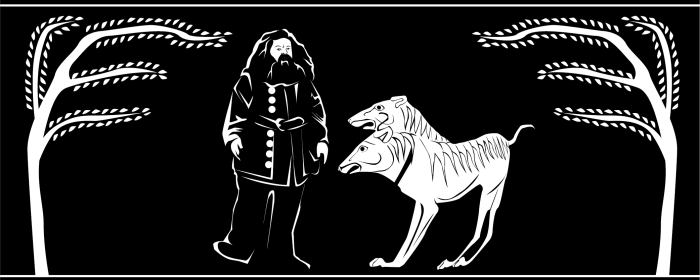
Harry and company don’t steal Fluffy from Hogwarts, nor did they bring him there. Hagrid did, after he bought him from a “Greek chappie” under less-than-legal circumstances (*cough* animal trafficking *cough*). This is a far cry from the violent episode you’re probably imaging with Heracles literally dragging Cerberus out of the Underworld. But Timothy Gantz points out in his 1993 book Early Greek Myththat the iconography of this episode, and its development, depicts a shift in attitude about Heracles’ involvement in this labor. Early vases show him violently storming the Underworld to steal Cerberus; later ones show a more gentle encounter with Persephone allowing Heracles to borrow Cerberus. So while Heracles doesn’t necessarily steal Cerberus every time this episode is recounted, he does participate in the movement of an exotic animal across borders — with no real intention of returning him.
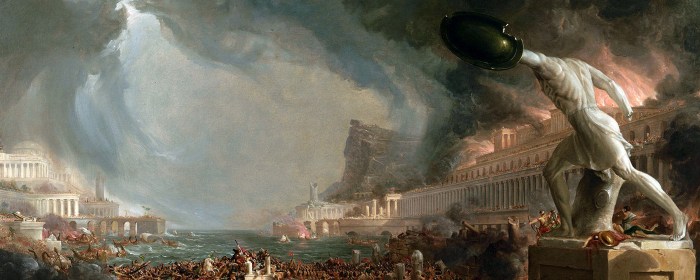
But we shouldn’t pillory Heracles as a proto-animal trafficker. Animal trafficking as we know it, the illicit trade for everything from bushmeat to elephant tusks to illegal house pets, just didn’t exist in the ancient world. What did exist in Antiquity was animal hunting, specifically exotic animal hunting. Think crocodiles from Egypt, panthers from Greece, and elephants from north Africa. Big game from conquered locales played a huge role in the Roman Empire, marching alongside war captives during the imperial triumph. Our earliest account of foreign animals’ participation in processions comes from Josephus’s description of Vespasian’s and Titus’ triumph where “beasts of many species were led along, all decked out with the appropriate adornments” (7.136). Exotic animals, dressed up and subjugated like their human counterparts, were paraded through the streets as prisoners, then later slaughtered in the amphitheater during the ludi, or games. The more fantastic the beast, the better.

So while these fantastic beasts weren’t trafficked, they were displayed as symbols of Rome’s power. And that’s what Cerberus/Fluffy does for his conqueror. Like the emperors Titus and Vespasian, in capturing and later displaying Cerberus to Eurystheus, Heracles didn’t display the might and prowess of the hellhound but his own. Similarly Rowling displays her own literary and cultural prowess when she places Fluffy at the trapdoor leading to the Sorcerer’s Stone. Here, she takes a prominent, seminal image from Western literature and adapts it for her own purposes. And she does so in a pretty clever way by placing Fluffy at the beginning of Harry’s katabasis (a descent into the Underworld) and associating him with heroes like Orpheus, Heracles, and Aeneas.

But who owns Fluffy? The ancient Greeks are no longer alive, and their stories no longer hold any real religious weight. You could point fingers at Rome, but Rome “appropriated” Greek culture long ago (part of a larger drive in Roman society to assimilate conquered cultures). Greek mythology now resides in the foundations of Western literature and art: you can plagiarize its particular iterations but not its general ideas. This is why Greece can argue for the repatriation of the Parthenon Marbles but not, say, the dismantling of Washington, D.C. And yes, on Cerberus you could argue that Vergil cribbed Homer, and Dante Vergil, but whoever came up with Cerberus first is long gone — and he’s ripe for the taking.

[Via]

GABBLER RECOMMENDS: ‘The Whitening Thief Latent White Supremacy in Percy Jackson’ by Maxwell T Paule

This exceptionalism is then explicitly tied to the Greek gods or their direct offspring who serve as the movers and shakers of world events. World War II is described as a “fight between the sons of Zeus & Poseidon on one side, and the sons of Hades on the other,” and among the list of notable divine offspring Riordan lists William Shakespeare, Thomas Jefferson and George Washington. (And yes, it is only white men who are cited as famous demigods in this book.)

Creating a world in which the divine offspring of Greek gods shape the course of western civilization is already sipping at a pretty racist cocktail, but Riordan goes much further when he explains that all of these offspring are considered to be part of the same genetic bloodline. One character specifically says of the dozens of demigods assembled at “Camp Half-Blood” (No, I’m not making this up, that’s… really the name. For real.): “We’re all extended family,” and as Percy meets various campers, he repeatedly notices a “family resemblance.” To put this distinction between demigods and mortals into starker relief, Percy later receives a sword that can harm monsters and demigods, but learns from Chiron that “the blade will pass through mortals like an illusion. They simply are not important enough for the blade to kill.” (Emphasis added to highlight the absurdity of this sentiment.)

In short, Riordan has imagined that western civilization — which he here equates with Civilization Itself — has been shaped by a genetically distinct population with divine parentage who are all, to a person, more important than the entirety of the general population. We’ve now moved from sipping that racist cocktail to slamming the whole damn thing. Especially when you consider that all of these gods and demigods are white, and the only two (yes, two) people of color in the entirety of The Lightning Thief are monsters (Medusa and Charon) with foreign accents (I know).

[Via]

GABBLER RECOMMENDS: Stephen Colbert asks Phoebe Waller-Bridge what The Fox was