On New York Publishing:

“There was another consistent trend I found when interviewing zombie novelists for my article: fervent distaste for the New York publishing industry. And maybe that’s the real reason why publishers and agents never bothered reaching out to them; it’s not that they don’t recognize the sales and money potential for these authors, it’s that they’ve spent the last decade sowing so much bad blood within the writer community that they know approaching them for a book deal is a lost cause. Midlist authors have been burned once, and now with Amazon and their own marketing abilities they can ensure they’ll never be burned again.”

Read the rest here.
[“BLA and GB Gabbler” (really just a pen name) are the Editor and Narrator behind THE AUTOMATION, vol. 1 of the Circo del Herrero series. They are on facebook, twitter, tumblr, and goodreads.]

The problem with literary agents:

“Almost all agencies, he told me, are looking for one of two things: bestseller potential or the possibility of media adaptations…

Let us hope that what that agent told me was a gross exaggeration born out of personal disenchantment. (Everyone in the publishing industry these days seems pretty disgruntled.) After all, good and serious books still manage to get published. Yet after plowing through hundreds of agency websites, I find it hard to believe that many other good and serious books aren’t being stopped dead in their tracks. The nomenclature is the first tip off. Nothing wrong with a little business jargon, but must they call themselves “boutique agencies” or, even worse, “full-service boutique agencies,” which, rather than lending the snob cachet so obviously intended, makes them sound like massage parlors? Far worse than any unfortunate phraseology is the resistance to ideas that contradicts the otherwise high-sounding claims made on so many of the agencies’ websites…

Unlike furiously anti-establishment bloggers, I have no problem with the role played by literary agents as cultural gatekeepers. There are far too many writers out there, and if the good ones are not to be buried by the bad ones, agents have an obligation to recognize and nurture talent that might otherwise go undetected. Economies of scale, to which the publishing industry remains bound, tend to favor the mass publication of trash, and the trash isn’t always so trashy. Only the sourest puritan would disdain genre fiction as inventive as George R. R. Martin’s Game of Thrones saga merely because there are five clichés to a page. But economies of scale also allow for the publication of midlist books supported by all that trash, not to mention by all those indispensible guides to gastro-intestinal disorders, college entrance exams, and the rest.

…As I’ve said, significant books still get published, and there are inspiring literary agents helping to make such works a reality. I’d like to see more of such books, yet the grotesque philistinism of so many literary agencies works against that outcomeand you can’t get to the publishers without the agencies. It’s no accident that much of the best American writing today is to be found not inside the covers of a book but in magazines and online journals.

…So why beat up on literary agencies? Aren’t publishing houses equally risk averse? Possibly so, but in mediating between writer and publisher, the agencies build in an extra layer of exactly what is not needed: more conservatism and caution. Am I naïve in believing that publishing houses might be slightly more receptive to innovation than most literary agencies imagine? A literary scholar of my acquaintance told me he knows of three first-rate studies of W. H. Auden that have no chance of getting out of manuscript. Never mind my book. I want to see the ones about Auden.”

-Stephen Akey. Read the rest.

[“BLA and GB Gabbler” (really just a pen name) are the Editor and Narrator behind THE AUTOMATION, vol. 1 of the Circo del Herrero series. They are on facebook, twitter, tumblr, and goodreads.]

Should you Self-Publish or go Traditional? Infographic:

Self-Publishing or Traditional Publishing: Which Should You Choose?
Courtesy of: The Write Life

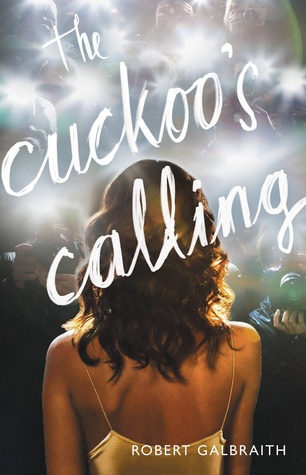
Why didn’t J.K. Rowling self-publish if she wanted her pen name to stay a secret?

So, J.K. Rowling decided to use a pen name (Robert Galbraith) to write her new series of crime novels, the first being The Cuckoo’s Calling. And, if I’m not mistaken, she was a little upset when her lawyer’s wife (?) spilled the beans that it was her.


However, my new thought is: If she wanted her pen name to stay a secret then why not do things on her own? Why did she involve so many people (and their wives)? Why not hire a freelance editor – a really good one. It’s not like she’s strapped for cash to hire out. She could have even paid one she already knew on the side. Cash only. Whathaveyou. She could have afforded to advertise on websites apart from a publisher’s initiative. She had so many options. What’s more, she could have used her pen name to get all the business aspects done and no one would have blinked an eye. No one really knows who they’re working with online [speaking from experience (cough, cough)]. She is certainly smart enough to have done it on her own. She self-published the Harry Potter ebooks, technically. She knows how it works.

Maybe it was in her contract that her next novel(s) go to her previous publisher/agent. Maybe she was just lazy. Maybe she meant for it all to be a publicity stunt. Maybe she hates self-publishing and self-publishers. Maybe she already HAS self-published a novel under another pen name and got it right that time and WE WILL NEVER KNOW SHE’S REALLY THE ONE WHO WROTE IT.

Conspiracy, conspiracy, conspiracy.

But seriously, why?

-Gabs

[“BLA and GB Gabbler” (really just a pen name – singular) are the Editor and Narrator behind THE AUTOMATION, vol. 1 of the Circo del Herrero series. They are on facebook, twitter, tumblr, goodreads, and Vulcan’s shit list.]

all yellow B&N | Amazon | Etc.

Thomas Keneally’s writing advice:

“My aphorism is ‘only begin.’ It’s hard to do if you have a job, but if you can find the time to write a number of days or nights a week, even if it’s just five hundred words – that process will help free up your subconscious. And that’s where so many good ideas come from, so many good characters, so many good connections between characters, so many great plot ideas.  You’ve got to use your conscious mind to refine it all, but a lot of good material comes from the unconscious, and to engage the unconscious you have to write a number of times a week to get the sub-conscious stirred up. I’ve got this idea that all the great stories are in our subconscious somewhere and they’ll come out if only we give them a chance.  Getting it published in the present climate is the heartbreak, but there’s always Amazon.” -Thomas Keneally from here.