“As the proletarian worker is seen by the Marxist to be the workhorse of industrial society, so is Hephaistos the only Olympian God who works…
Hephaistos is a quintessential fringe-person on Olympus…
Hephaistos-consciousness drifts a bit toward the Frankenstein phenomenon: his brother is the monster Typhon, but that goes beyond the fringe of Olympian society.
…The feet of Hephaistos tell volumes: they are turned back to front, and when he walks he goes with a rolling gait that strikes the other Gods as somehow hilarious…On this particular occasion his buffoonery has the effect of keeping the Gods from each other’s throats.
…
The island of Rhodes, Samothrace, Delos, Lemnos were much associated with a race of cretaures variously called Dakyloi, Telchines, Kouretes, Korybantes, or Kabeiroi; on Lemnos they were called Hephaistoi, in the plural. These names refer to dwarf-like servants of the Great Mother Goddess. Invariably, they occupy themselves with metallurgy at subterranean forges, deep in the body of the Mother herself, for the islands were in earliest times identical with the Great Goddess. As the Idaean Daktyloi (‘Daktyloi’ meaning ‘fingers,’ thus as the ‘fingers’ of the Great Goddess), these smith-dwarfs learne dtheir matallurgic arts originally from the Great Mother herself.
…Hera, the Olympian mother of Hephaistos, preserves associations from earlier, pre-Olympian times with beings of Dactylic nature. The importance of this incestuous pattern in the Hephaistian configuration is central.
Invariably the mythical smiths were set apart by some defect or oddity…
…But the fire of Hephaistos is fundamentally not a daytime, Olympian fire but a subterranean fire.
…Baccaccio argued that Greek imagination gave Hephaistos to the apes because apes imitate nature by practicing the arts and crafts.
…The furnace itself is an ‘artificial uterus,’ as Eliade has pointed out; the smith stands in the service of the metallurgic processes that occur in the furnace just as the Idaean Daktyloi served the Great Mother in her labor. Whereas the heroes o fsolar masculinity perform great tasks to free themselves from bondage to the maternal background, Hephaistos remains always in the service of the feminine. And the Hephaistian passion for creative work is deeply of the Mother.
This intimacy between Hephaistos and the feminine world finds mythic expression through an incident of his boyhood. When Hera flings him in disgust from the gates of heaven, the crippled child falls into the sea and is rescued from drowning by the sea-nymphs Thetis and Eurynome, who take him home and nurture him for nine years.
…To the feminine ego the Hephaistian constellation may appear perhaps even more problematical and threatening. Hephaistos connects to her deepest feminine-maternal impulses, yet wants something other than simple maternity….Hephaistos goes contra naturam (his feet turned the wrong way round!) in a way that profoundly threatens to undermine or rechannel the essence of purely natural feminine creativity. Hephaistos may be, therefore, a monstrous offense to feminine naturalism, a sick-making disharmony in the tones that vibrate between feminine ego=consciousness and the Great Mother.
…And yet, in a subtle way unseen by Hera, Hephaistos is a precise response to Athene, from hermaphroditic femininity to hermaphroditic masculinity. If as W. F. Otto says ‘Athene is a woman, but as if she were a man,’ Hephaistos is a man, but as if he were a woman.
Because she sees in Hephaistos a failure, Hera tries again and produces, finally, Ares. Whether or not Ares satisfies her is not said, but he certainly does reflect his mother’s ferocious, battle-crazy animus…
In temperament, too, the brothers are very unlike, Ares thriving on strife and drinking too deeply of the bloody waters of mortal combat, Hephaistos rather the peace-maker who tends to shy away from conflict.
…
Hephaistos, it is told, won the hand hand of Aphrodite as reward for freeing Hera from the chains with which he had bound her. What sort of marriage this was remains in the dark, but it seems quite clear that Hephaistos spent much of his time on Lemnos with his smithy-friends, leaving the voluptuous Aphrodite home alone to mind the house. Her affair with Ares, begun during these interludes and carried on while Hephaisots was introverting at his underground forge, is marked by high erotic intensity: it is a as through in the coming together of Ares and Aphrodite two sexual opposites meet which were simply not present tin the Hephaistos-Aphrodite combination.
Not that Hephaistos is at all effeminate and soft. The many drawings and paintings of him show generally a robust specimen of the masculine sex with heavily muscled arms and thick neck. And he is, after all, God of smiths and craftsmen (‘hardhats’!), probably the least effeminate elements of the population.
Even more than Hephaistos, Dionysos is ‘a man but as if he were a woman.’ But whereas Hephaistos tends to tie down and fixate (a kind of compulsion to ‘show them’), Dionysos is the God of dismemberment, dissolution, and loosening.
…
The mythic ties between Hephaistos and Athene show, both in their quantity and profundity, a deep-going association between these two figures. More than Aphrodite, Athene is the ‘soul-mate’ of Hephaistos. Yet a kind of cloudy mysteriousness shrouds their relationship; no single tradition was ever clearly established on this subject, and so what confronts us is a blurred image based on rumors and conflicting reports…Whether, as in some reports, he marries her or not, the outcome is the same: Hephaistos seeks impetuously and passionately to make love to Athene: at the moment of climax she pushes him aside, and his semen falls to the earth where it impregnates Gaia…” – James Hillman, “Hephaistos: A Pattern of Introversion,” from Facing the Gods.
 “In ancient Greece and Rome, small female figures made of clay, ivory, and even bone had articulated hands and legs fastened using pins or wire so that they could look animated when shaken or moved. In Greece, the figures were often too fragile to be toys; instead, they were used as votives or offerings to the gods placed in household shrines, temples, burial sites, and graves where they could also be protective devices or prized possessions of the deceased. Young girls offered the doll figures to Apollo, Artemis, and Aphrodite before their marriages to ensure that they would attain a healthy, functioning female body that produced and nourished children, the ideal of ancient Greek femininity.

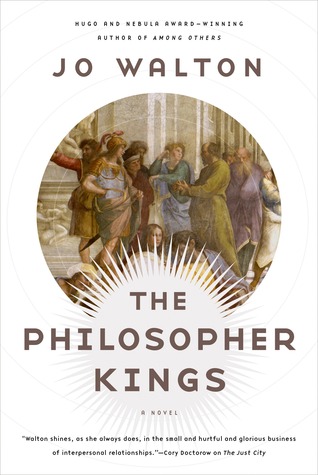 predictions for the number two book in the Thessaly series:

