Circo del Herrero = The Blacksmith’s Circus
[a website for the Editor and Narrator of the Circo del Herrero series]
That one time Neil Cicierega uploaded a version of Harry Potter the world will never forget. 2007.
Also, talk about a “cursed child”:
Where does artistic and academic integrity differ? How to do we define integrity; if we’re making money off something does it become irrelevant? Has anyone asked James Patterson or the Big 5 these questions?
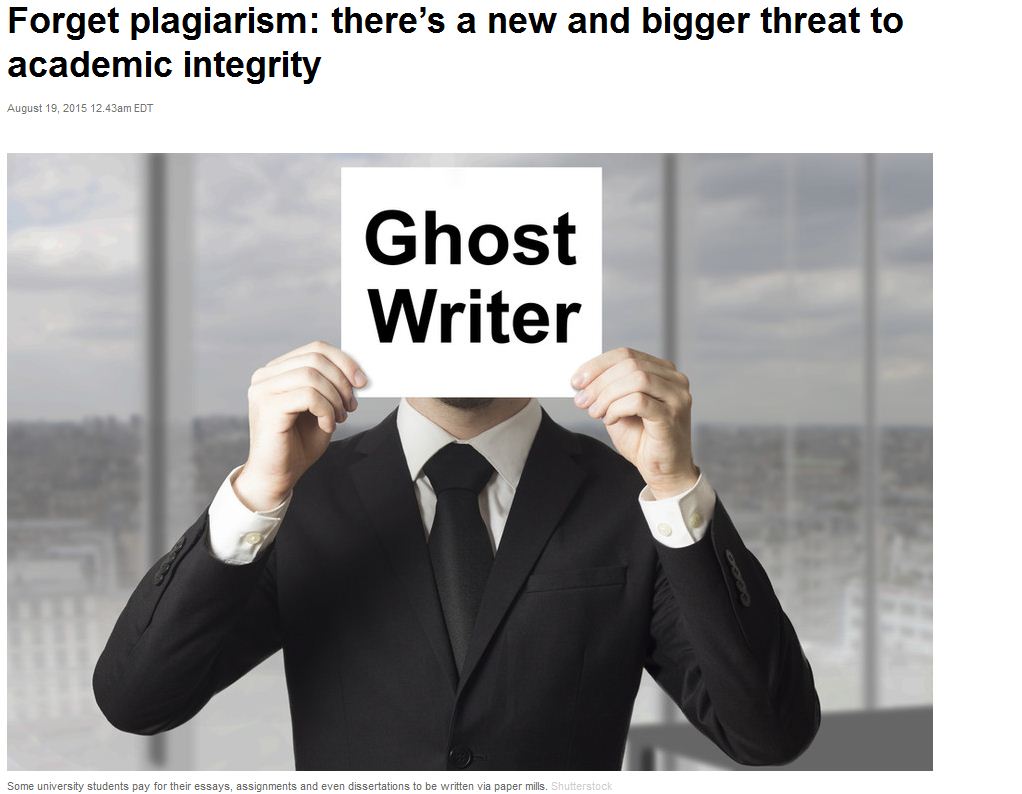
“There is another problem with calling on academics alone to tackle plagiarism. Research suggests that many may themselves be guilty of the same [offense] or may ignore their students’ dishonesty because they feel investigating plagiarism takes too much time.
It has also been proved that cheating behaviour thrives in environments where there are few or no consequences. But perhaps herein lies a solution that could help in addressing the problem of plagiarism and paper mills.”
[Via]
See also: Why Literature Is No Longer Art & On Book Packagers & Art & Honesty
[“BLA and GB Gabbler” (really just a pen name – singular) are the Editor and Narrator behind THE AUTOMATION, vol. 1 of the Circo del Herrero series. They are on facebook, twitter, tumblr, goodreads, and Vulcan’s shit list.]


Indeed, why did J.K. Rowling not think that her screenplay for Fantastic Beasts would be enough to delight readers? We’ve waited this many years for something for her that is “Harry Potter” — that would have been enough. Why would she give up more of her rights and her story to a play that was so sub-par? Did Jack Thorne and John Tiffany blackmail her? Is she trying to prove to us that she isn’t perfect and makes mistakes? That the fanfiction community is her bitch? What?
Also:
Indeed, where is Remus and Tonk’s child? Clearly there were some characters Rowling didn’t allow Jack Thorne to touch.
[“BLA and GB Gabbler” (really just a pen name – singular) are the Editor and Narrator behind THE AUTOMATION, vol. 1 of the Circo del Herrero series. They are on facebook, twitter, tumblr, goodreads, and Vulcan’s shit list.]
That time a TV show led us to believe it was actually going somewhere with an antinatalist hero. 2014.
But at least we got a cool song out of it.