 “The last beachheads of uniqueness have been polluted if not turned into amusement parks–language tool use, social behaviour, mental events, nothing really convincingly settles the separation of human and animal. And many people no longer feel the need for such a separation; indeed, many branches of feminist culture affirm the pleasure of connection of human and other living creatures. Movements for animal rights are not irrational denials of human uniqueness; they are a clear-sighted recognition of connection across the discredited breach of nature and culture. Biology and evolutionary theory over the last two centuries have simultaneously produced modern organisms as objects of knowledge and reduced the line between humans and animals to a faint trace re-etched in ideological struggle or professional disputes between life and social science. Within this framework, teaching modern Christian creationism should be fought as a form of child abuse.
…
The second leaky distinction is between animal-human (organism) and machine. Pre-cybernetic machines could be haunted; there was always the spectre of the ghost in the machine. This dualism structured the dialogue between materialism and idealism that was settled by a dialectical progeny, called spirit or history, according to taste. But basically machines were not self-moving, self-designing, autonomous. They could not achieve man’s dream, only mock it. They were not man, an author to himself, but only a caricature of that masculinist reproductive dream. To think they were otherwise was paranoid. Now we are not so sure. Late twentieth-century machines have made thoroughly ambiguous the difference between natural and art)ficial, mind and body, self-developing and externally designed, and many other distinctions that used to apply to organisms and machines. Our machines are disturbingly lively, and we ourselves frighteningly inert.
…
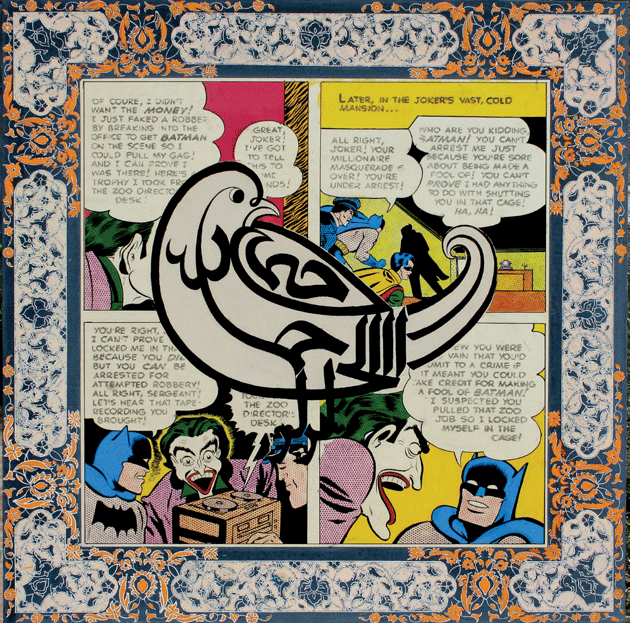
Cyborg writing must not be about the Fall, the imagination of a once-upon-a-time wholeness before language, before writing, before Man. Cyborg writing is about the power to survive, not on the basis of original innocence, but on the basis of seizing the tools to mark the world that marked them as other.
The tools are often stories, retold stories, versions that reverse and displace the hierarchical dualisms of naturalized identities. In retelling origin stories, cyborg authors subvert the central myths of origin of Western culture. We have all been colonized by those origin myths, with their longing for fulfilment in apocalypse. The phallogocentrie origin stories most crucial for feminist cyborgs are built into the literal technologies – teehnologies that write the world, biotechnology and microelectronics – that have recently textualized our bodies as code problems on the grid of C3I. Feminist cyborg stories have the task of recoding communication and intelligence to subvert command and control.
…
Cyborg imagery can help express two crucial arguments in this essay: first, the production of universal, totalizing theory is a major mistake that misses most of reality, probably always, but certainly now; and second, taking responsibility for the social relations of science and technology means refusing an anti-science metaphysics, a demonology of technology, and so means embracing the skilful task of reconstructing the boundaries of daily life, in partial connection with others, in communication with all of our parts. It is not just that science and technology are possible means of great human satisfaction, as well as a matrix of complex dominations. Cyborg imagery can suggest a way out of the maze of dualisms in which we have explained our bodies and our tools to ourselves. This is a dream not of a common language, but of a powerful infidel heteroglossia. It is an imagination of a feminist speaking in tongues to strike fear into the circuits of the supersavers of the new right. It means both building and destroying machines, identities, categories, relationships, space stories. Though both are bound in the spiral dance, I would rather be a cyborg than a goddess.”
[Via]
 Where I disagree with Achebe is that, because of the racism in Heart of Darkness, he refuses to consider it a masterwork. Like all books, Conrad’s novel is limited by his vision, his biases, his worldview. There is no writer with limitless vision, no writer whose worldview is shared by everyone. The problem is not that people read Heart of Darkness as a masterpiece—it is one—it’s that few read books unsanctioned by empire, and even if you wanted to, there aren’t that many available. Today’s imperial censorship is usually masked as the publisher’s bottom line. “This won’t sell” is the widest moat in the castle’s defenses.