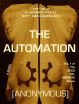
To yourself. Give it to yourself.
Buy it on Amazon– running at $ 6.54 new, currently.
[a website for the Editor and Narrator of the Circo del Herrero series]
Buy it on Amazon– running at $ 6.54 new, currently.

1. Gabbler Recommended things as usual. Like Aziz Ansari’s new Netflix series Master of None.
2. We started reading My Fair Ladies by Julie Wosk. Here’s a quote from it.
3. And, as always, we sifted through our many tweets to bring you only the best for our Tweets of the Week under the Social Medea category/gear, like these little bird songs about nothing.

Horrific Holidays!


A few months back, I recommended season 1 of You’re the Worst. This second season was just as good.

Reviewers keep talking about how “It’s not just about being an anti-RomCom anymore! The depression story line is so progressive!”

But this overlooks what makes that story line work; it has a tight plot, well-written characters, and, most of all, grace when dealing with horrible subject matter (or, just horrible people). It’s just good TV.

Instead of focusing on how well they handled Gretchen’s depression, I want to focus on how truthful the entire story is. No character is entirely without fault, yet you end up loving each one AND their faults.

Watch it.
[“BLA and GB Gabbler” (really just a pen name – singular) are the Editor and Narrator behind THE AUTOMATION, vol. 1 of the Circo del Herrero series. They are on facebook, twitter, tumblr, goodreads, and Vulcan’s shit list.]
Looks fucking amazing. How far away is May again?
Time and time again, the literary establishment seizes on the story of a writer who meets inordinate obstacles, including financial struggles, crippling self-doubt, and rejection across the board, only to finally achieve the recognition and success they deserve. The halls of the literary establishment echo with tales of now-revered writers who initially faced failure, from Stephen King (whose early novel Carrie was rejected 30 times before being published), to Alex Haley (whose epic Roots was rejected 200 times in eight years). This arc is the literary equivalent of the American Dream, but like the Dream itself, the romantic narrative hides a more sinister one. Focusing on how individual artists should persist in the face of rejection obscures how the system is set up to reward only a chosen few, often in a fundamentally unmeritocratic way.
What are we meant to make of the fact that James’s manuscript was rejected 80 times? Sadly, this phenomenon isn’t that uncommon. In fact, there’s a website dedicated to bestsellers that were initially rejected. Was it lack of imagination on the part of those publishers? Was it unconscious bias against a new and unfamiliar narrative—one that they didn’t regard as “mainstream?” Or was it a complex business decision based on multiple factors? As an emerging writer of color, I’m no longer inspired by this narrative. I don’t see much cause to celebrate when writers of James’s profound talent are roundly rejected in the course of normal business.
…
Three years later, I remain perplexed by a system that creates the conditions by which manuscripts that will go on to be lauded are first broadly rejected. While other sectors have certainly overlooked brilliant new ideas and missed opportunities for innovation, this fact isn’t usually romanticized or celebrated. In other sectors this level of oversight would be called “a system failure,” or “inefficiency,” or “failure to innovate.” And policies and practices would be put into place to try to prevent this from happening in the future.
But I don’t see those kinds of self-critiquing evaluative discussions or major efforts to dismantle such systems in the literary world. Just last month, Publishers Weekly’s annual field survey confirmed that 89 percent of the publishing sector workforce is white–exactly the same as the year before. Instead, the focus continues to be on individual persistence against myriad, intangible barriers, rather than on the role of the system in creating and perpetuating many of those barriers, thereby putting the full burden on writers.…
One of the most curious aspects of this mode of operation is that it gives rise to a secondary narrative: that of discovery. Instead of dismantling these barriers, literary power players emphasize how they “discovered” an author, even though that author was knocking at the door of the literary establishment the whole time, just waiting to be seen and let in.
Read the rest at The Atlantic.
[“BLA and GB Gabbler” (really just a pen name – singular) are the Editor and Narrator behind THE AUTOMATION, vol. 1 of the Circo del Herrero series. They are on facebook, twitter, tumblr, goodreads, and Vulcan’s shit list.]