Gabbler Recommends: Joanna Newsom’s interview with Tiny Mix Tapes

JN: My favorite author of all time is Nabokov. I’m really obsessed
with him, actually… all my Nabokov novels are, like, ravaged by notes crammed
into the margins of every page, from readings and re-readings. I especially like
the annotated Lolita, edited by Alfred Appel Jr., because I can just
luxuriate in his neurotic, exquisite feast of footnotes and endnotes… like a
book within a book… amazing.

My other favorite book is The Last Unicorn, by Peter S. Beagle.
Incredible. One of the greatest literary meditations on beauty, sickness,
mortality, loneliness, perfection, defection, bravery/heroism, regret, pity,
purity, magic, and power, of all time. So there. The movie is my
favorite, too, though for slightly different reasons. I actually just discovered
that Mr. Beagle lives in Oakland, which is right near me, so I’m sort of
hoping that somehow, someday, I might get to meet him…that would be so
amazing….

TMT: What music have you been listening to and enjoying as of late?

JN: Well, I honestly don’t listen to a great deal of music. I love
a great [deal] of music, both by folks working nowadays and those from a
ways back…. but I find myself tending toward silence most of the time,
especially if I’m trying to write my own music. I feel too permeable otherwise,
too afraid of being influenced, or of diluting my ideas, or of forgetting them.

[Read the rest.]

[“BLA and GB Gabbler” (really just a pen name – singular) are the Editor and Narrator behind THE AUTOMATION, vol. 1 of the Circo del Herrero series. They are on facebook, twitter, tumblr, goodreads, and Vulcan’s shit list.]
all yellowB&N | Amazon | Etc.

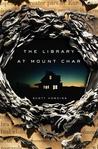
GABBLER RECOMMENDS: The Library at Mount Char

The Library at Mount CharThe Library at Mount Char by Scott Hawkins
My rating: 5 of 5 stars

Gabbler doesn’t just recommend it. Gabbler demands you read it.

View all my reviews

[“BLA and GB Gabbler” (really just a pen name – singular) are the Editor and Narrator behind THE AUTOMATION, vol. 1 of the Circo del Herrero series. They are on facebook, twitter, tumblr, goodreads, and Vulcan’s shit list.]

all yellowB&N | Amazon | Etc.

GABBLER RECOMMENDS: Literary Halloween Ghouls

See the rest. 


[“BLA and GB Gabbler” (really just a pen name – singular) are the Editor and Narrator behind THE AUTOMATION, vol. 1 of the Circo del Herrero series. They are on facebook, twitter, tumblr, goodreads, and Vulcan’s shit list.]

all yellowB&N | Amazon | Etc.

Gabbler Recommmends: Not Here To Make Friends

“That the question of likability even exists in literary conversations is odd. It implies we are engaging in a courtship. When characters are unlikable, they don’t meet our mutable, varying standards. Certainly, we can find kinship in fiction, but literary merit shouldn’t be dictated by whether or not we want to be friends or lovers with those about whom we read.

Writers are often told a character isn’t likable as literary criticism, as if a character’s likability is directly proportional to the quality of a novel’s writing. This is particularly true for women in fiction. In literature as in life, the rules are all too often different for girls. There are many instances where an unlikable man is billed as an anti-hero, earning a special term to explain those ways in which he deviates from the norm, the traditionally likable. Beginning with Holden Caulfield in Catcher in the Rye, the list is long. An unlikable man is inscrutably interesting, dark, or tormented but ultimately compelling even when he might behave in distasteful ways. This is the only explanation I can come up with for the popularity of, say, the novels of Philip Roth who is one hell of a writer, but also a writer who practically revels in the unlikability of his men, their neuroses and self-loathing (and, of course humanity) boldly on display from one page to the next.

When women are unlikable, it becomes a point of obsession in critical conversations by professional and amateur critics alike. Why are these women daring to flaunt convention? Why aren’t they making themselves likable (and therefore acceptable) to polite society? In a Publisher’s Weekly interview with Claire Messud about her recent novel The Woman Upstairs, which features a rather “unlikable” protagonist named Nora who is bitter, bereft, and downright angry about what her life has become, the interviewer said, “I wouldn’t want to be friends with Nora, would you? Her outlook is almost unbearably grim.” And there we have it. A reader was here to make friends with the characters in a book and she didn’t like what she found.

Messud, for her part, had a sharp response for her interviewer. “For heaven’s sake, what kind of question is that? Would you want to be friends with Humbert Humbert? Would you want to be friends with Mickey Sabbath? Saleem Sinai? Hamlet? Krapp? Oedipus? Oscar Wao? Antigone? Raskolnikov? Any of the characters in The Corrections? Any of the characters in Infinite Jest? Any of the characters in anything Pynchon has ever written? Or Martin Amis? Or Orhan Pamuk? Or Alice Munro, for that matter? If you’re reading to find friends, you’re in deep trouble. We read to find life, in all its possibilities. The relevant question isn’t ‘Is this a potential friend for me?’ but ‘Is this character alive?’

It is a seductive position a writer puts the reader in when they create an interesting, unlikable character — they make you complicit, in ways that are both uncomfortable and intriguing.”

-Roxanne Gay, BuzzFeed Books.

Irony in the Irony

‘To begin with, Pearson admitted to using a pseudonym, and his rationale—explained in an “interview” published by Cow Eye Press—echoed Pynchon’s stance on literary fame and public figuredom. “I’ve always had a severe distaste for all the mindless biographical drivel that serves to prop up this or that writer,” said Pearson. “So much effort goes into credentialing the creator that we lose sight of the creation itself, with the consequence being that we tend to read authors instead of their works. In fact, we’d probably prefer to read a crap book by a well-known writer than a great book by a writer who may happen to be obscure.”’

Read the rest.

[The ironic thing is, if he didn’t want his True Author Name to distract from the creation, his Fake Author Name is distracting from it. But perhaps that is the point, as I haven’t read the novel yet (the mystery being potentially so much more entertaining than any fiction right now). -The Author]

See also.

See also. 

See also.