[“BLA and GB Gabbler” (really just a pen name – singular) are the Editor and Narrator behind THE AUTOMATION, vol. 1 of the Circo del Herrero series. They are on facebook, twitter, tumblr, goodreads, and Vulcan’s shit list.]
Author: blablablaandgabbler
[BLA and GB GABBLER are two halves of the pen name behind the CIRCO DEL HERRERO series. Vol. 2, THE PRE-PROGRAMMING out now!]
GABBLER RECOMMENDS: Siri is not ‘genderless’ by Julia Dyck
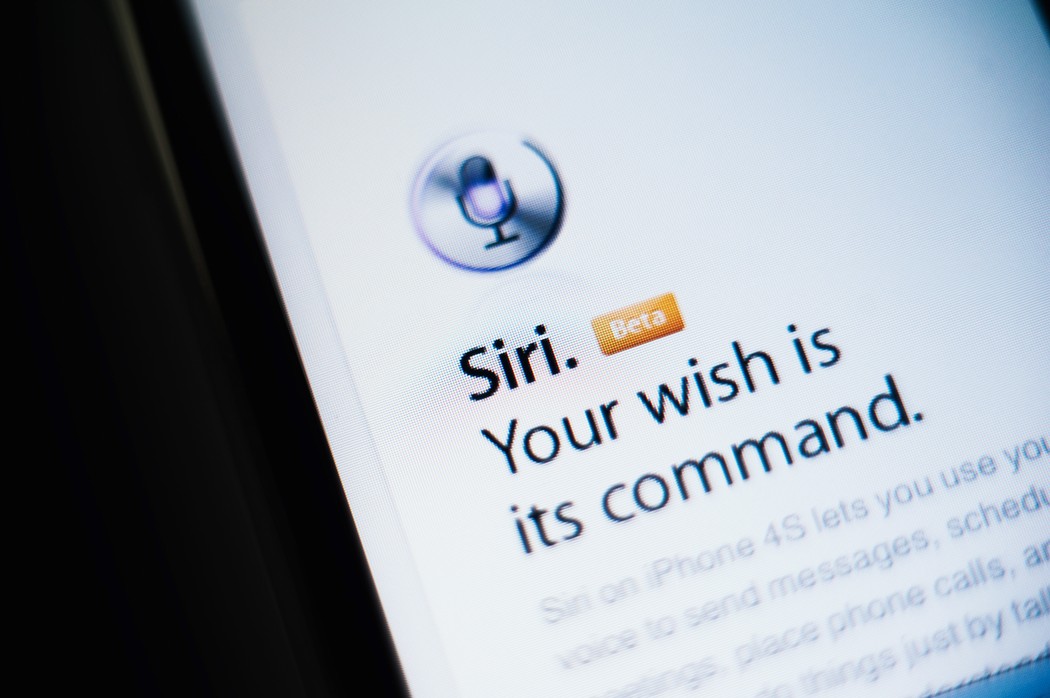
“…Siri’s female voice—which exists on the phone with a lack of explanation—suggests that while our relationships with personal technologies are increasingly intimate, the technologies themselves continue to be read as feminine. From the telephone operators of the 50s and 60s to the disembodied woman announcing the next public transit stop, female voices have been speaking for technologies throughout history while the voices and opinions of women have largely not been heard in the process of designing these technologies.
…
In 1984, feminist philosopher Donna Haraway dreamt up a feminist sci-fi subject in her “Cyborg Manifesto.” Haraway imagined a future where femininity and technology meet to transcend binary gender and sexuality and reimagine intimacy and power in ways that were not previously conceived of. Living in a post-gender world, the Cyborg is a woman-technology hybrid. Able to escape race, gender, class systems, and structured power relations, the Cyborg has acted as a utopian ideal for exploring post-corporeal feminist possibilities.
…
Siri, as well as other digital assistants like Alexa, Cortana, and Google Now, can be seen as an upgrade to these technologies and the actual women they replace. Not only will Siri perform secretarial work from your palm, but she has a clever yet constrained personality. She performs the role of feminized emotional labour that was unable to be replicated by earlier, less sophisticated assistants. Siri fulfills the fantasy of a machine, which performs the labour of women without being affected by stress, relationships, or the burden of a carnal casing.
…
As Jack Halberstam, gender theorist and queer philosopher, suggests, gender itself is technology, and technology is given a female identity when it must seduce the user into thinking of it as desirable or benign. As the telephone operators of the 1950s demonstrate, a good vocal user interface is one that does not draw attention to itself or its labour, one who is there to help us as a faithful chattel, but never an equal.”
[Via]
BookTuber Tuesday – Annalee Newitz on her book “Scatter, Adapt, and Remember”
Aesthetiiic
GABBLER RECOMMENDS: Festivals and Freedom by Amitav Ghosh
“But the controversy also raises questions about another issue that touches directly upon writing: this is the way in which literature is coming to be embedded within a wider culture of public spectacles and performances. This process, which got under way almost imperceptibly, has now achieved a momentum where it seems to be overtaking, and indeed overwhelming, writing itself as the primary end of a life in letters.
A frequently heard argument in favour of book festivals is that they provide a venue for writers to meet the reading public. Although appealing, this argument is based on a flawed premise in that it assumes that attendance is equivalent to approbation. Books, by their very nature often give offence and create outrage, and this is bound to be especially so in circumstances where there are deep anxieties about how certain groups are perceived and represented. In democratic societies, those who are offended or outraged are within their rights to express their views so long as they refrain from violence and remain within certain limits. They are even entitled to resort to demonstrations, dharnas, occupations and the like; in circumstances where any arm of the government plays a role people are entitled also to press for the withdrawal of public funds or sponsorship (something like this has already happened in the US in relation to publicly-funded TV and radio channels). The equation is quite simple: to expand the points of direct contact between writers and the public is also to increase the leverage of the latter over the former.
Writers and readers have not always stared each other in the face. Until quite recently most writers shrank from the notion of publicly embracing their readership. I remember once being at an event with the American novelist William Gaddis: this was in the nineteen-nineties and he was in his seventies then. A major figure in American post-modernism Gaddis had been reared in a very different culture of writing: he would not sign copies or take questions from readers. He refused even to read aloud from his book. After much persuasion he agreed to sit silently in front of the audience while someone else read out passages from his work. When we talked about this afterwards he said quite categorically that he believed that books should have lives of their own and that writers could only diminish the autonomy and integrity of their work by inserting themselves between the reader and the text.”
[Via]