Quotes from Before We Were Trans: A New History of Gender by Kit Heyam

“The second problem with our existing criteria for inclusion in ‘trans history’ is that they privilege an incredibly narrow version of what it means to be trans. The trans histories we tend to tell are those that conform to the trans narrative that’s centered and recapitulated in contemporary media. The non-binary writer and activist Jacob Tobia, in their memoir Sissy: A Coming-Of-Gender Story, has a brilliantly likened this narrative to the game Mad Lib: a story with pre-written skeleton format, where the teller fills in the specifics from a limited list of options.”


“Our inability to know their individual experiences doesn’t exclude these people from trans history. In a period where clothing helped to make gender – when to change your dress was to change your gender – contemporary responses show that the genders of gender-nonconforming people were understood in non-binary ways. This chapter of the past, then, underlies how the way was think about gender has shifted over time, and how we need to be expansive in our thinking about what counts as part of trans history.”


“In other words, inversion wasn’t a synonym for homosexuality: it was a spectrum of gendered and sexual experience, ranging from what we would now call bisexuality to what we would now call trans identity. …But for others, inversion offered a valuable way to make sense of their experience. Some of the ideas about how inversion changed a person’s gender are based on stereotypes – for example, when Krafft-Ebing wrote that the second-degree invert ‘feels himself to be a woman during the sexual act,’ it seems pretty clear that he was equating ‘woman’ with ‘enjoys being penetrated’ – but if those inverts were socialized to believe that those stereotypes were real, seeing being penetrated as an intrinsically female thing, then this would still have affected their sense of gender. Inversion also offered many people who experienced queer attraction an explanation for the discomfort and lack of connection they felt with normative ideas of maleness and femaleness (something that, as I’ll say more about later, still resonates with many gay, lesbian and bi people today). As a result, the idea of inversion was embraced positively by many, persisting in Britain as the dominant way of understanding queer attraction even after Freud’s work offer an alternative model that didn’t connect sexuality with gender.”


“If queer attraction and queer sex had gendered meanings in particular historical periods and cultures, I can’t – no one should – just ignore that because it doesn’t sit comfortably alongside the ideals I personally hold today.”


“It has become commonplace for groups like Indian hijras and Native American/First Nations Two-Spirit people, who cannot be accurately categorized by binary gender, to be namechecked as part of any argument for non-binary recognition. If ‘other’ cultures have non-binary genders, the argument goes, this proves that the Western gender binary is arbitrary. Some trans people have even been prompted to argue that they were not ‘born into the wrong body,’ but ‘born into the wrong culture.’”
When readers aren’t in on the joke/art:

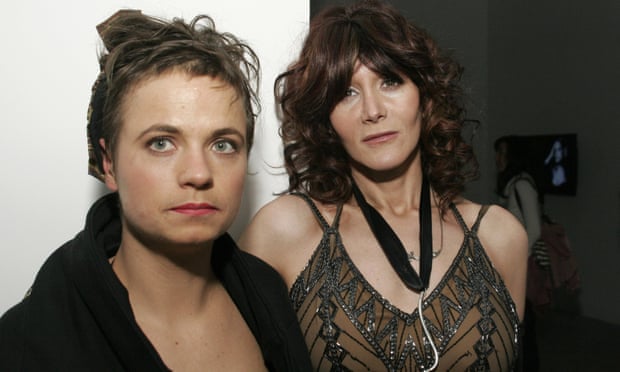
‘Literature is full of impostors and noms de plume, from George Eliot to “Robert Galbraith” (aka JK Rowling), but JT LeRoy is something else. George Eliot never did high-end fashion shoots, or received backstage passes to U2 gigs, or was sent Kabbalah books by Madonna. Some see Albert/LeRoy as a fraud on the make, a player exploiting the kindness and credulity of celebrities, care workers and fans; others regard her as a complex, postmodern artist, whose literary talent justified the masquerade. Was this one of the greatest literary hoaxes of the modern age? Or a strategic confidence trick?

“It was a fiction that went way off the page,” says Jeff Feuerzeig, director of new documentary Author: The JT LeRoy Story. “It raises the question of where does fiction come from? What is fiction? I found that to be interesting.” Having turned down previous approaches, Albert agreed to tell her story to Feuerzeig, partly on the strength of his 2005 music documentary The Devil and Daniel Johnston, but also, she told him, “Because you’re a Jew and you came out of punk rock.”

On being told by JT that he’d never had a birthday present, one of them sent her a present for every year of his life, another bought her a new computer, another cancelled his own Christmas on hearing that JT was going out turning tricks. “This person made me feel like if I didn’t talk to them, they were going to kill themselves,” one of them says. The Cult Of JT LeRoy also goes deeper into Albert’s 2007 trial and conviction for fraud, having signed a contract in JT LeRoy’s name rather than her own, then set up a company in the name of her alias

Laura Albert does not see what she did as a lie or a hoax or a masquerade. She refers to her unmasking as “the reveal”. She has made various justifications for her actions in interviews over the years. One is that JT LeRoy was a valid artistic device – “art should confuse”. Another, which she explains to me via email, is that the LeRoy persona was her own, unique form of therapy.

“JT was asbestos gloves to handle material I otherwise could not have touched,” she writes…

That’s Albert’s ultimate defence: the work itself. “I was writing Jeremy’s [JT’s] story and publishing it as fiction, and everyone who was interested got a real live book in their hands,” she writes. “Since the reveal, I’ve heard from more people who understand the need to hide that I had then, how it freed my voice to have someone who wasn’t me. They recognise the felt authenticity of my fiction, the emotional truths.”

The question is whether or not those books have changed now that their author’s own convoluted story has all but eclipsed them. Is there a difference between “honest” fiction and “dishonest” fiction? LeRoy’s books are being reissued to coincide with the release of Feuerzeig’s documentary, so perhaps we’ll see. In the mean time, Laura Albert is currently writing her memoirs. As herself.’

[Via]

[“BLA and GB Gabbler” (really just a pen name – singular) are the Editor and Narrator behind THE AUTOMATION, vol. 1 of the Circo del Herrero series. They are on facebook, twitter, tumblr, goodreads, and Vulcan’s shit list.]

all yellowB&N | Amazon | Etc.