“On Science, Ancient Philosophy, and Re-Enchanting Nature”

I teach a course called “How to Think About Animals,” in which we read T.H. Huxley’s classic paper “On the Hypothesis That Animals Are Automata and Its History,” published in the journal Nature in 1874. Huxley (1825–1895), nicknamed Darwin’s Bulldog for his fierce defense of Natural Selection against the counter-tide of Victorian sentiment, recounts sympathetically how one of the greatest scientists of the seventeenth century, René Descartes (1596–1650), could have come to the unfortunate conclusion that animals are nothing more than unconscious machines.

Against this notion—a logical outcome of an anthropocentric, mechanistic view of Nature—Huxley argues that nonhuman animals are, rather, like us, “conscious automata.” While Huxley’s conclusions on other matters may fall short of satisfactory, he puts his finger on a button that should signal our attention: consciousness is a real wrench in the works, so to speak.

The perhaps irresolvable problem that besets us all, arguably the font and fundament of all our other problems, is that humans are both a part of Nature, yet, with our capacity for recursive thought and symbolic representation, can also stand apart from it. We need somehow to reconcile both conditions, what we might call singly the human condition.

Ancient thinkers seem to have understood this dilemma. Their injunction to follow Nature’s lead in deciding how to live and what courses of action to pursue is an attempt to resolve it.

To the charge that in valorizing this idea from the past I have resorted to cherry-picking the evidence I would reply that, well, cherries are delicious. Of course we should pick the ripe, low-hanging fruit. And we should preserve it.

[Via]
“Ross Gay: In Praise of (Foot- End- Etc.) Notes”

To my delight I found that McKittrick’s book is thoroughly footnoted, not only in a standard bibliographical way, though some of that, but in a digressive, contrapuntal, sub-argumentative way. By which I mean, quick glance here, it appears as though some of these footnotes are miniature essays, essayettes, which I’m sure complicate, deepen, twist up, who knows, the text. Occasionally these footnotes are a whole page or more. It might be the poet in me, by which I mean the writer obsessed with form in me, who is so interested in and enamored of the oddball overlong footnote, the footnote that calls into question the very idea of the ancillary, just as Jenny Boully’s book The Body, made entirely of footnotes, does. I’m pretty sure the first time I realized I loved footnotes was Junot Dìaz’s book The Brief Wondrous Life of Oscar Wao, where the author pokes his head through the curtains of the novel to give crucial lessons on the history of the Dominican Republic, etc. I was finishing a PhD, which some people call a PhDuh, and was relieved—thrilled really—to see someone making playful use of what is usually a toneless, utilitarian, citational requirement of the form (bad writing). I have lately been writing long footnotes myself—way too long, believe me—in an effort, I realized as they were accruing, to do that thing we do in conversation, which is interrupt ourselves, or interject—oh yeah hold up you need to know this, too—such that, in the best conversations, the ones I love, visiting is the word, you sometimes go as deep as you do far. Another poetic preoccupation, perhaps. Another definition of the lyric, perhaps. That’s my two cents anyway.[1]

[Via]

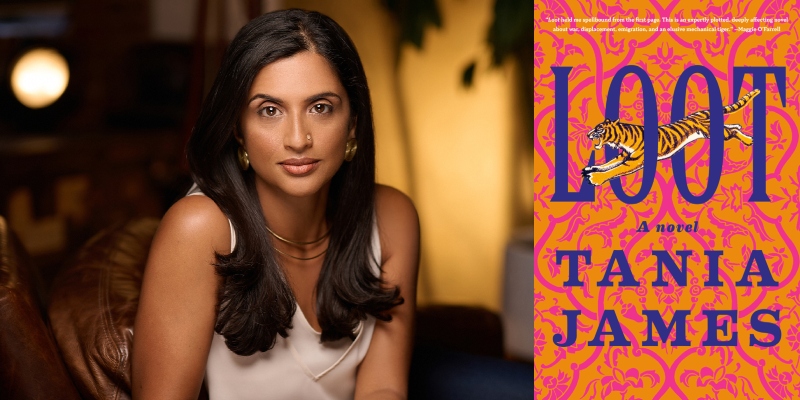
GABBLER RECOMMENDS: “Tania James on Trust, Truth, and the Desire to Create Something That Lasts”

From the podcast:

Tania James: Yeah, I don’t think he actually commissioned the elephant clock. I kind of created this moment. But I think he would’ve really responded to that object that was created and designed by a 12th-century Muslim polymath. His name was Al-Jazari and he is well known in the Arab world. I don’t know. But when I discovered this thing, this was a whole other world of automatons that I had not read about.

I had only associated automatons with Europe, but here he was doing it in the 1100s. And I think that Tipu Sultan would’ve been really attracted to this idea behind the elephant clock, which is that each part of it represents a certain part of civilization, but none of those civilizations he’s mentioning are European. So I felt that he would really have been attracted to that, but I didn’t find that anywhere in the historical record. I just made up that he had that commission.

[Via]

Mentioned in the podcast is Tipu’s Tiger automaton:

Gabbler Recommends: ‘Crafting with Ursula : Lidia Yuknavitch on The Carrier Bag Theory of Fiction’ from Between the Covers Podcast

A Between the Covers Podcast episode from TinHouse.

I liked what Yuknavitch had to say about her polyvocal story, about objects as characters. Particularly as someone who has a polyvocal narrative and objects (no matter how anthropomorphized) as characters in their own novel.


GABBLER RECOMMENDS: ‘Googling Literary Lesbians: On Carson McCullers and the Erotics of Incompletion Sarah Heying Asks “The Sappho Question”‘

“In the study of lesbian history, the desire for proof is generally one the researcher doesn’t expect or even want to have satisfied. Queer research can feel like a secret club, where evidence is stored only within the blood that rushes from our bellies to our cheeks and is exchanged via intuition and rumor. When Shapland finds her proof, several years into researching McCullers, she’s overwhelmed by the verification of that which she’d known all along. Her girlfriend doesn’t share in her sense of shock. “‘Isn’t this what you were looking for?’” she asks. “‘Well,’” responds Shapland, “‘I didn’t think I’d actually find it.’”

…Which is to say, proof might be relevant, but it’s not the point. Often, the act of writing a biography is one on hand an attempt to uncover some previously unseen truth about a person, and on the other an effort to establish narrative or analytical meaning to the messiness of life. For Shapland, it’s more about finding a way to accept the mess in all its absences and utterances and to be honest with herself and her readers about what it is she wants from the archive. Ultimately, Shapland’s book aims to behold a woman she’ll never meet and to love her without laying claim.

The act of piecing ourselves together through each other shows up again and again in lesbian literature. Sure, it can fringe on enmeshment when done possessively and without regard for one’s own motivations, and that’s a stereotype that makes for a handful of easy punchlines. But all jokes aside (cue joke about humorless lesbians), what so often gets overlooked is the great possibility in considering self-creation as a collaborative work of love in which we carry the bodies of others within our own….The woman that the narrator loves is dead, but not. The narrator is the woman that she loves, but not. When we continually re-make ourselves and each other through intimacy, we’re never done becoming.”

[Via]