Quote from Playing Possum: How Animals Understand Death by Susana Monsó

Anthropomorphism also needs to be distinguished from anthropocentrism. In its most general sense, anthropocentrism refers to a bias that leads us to consider our own species as the center of the universe. It’s the tendency to think that, given that we are the most important thing from our perspective, we must be the most important thing in general.

Anthropocentrism can manifest in different ways depending on the context. Most of our cities, for instance, follow an anthropocentric urban planning, for they systematically ignore the many nonhuman species with whom we share a space; not just our pets (which are for the most part not massively taken into account either), but the thousands of wild species that inhabit and are adapted to the urban environment, as is the case of rats, cockroaches, pigeons, sparrows, squirrels, racoons, etc.

In science, anthropocentrism also manifests in various ways. Although according to its popular image science offers objective facts about the world, the truth is that this is an activity that is carried out by humans, and as such it is also a target for our biases and is heavily influenced by our values. The topics that we decide to study, the ones that have the greater chances of getting published or receiving funding, are not random, but rather obey our human interests. For this reason, the relevance of studying the mind and behavior of animals is often justified with reference to some human value, like our interest in uncovering the evolutionary origin of our psychological capacities or what distinguishes our mind from that of the remaining species.

Comparative thanatology cannot escape the influence of our human values either. In this discipline, the study of animals’ behavior and reactions surrounding death is often justified by an appeal to the importance of discovering the evolutionary origin of our own funerary practices and attitudes toward death. Even though this is of legitimate interest, it’s important to point out that a question doesn’t necessarily become more interesting when it can be explicitly related to us and our values. Perhaps you, the person reading this, find the question of how animals experience and understand death fascinating in and of itself, independently of what it can tell us about ourselves. If that is the case, welcome to the club.

In addition, we must remember that the study of other animals’ behavior doesn’t t have to give us clues about the evolution of our own capacities, even in the case of closely related species, such as the other great apes. Chimpanzees, bonobos, orangutans, and gorillas are not “less evolved” humans. They are species with whom we share common ancestors, but at no point in our evolutionary past were we chimpanzees, bonobos, orangutans, or gorillas. Consequently, even though studying them can give us some answers about our own evolution, they are not a direct window into our evolutionary history.

Anthropocentrism is a bias that leads us to believe that we are the center of the universe, but it also works like a pair of innate blinkers that prevent us from seeing beyond our own perspective. This anthropocentrism is implicit in a great deal of studies in comparative psychology, which don’t just aim to answer questions with our interests in mind, but also often follow methodologies that highlight the difficulties we have in abandoning our sapiens way of seeing the world. – Playing Possum: How Animals Understand Death by Susana Monsó
 

GABBLER RECOMMENDS: Brittany Broski’s mythology kick

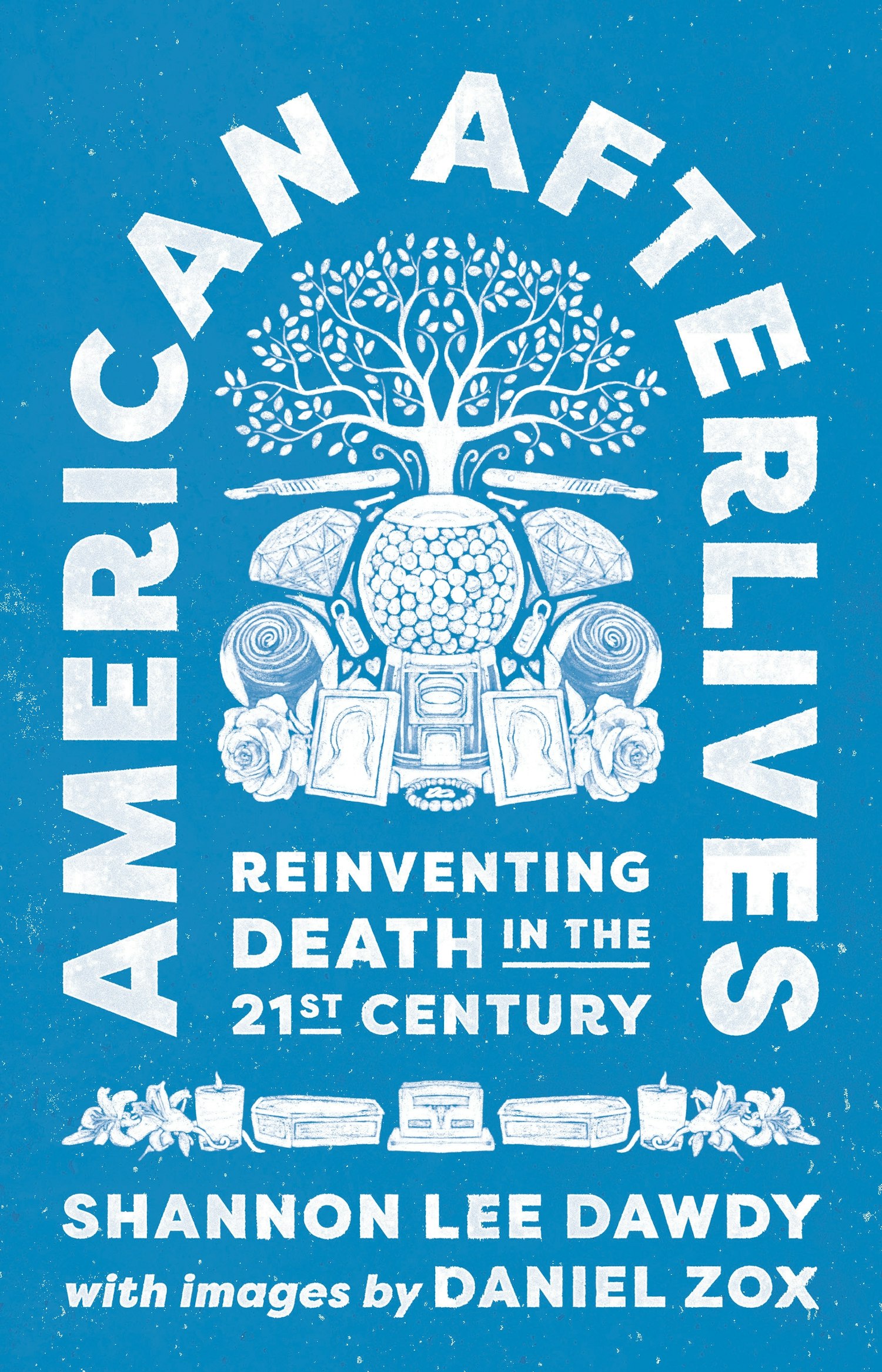
Quotes from: American Afterlives: Reinventing Death in the Twenty-First Century by Shannon Lee Dawdy

“Scholars and social commentators have pointed to the embalming ritual as evidence for a propensity to deny death by re-creating a lifelike body, another case of American exceptionalism. Historian David Sloane calls it the ‘death taboo.’ But Beverly told me that viewing or touching the embalmed body does quite the opposite–it helps overcome death denial. I will return to this puzzle and how I have come to doubt strong versions of the ‘death denial thesis,’ but first I want to dig into the historical roots of embalming to better understand how Americans became neo-Egyptians in the first place.

President Lincoln’s embalmed and cosmeticized body was placed on a funeral train that made several stops on its two-week journey from Washington…How much this corpse viewing was driven by respect for the martyred president, versus fascination with the novelty of embalming, is impossible to say. But the second motivation should not be discounted…During this same period, ‘Egyptomania’ had captured the American imagination. The display and ceremonial unwrapping of Egyptian mummies was itself a popular spectacle in the nineteenth century…The link between Egyptomania nd the rise of embalming is no trivial coincidence. Early embalmers I interviewed referred seriously to ancient Egyptians as their forerunners, if not forefathers.

When I started this project, I had no idea I was going to run into magicians and ancient Egyptians.

Despite his alter to the Egyptian gods (which we did not discuss), Michael say that modern embalming is not a form of mummification for eternity. The preservation it provides is temporary–a matter of years, maybe decades, but not centuries or millennia. I have come to realize that this is another big disconnect between professional and the public understandings of the embalming practice. Most laypeople seem to assume that the embalming will prevent decay of the body indefinitely. The actual time frame, as with any archaeological deposit, depends on local environmental condition…Materially, its primary purpose resides in the funeral ritual.

Cremation can be romantic. In 1822, the poet Percy Shelley was cremated on a pyre on a beach in Italy by Lord Byron and friends after a boating accident. In death as in life, Romantics wanted to bring back what they thought were the nobler practices of ancient Greece and Rome. The embrace of creation by educated Europeans started to chip away at cultural (and largely Christian) biases against it, but creation did not take off until the later nineteenth century…Historian David Arnold argues that another significant factor in its adoption was the strident defense of traditional cremation by Indian Hindus, Buddhists, and Sikhs against critiques of the colonial British government. The debate led to a greater public awareness of cremation and a practical need to accommodate the Indian diaspora.

Cremation as a human funerary practice runs deep into antiquity. Archaeological evidence indicates that ancient Australians were practicing cremation at least twenty thousand years ago, possibly much longer….In Bronze Age and Iron Age Europe, Anglo-Saxons and other ‘barbarians’ practiced cremation before Christianity and its peculiar cult of the revenant dead wiped out this form of disposition (it was thought that cremated bodies could not be resurrected on Judgment Day). Protestantism, neo-paganism, secularism, and the influence of immigrants from the colonies opened the way for cremation to return to Europe in the nineteenth century. The revival of cremation also meant the return of fancy Roman-style urns. Shelley would have been pleased.”

From Richard Kearney’s “Melancholy: Between Gods and Monsters.”

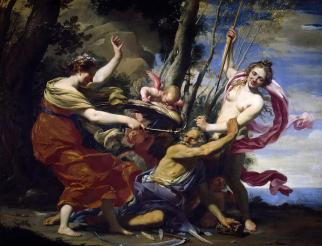
“…In short, sexual desire for female beauty was intimately linked, in our mythological unconscious, with an initial ac of sundering and separation. Without castration there could be no sense of that lack, difference or otherness which is so indispensable to the workings of eros. Indeed, we find countless allusions to the amorous, venal and sometimes lecherous character of the melancholic throughout the ages.

The identification of Kronos-Saturn with ‘time’ is more than a phonetic coincidence (Kronos-chronos). The [melancholic] is intimately related to the dread produced in mortals by the scythe of Time the Reaper — i.e. by that separation of all separations, death. The ‘chronological’ character of melancholy is thus captured in Kronos’ threefold act of devouring, substitution and castration, each of which represents a fundamental aspect of time. Indeed another way to read this myth would be to emphasize the futility of Kronos’ efforts to remain eternal by reversing time, drawing is progeny back into himself: an act of monstrous self-absorption punished by the inevitable passage of time as both substitution  (one moment replacing another) and castration (the cutting of the illusion of phallic self-sufficiency).


In other words, to the extent that Kronos destroys he is himself destroyed. Kronos is the destroyed destroyer, just as he is the castrated castrator. This paradoxical character of the Kronos-Saturn figure is further underscored, moreover, by the fact that the experience of sundering can also give rise to reactivity. The inaugural myths of castration lead not only to the survival and empowerment of the greatest Olympian deity — Zeus — but also to the birth of beauty and desire (Venus rising from the waves bloodied by castrated genitals). In this reading cyclical time which seeks to return itself gives way to chronological time which acknowledges the ineluctability of historical transience and mortality. It is the virtue of wisdom, capable of accepting the ruptures of mortal existence, which lies at the root of the visual representations of Saturn as elderly sage and resigned soverign. Disenchanted with the narcissistic ideal of self-plenitude, the creative melancholic is one who re-experiences the world without illusion, that is, with eyes capable of seeing otherwise.

According to this Saturnine narrative, in sum, the artist is one who lets go of the ego in order to rediscover him-or herself anew. Working through melancholy towards a form of productive mourning, the artist becomes like a wise Olympian deity, a curious ‘gaiety transfiguring all that dread’ (Yeats). This more upbeat legacy runs from certain ideas of classical antiquity up to the middle ages an early Renaissance, as witnessed in countless sculptures, frescoes, murals and portraits depicting Melancholia as creative thinker, head on hand, calmly embracing death. This is the melancholic mind that authentically accepts its ‘being-toward-death’ (Heidegger). Or to use psychoanalytic language, it is the nationalistically wounded soul that has undergone ‘symbolic castration’ and acknowledged its incorrigible and ultimately insatiable condition as ‘want-to-be’…The melancholic moves from destruction to creation by accepting his/her own death.

Darkness encountered and traversed becomes a source of new light, a ‘black sun’. Hence the proliferation through the Western visual tradition of images of the castrated-castrating Kronos holding aloft a sickle, scythe or dragon of time biting its own tail. Unless, these symbols suggest, we embrace our mortality as a limit-experience of irreversible loss, we cannot transform the disease of melancholy into healing insight.”  – Richard Kearney in Strangers, Gods and Monsters. 

See also: On the Sacrifice of the Scapegoat. 

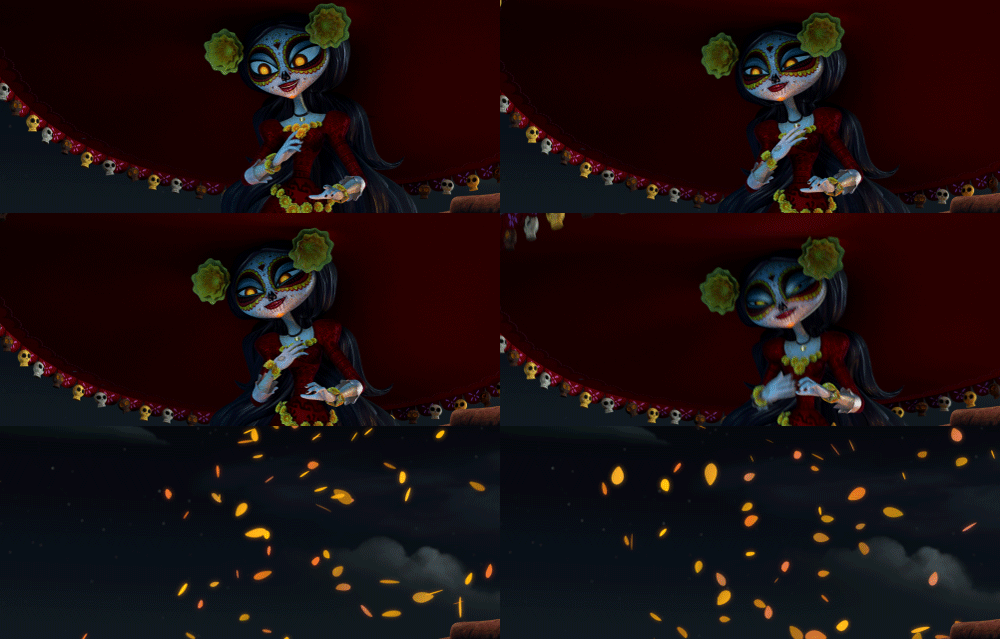
Gabbler Recommends: The Book of Life


An adorable and beautiful film.

What are you waiting for? Go watch it now!

[“BLA and GB Gabbler” (really just a pen name – singular) are the Editor and Narrator behind THE AUTOMATION, vol. 1 of the Circo del Herrero series. They are on facebook, twitter, tumblr, goodreads, and Vulcan’s shit list.]

all yellow B&N | Amazon | Etc.