On interesting characters

“In adapting Roth’s approach to my writing, I set out some heuristics—my characters would be 1.) exactly as smart as me, 2.) about as privileged, and 3.) freely awful. They’re millennials. Cory is self-righteous, Linda a malicious liar, Henrik a pitiful sad-sack. Then there’s Will, who, as the only Asian protagonist, I expected readers to identify with me. I’d always played it safe by strapping the neutralizing uniform of whiteness onto my characters, fearing that anything unusual an Asian character did would be attributed to their Asianness (and mine). Well, Will is Asian, and he’s a real dick. He surveils and manipulates his girlfriend, is ugly-rich, drinks, binges on porn, and nurtures a self-centered preoccupation with his own oppression that leads him to minimize everyone else’s. On top of that, he embodies just about every Asian male stereotype there is. Like Roth, rather than avoid unflattering comparisons and stereotypes, I booby-trapped them; and the impossibility of constructing an authentic identity was no longer an obstacle, but a subject.

Freedoms are habit-forming. Once I let go of any pretense of knowing other people and any interest in concealing my flaws, I saw at once how my less desirable qualities could be leveraged—that, for instance, being the most judgmental prick on Earth suited me to satire, or that my self-centeredness offered material for farce I could never touch before, because nothing dulls comedy like respectability. I set out to write with as much love, empathy, hope, and imagination as hate, spite, pessimism, and self-indulgence. And so the book got written.

I’m not saying unsavory characters automatically make for good writing; it’s just as easy to go the other way and make Bret Easton Ellis/Chuck Palahniuk shadow puppets (dark, flat, silly). The same usually goes for attempts to look intellectual, radical, manly, “brave” (in the sense of confessional), self-deprecating, hip; in each case, the project is branding, not art. I’m saying that to try to write your characters in such a way as to avoid or shape any comparisons to you, and worse, to call this empathy, is to forfeit the honesty that readers deserve in lieu of truth.”

[via]

[“BLA and GB Gabbler” (really just a pen name – singular) are the Editor and Narrator behind THE AUTOMATION, vol. 1 of the Circo del Herrero series. They are on facebook, twitter, tumblr, goodreads, and Vulcan’s shit list.]
all yellowB&N | Amazon | Etc.

On the state of fan fiction

Of course, Clare was reviled—and adored—in Harry Potter fandom even before the plagiarism charges against her came to light. And fan fiction itself has come a long way, spawning numerous real-world stars, fan writers such as E.L. James who move on to publish best-sellers. Clare was among the very first to do this. But the prospect of going pro and striking it rich seems to many fan-fiction writers like a serpent in the garden, corrupting what once felt like an idyllic, egalitarian gift-economy of like-minded dabblers. Once, fandom was a destination in itself; now it’s just another stepping stone for ambitious writers with their eyes on a richer prize. Like so much of the idealism of the early Internet, this, too, has become an offshoot of the marketplace. “I think what you don’t understand,” one friend told me when I expressed bafflement that Clare’s fellow fan-fiction writers didn’t view the popularity of her books as a feather in their collective cap, “is that a lot of them just feel used.” When I admitted that didn’t make sense to me, she added, “It’s hard to explain, but that doesn’t mean it isn’t real.”

[via]

[“BLA and GB Gabbler” (really just a pen name – singular) are the Editor and Narrator behind THE AUTOMATION, vol. 1 of the Circo del Herrero series. They are on facebook, twitter, tumblr, goodreads, and Vulcan’s shit list.]
all yellowB&N | Amazon | Etc.

Every day is a GIF:

FAQ update: Gender and Pronouns

We just updated our FAQ to reflect a question we’ve been getting a lot:

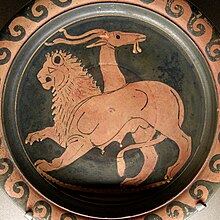
Why do you guys use “s/he” or “he/she” so much when talking about each other? Why not use only gender-neutral pronouns such as “they/their”? That’s a good point. The main reason is the Narrator and I are cis-gendered. We don’t want to abuse a gender-neutral pronoun because, when we do finally reveal who we are, we don’t want to undermine a whole group of people who do use the they/their. It’s not our pronoun and we want to respect those who do identify with they/their. Though, you may see us drop a few they/theirs in the novel because English is an illogical chimera of language.

Hope this clarifies some things for you, Reader.

chimera

The English Language, basically. 

[“BLA and GB Gabbler” (really just a pen name – singular) are the Editor and Narrator behind THE AUTOMATION, vol. 1 of the Circo del Herrero series. They are on facebook, twitter, tumblr, goodreads, and Vulcan’s shit list.]

all yellowB&N | Amazon | Etc.

The dark version of the Manic Pixie Dream Girl:

“Although Sylvia Plath was a fiercely brilliant poet and novelist, she is arguably most famous for her suicide. The most common cultural association that we have with her is an image of a young woman with her head in the oven. Her final breakdown and death have overshadowed her life and accomplishments, and her name has become a placeholder for a specific type of tragic beauty. When Adams sings that he wants a Sylvia Plath, he does not mean that he wants the reality of someone experiencing a depressive episode or suicidal ideation. He means that he wants a woman who is sort of sad but in a wild, impetuous, sexy way that will somehow benefit him. He doesn’t want a real person; he wants a Sexy Tragic Muse.

The Sexy Tragic Muse can be found in music, film, literature and pretty much every other form of media. She’s not dissimilar from the Manic Pixie Dream Girl – in fact, I would argue that there is some crossover between the two tropes – but she is also very much her own distinct type.  She is usually young, and nearly always white.  She’s often portrayed as being hyper-sexual – she’s the type that 30 Rock’s Jack Donaghy was referring to when he said “Emotionally unstable women are fantastic in the sack.” She’s damaged, often as a result of sexual assault or other abuse by men. Her life carries with it some kind of Deep Lesson, usually a lesson that a male protagonist needs to learn.

The Sexy Tragic Muse is Joon in Benny & Joon, a mentally ill woman who, to paraphrase a wonderful review by Carleen Tibbets, turns out not to need professional help so much as she needs a boyfriend. She’s Marla in Fight Club, with her eerie stare and penchant for attending support groups for illnesses that she doesn’t have. She’s Gia Carangi inGia, a movie whose tagline is “Too Beautiful To Die, Too Wild To Live.” She’s Babydoll in Sucker Punch, a pigtailed ingénue in lingerie who sexily pouts her way through an escape from a psychiatric institution. She’s Suzanne in Leonard Cohen’s Suzanne, a woman who is “half crazy” but who can “[touch] your perfect body with her mind.”

The Sexy Tragic Muse fetishizes women’s pain by portraying debilitating mental health disorders filtered dreamily through the male gaze. The trope glamourizes addiction and illnesses like depression, bipolar disorder, and schizophrenia – diseases that are distinctly unglamorous for those of us who live with them. The Sexy Tragic Muse is vulnerable, and her vulnerability is sexualized. Her inability to properly care for herself or make decisions on her own behalf is presented as being part of her appeal.

And perhaps this is the most frustrating thing about the Sexy Tragic Muse – the fact that this character type seems to be a neat way of removing a woman’s agency without the film or book or song coming across as overtly misogynistic. She occupies the intersection of ableism and sexism, and her mental illness is portrayed in a way that makes it commendable, even necessary, for others to care for her. We feel gratitude to the men that step up and save her, because she obviously cannot save herself. We feel empathy for the men that break up with her, because we see that she is difficult and volatile. We never get to see things from her perspective; often it is implied that this would be impossible, because her perspective is too confused and fractured.”

Read the rest. 

[“BLA and GB Gabbler” (really just a pen name – singular) are the Editor and Narrator behind THE AUTOMATION, vol. 1 of the Circo del Herrero series. They are on facebook, twitter, tumblr, goodreads, and Vulcan’s shit list.]

all yellowB&N | Amazon | Etc.