“Of all the chapters of religious anthropology probably none has tarried to the same extent as studies in the field of mythology. From a theoretical point of view the situation remains very much the same as it was fifty years ago, namely, a picture of chaos. Myths are still widely interpreted in conflicting ways: collective dreams, the outcome of a kind of esthetic play, the foundation of ritual…. Mythological figures are considered as personified abstractions, divinized heroes or decayed gods. Whatever the hypothesis, the choice amounts to reducing mythology either to an idle play or to a coarse kind of speculation.
…
Mythology confronts the student with a situation which at first sight could be looked upon as contradictory. On the one hand, it would seem that in the course of a myth anything is likely to happen. There is no logic, no continuity. Any characteristic can be attributed to any subject; every conceivable relation can be met. With myth, everything becomes possible. But on the other hand, this apparent arbitrariness is belied by the astounding similarity between myths collected in widely different regions. Therefore the problem: if the content of a myth is contingent, how are we going to explain that throughout the world myths do resemble one another so much?
…
A remark can be introduced at this point which will help to show the singularity of myth among other linguistic phenomena. Myth is the part of language where the formula traduttore, tradittore reaches its lowest truth-value. From that point of view it should be put in the whole gamut of linguistic expressions at the end opposite to that of poetry, in spite of all the claims which have been made to prove the contrary. Poetry is a kind of speech which cannot be translated except at the cost of serious distortions; whereas the mythical value of the myth remains preserved, even through the worst translation. Whatever our ignorance of the language and the culture of the people where it originated, a myth is still felt as a myth by any reader through- out the world. Its substance does not lie in its style, its original music, or its syntax, but in the story which it tells. It is language, functioning on an especially high level where meaning succeeds practically at “taking off” from the linguistic ground on which it keeps on rolling.
…
Prevalent attempts to explain alleged differences between the so-called “primitive” mind and scientific thought have resorted to qualitative differences between the working processes of the mind in both cases while assuming that the objects to which they were applying themselves remained very much the same. If our interpretation is correct, we are led toward a completely different view, namely, that the kind of logic which is used by mythical thought is as rigorous as that of modern science, and that the difference lies not in the quality of the intellectual process, but in the nature of the things to which it is applied. This is well in agreement with the situation known to prevail in the field of technology: what makes a steel ax superior to a stone one is not that the first one is better made than the second. They are equally well made, but steel is a different thing than stone. In the same way we may be able to show that the same logical processes are put to use in myth as in science, and that man has always been thinking equally well; the improvement lies, not in an alleged progress of man’s conscience, but in the discovery of new things to which it may apply its unchangeable abilities.”
“The Structural Study of Myth” by Claude Lévi-Strauss
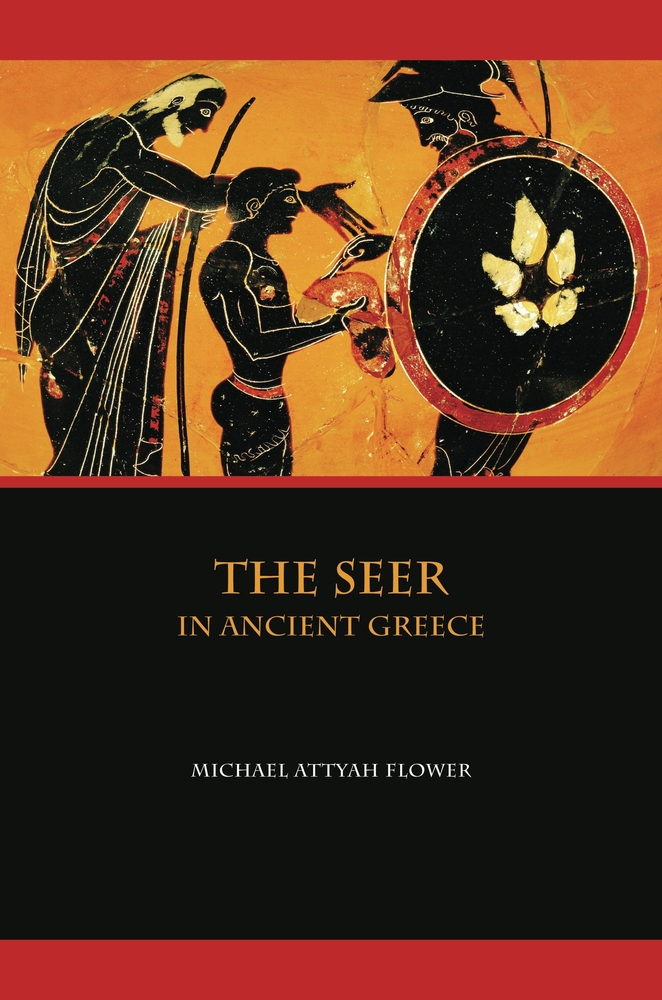 ‘What the gods specifically desire from mortals via sacrifice is “honor, prerogatives, and gratitude.” Thus those priests and seers who attempt to bind the gods practice a perversion of religion, and in his Laws Plato specifies the death penalty as the punishment for an mantis who attempts to harm someone through spells and incantations. Plato’s formulation is problematic, however, because his religious beliefs were not necessarily those of the average Greek, or even Athenian, and his distinction between religion and magic is surely far more narrow than the popular one, insofar as most Greeks even thought about the distinction at all.
 “Dystopian fiction is animated by fear, but postapocalyptic stories almost always harbor a kernel of desire. Dystopia is a form of criticism: It sounds a klaxon, urging society to course-correct before it’s too late. But the postapocalyptic narrative is fatalistic and romantic. Civilization’s coup de grace might come, as 20th-century science-fiction novelists anticipated, in the form of nuclear war, or—today’s preference—as a pandemic or devastating climate change. The carnage will certainly be epic. But afterward comes the possibility of a return to what really matters and a clean slate on which to draw society anew. Even at their most seemingly nihilistic, postapocalyptic scenarios invoke the persistent, cherished American myth of the frontier, that place where a man can prove himself through hard work and violence, free from the rules, hassles, and compromises imposed by civilization.
 ‘FRANZ KAFKA NEVER left home. Outside of a year in Berlin and a stay at a sanatorium near Vienna before his death, he lived in the same part of Prague — mostly at his parent’s house — for all 40 years of his life, worked as a clerk at the Workers’ Accident Insurance Institute, and never married.