“Amun’s nature tended toward syncretism, and the name Amun-Re appeared on a stela erected by the governor Intef of Thebes before 2000 BCE. Amun’s growth was accelerated when Amenemhet I seized power in Thebes and founded the twelfth dynasty in 1991 BCE.
The hidden aspect of Amun enabled him to be easily syncretized and associated with other deities. Amun was identified with Montu and he soon replaced Montu as protector of Thebes. As the power of Thebes increased, Amun’s identification with Re became more pronounced. That identification was probably encouraged by the moving of Egypt’s capital from Thebes to Itjtawy, at the apex of the Nile Delta, under Amenemhet I… Amun and Re were thereby placed in closer contact, and a syncretism of the two would have been very astute, both theologically and politically. The syncretism did not imply the absorption of one deity by the other; nor did it imply the creation of yet another god. Amun and Re still remained as separate hypostatic deities, but their syncretism was an expression of the unity of divine power.” – Vincent Arieh Tobin, The Ancient Gods Speak
In our third novel, there is a character who is an amalgamation of various divinities — a chimera of discarded parts, mainly from Egyptian gods, that forms what basically amounts to a griffin. In my attempts to fact-check the Narrator, I found this book. This quote, I think, captures how it is possible for him to be more than one god, yet have those gods still exist apart from him. Fascinating stuff.
-Gabs
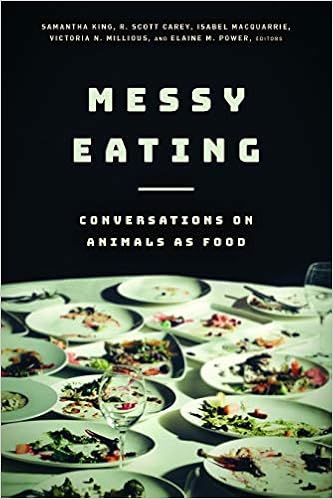 “She describes her move to transition, and he replies something along the lines of, ‘Well, thanks for telling me, and when did you make this decision?’ And she responds, ‘It was more of an erosion than a decision.’ I think of that as an example of trans affect, as ceding to a bodily movement, rather than, ‘Well, I’m going to decide to put on some different clothes tomorrow.’ It’s also notable because one of the things you’ll notice if you start reading a lot of trans memoirs, as I did, is up until probably the late 1990s they all sound the same. This is because there was, and still is, a lot of medical gatekeeping, where you have to present with this particular narrative of being ‘trapped in the wrong body’ for a long time. You also had to identify as heterosexual. You had to use that specific language adamantly, and if you didn’t, then you didn’t get hormones or any other kind of treatment. So in order to medically transition, people ended up telling these stories I think – probably as expected – internalizing them, even if they weren’t necessarily true to their experiences. So one of the ways I tried to intervene in my dissertation by reading for trans affect was to examine how there is still stuff going on in the confines of language that seems, on its surface, very limiting.” – Harlan Weaver, “Interspecies Intersectionalities,” Messy Eating
 ‘“The elements of steampunk are all about exposing the inner workings of technology,” explains Jake von Slatt, proprietor of the Steampunk Workshop and perhaps the best known of the steampunk designers. “It’s about using design to make the working of technology scrutable through an object’s aesthetic. So many of the objects in today’s world are black boxes, and what happens inside them is totally invisible. So steampunk was all about revealing those inner workings, and empowering people to understand technology again, even if it was only fictitiously.”
 “I’m sorry that we, as a literary culture, seem to be losing faith in the omniscient narrator. People say, “Oh, I need to know who’s telling the story, otherwise I don’t know what to believe. I don’t know whether to believe it at all.” And another thing we see more and more of is the bloody present tense. I hate books written in the present tense! I refuse to read them. Actually, no, I don’t refuse to read them, because there have been some very fine books written in the present tense, and by design I might have used the present tense. But I think it’s kind of an abdication of narrative responsibility, because we know it’s not happening now, and she’s not coming downstairs now and looking out the window now. It’s already happened! It’s been written about and printed!