GABBLER RECOMMENDS: The Alchemist Cookbook

It is weird. Strange. Odd.

And good.

This unclassifiable miniature involving a man in a trailer in the woods trying to contact the Dark Lord is as funny and distinctive as it is near-plotless.’ [via]

[“BLA and GB Gabbler” (really just a pen name – singular) are the Editor and Narrator behind THE AUTOMATION, vol. 1 of the Circo del Herrero series. They are on facebook, twitter, tumblr, goodreads, and Vulcan’s shit list.]

all yellowB&N | Amazon | Etc.

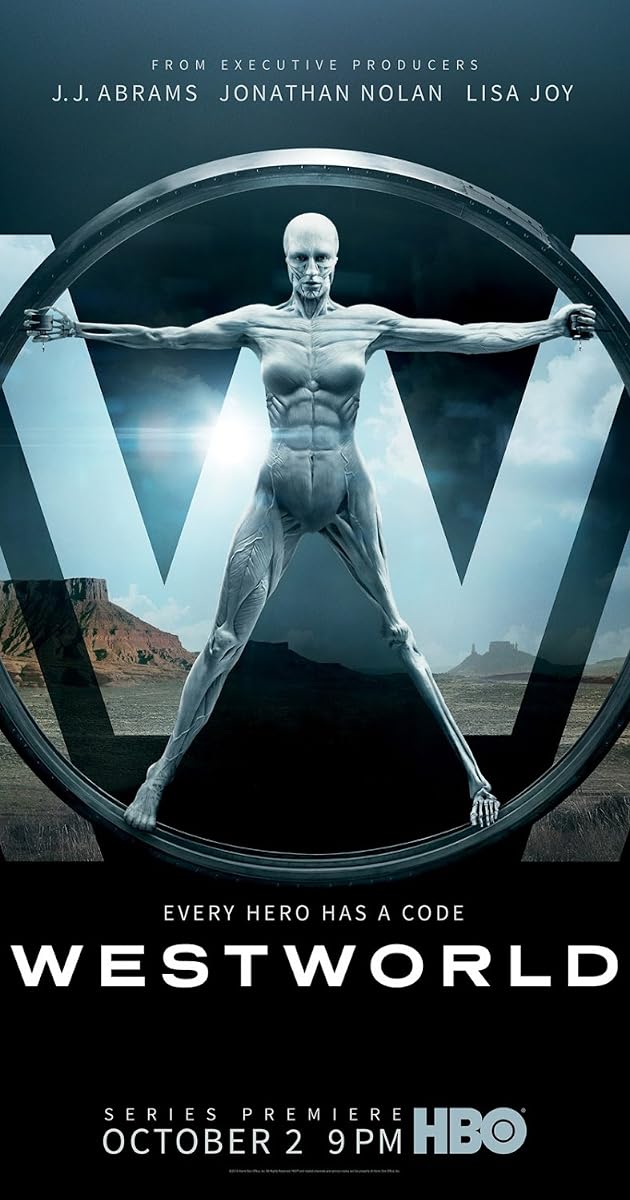
GABBLER RECOMMENDS: First episode of Westworld 2016

Watch iiiiiit.

Is ‘Westworld’ HBO’s Next Big Hit?

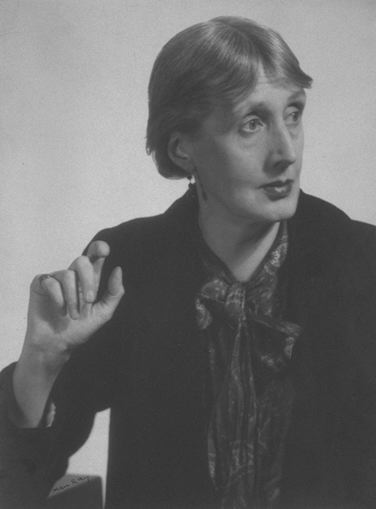
The Influential Science Fiction of Virginia Woolf

GABBLER RECOMMENDS: This horseshit.

checkyourfacts's avatarCheck Your Facts

Virginia Woolf, arguably one of the most famous female authors of the 20th century, is best known for her novels that experimented with stream-of-consciousness and the underlying psychological as well as emotional motives of characters.  Less well known are the early pseudo-science-fiction works that Woolf wrote under the pen name E V Odle, however in recent years it is these works that have arguably had more influence on popular culture.

Woolf was born in 1882 and showed a talent for writing from a very early age; however her first book The Voyage Out was not published until she was 33 in 1915.  For the next few years she enjoyed mixed success as a novelist (not enjoying mainstream recognition under her own name until 1925’s Mrs Dalloway) and so as a way to supplement her income wrote a number of short stories and novels to be published in popular magazines and…

View original post 486 more words

GABBLER RECOMMENDS: Why the TLS would not have named Elena Ferrante by STIG ABELL

‘Ferrante didn’t “apparently” wish for her identity not to be known, as Gatti guiltily avers.  She was explicit about it; and repeatedly so.  She said this to the Guardian, for example:

The wish to remove oneself from all forms of social pressure or obligation. Not to feel tied down to what could become one’s public image. To concentrate exclusively and with complete freedom on writing and its strategies.

So there are artistic reasons for her anonymity. As a paper whose chief purpose is to defend the importance of the humanities, it would be abhorrent as well as self-defeating to ignore this writer’s clearly delineated withdrawal of consent.

I, too, would have been uneasy about the gender politics of all this.  Ferrante has talked about “male power, whether violently or delicately imposed, still bent on subordinating us”, and – while I am sure this was neither the motivation of Gatti or the NYRB – there is the regrettable, sulphurous whiff of a female artist being “mansplained” here.  We may never know all of the reasons for Ferrante’s desired anonymity, but it is dangerous to assume they are simple and straightforward.

All this is easy for me to say now, of course, with hindsight and not having been offered the piece.  But, ultimately, Gatti’s is not an important work of journalism: intellectually, ethically or artistically.  He didn’t need to investigate this; and the NYRB – and others – shouldn’t have published it.’

[Via]

GABBLER RECOMMENDS: THE “UNMASKING” OF ELENA FERRANTE by Alexandra Schwartz


‘Ferrante’s steadfast artistic choice to be anonymous can only be that: an artistic choice, made at the beginning of her writing career for private reasons that she deemed essential. The cost of anonymity is high; she told her publisher that she would do nothing to promote her books, and, indeed, they could well have sunk to the bottom of the literary river without a trace. That they succeeded, and reached the kind of audience they have, has happened, if anything, in spite of Ferrante’s anonymity, not because of it. Its costs continue. One particularly bizarre and offensive claim of Gatti’s is that his “exposure” of Anita Raja as Ferrante leaves “open the possibility of some kind of unofficial collaboration with her husband, the writer Starnone.” Ferrante’s anonymity has apparently now made her vulnerable to the accusation that she has not been able to write her books without leaning creatively on a man.

The only solace in this whole mess may be the character of Gatti. He, not Ferrante, seems to be the fictional persona, a puffed-up pedant straight out of Nabokov, right down to his Nabokovian name: Claudio the Cat, prowling around in search of secrets. Gatti is the kind of reader who sees “clues” in a writer’s work, as if she has constructed a puzzle to be solved rather than written a novel to be read. Even as he crows that Raja’s life shares almost nothing in its particulars with the world of Ferrante’s novels, he holds up as definitive a few corroborating crumbs: the fact that Raja’s aunt was named Elena, for example, or that Nino, the name of the man the character Elena loves, is the family nickname of Domenico Starnone. Like Charles Kinbote, the unstable narrator of “Pale Fire,” who takes it upon himself to “annotate” the final poem of his famous neighbor, John Shade, Gatti seems to believe that he can obtain power over a great writer by exposing her, not for the purpose of interpretation or greater understanding but simply for the sake of being the first to do it.’

[Via]