That time Nell Irvin Painter myth-busted the idea of whiteness and Thomas Emerson made white history. 2010.
“Transcendentalism, the American version of German romanticism (a la Kant, Fichte, Goethe, and the Schlegel brothers), flourished in New England, particularly in eastern Massachusetts, from the mid-1830s to the 1840s. German transcendentalism offered an odd mixture, including even a hefty does of Indian mysticism inspired by Friedrich von Schlegel, which Mary Emerson hand also found congenial. In place of established Christian religion (particularly the then prevailing Unitarianism), transcendentalism offered a set of romantic notions about nature, intuition, genius, individualism, the workings of the Spirit, and, especially, the character of religious conviction…
Within this German-driven transcendental swirl, one man, an Englishman, stood tallest: he was Thomas Carlyle (1785-1881)…
Carlyle actually came to think of Goethe as “a kind of spiritual father,” and took upon himself the task of spreading the transcendental gospel. And spread it he did, writing the magazine articles Emerson was reading in the New England…
Emerson was thirty when he first saw Europe. By then he had left his pastorate and lost his beloved young wife to tuberculosis two years after their marriage. Now he poured energy into seeing for himself the luminaries of this new philosophy. Coleridge and Wordsworth came first, and both disappointed Emerson greatly…Even worse was Wordsworth who abused the beloved Goethe and Carlyle and nattered on as though reading aloud from his books…
Much younger than Coleridge and Wordsworth, Carlyle captivated Emerson through a day and night of passionate exchange chock full of fresh ideas ….
Emerson took Carlyle’s novel in hand, shepherding an American edition into print and contributing a preface. With his help, the thumping, clamorous, and obscure style of Sartor Resartus, electrified the Americans becoming known as transcendentalists…
John Ruskin’s estimation of Emerson wavered over time; at one point Ruskin, one of England’s leading intellectuals, considered Emerson ‘only a sort of cobweb over Carlyle.’
This image of Emerson as a watered-down Carlyle-Teutonist never entirely dissipated, just as critics of Carlyle, Emerson, and transcendentalists have harped on the Teutonic opacity of their style…
On the other hand, Americans adored Carlyle’s emphatic writing style and his apparent, if vague, sympathy for ordinary people and a disdain for the elite…
But while their halcyon days may have gone, their influence lived on. Tutored in German race theory reaching back to Winckelmann and Goethe, each had become his country’s national voice, eloquently equating Americans with Britons and Britons with Saxons. The Anglo-Saxon myth of racial superiority now permeated concepts of race in the United States and virtually throughout the English-speaking world. To be American was to be Saxon. ” – Nell Irvin Painter, “The Education of Ralph Waldo Emerson” in The History of White People.


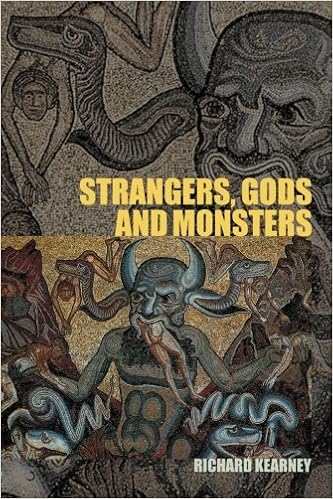 “But the scapegoat was not always reviled. As noted above, the sacrificial victim sometimes came to be revered after the event – even to the point of becoming over time a founding hero for the community. The Greeks celebrated Prometheus as a sacred pharmakos (scapegoat) after he had met with his sacrificial fate, and we witness a similarly retrospective apotheosis of scapegoats across a variety of foundational myths – Osiris, Romulus, Christ, Orpheus, Socrates, Cuchulian. Such figures, though invariably ostracized for excoriated by their contemporaries, became hallowed over the ages until they were eventually remembered as savior gods ho restored their community from chaos to order. They re-emerge out of the mists of time as miraculous deities who managed to transmute conflict into law. But this alteration of sacrificed ‘aliens’ into sacred ‘other is, of course, predicated upon a strategic forgetfulness of their initial stigmatization, that is, the fact that they were originally victims of ritual bloodletting…