If you enjoy cannibals, may we introduce you to our own in Volume 2?
[a website for the Editor and Narrator of the Circo del Herrero series]
Recommend a BookTuber video in the comments and it could make our Tuesday post!
[“BLA and GB Gabbler” (really just a pen name – singular) are the Editor and Narrator behind THE AUTOMATION, vol. 1 of the Circo del Herrero series. They are on facebook, twitter, tumblr, goodreads, and Vulcan’s shit list.]
Recommend a BookTuber video in the comments and it could make our Tuesday post!
[“BLA and GB Gabbler” (really just a pen name – singular) are the Editor and Narrator behind THE AUTOMATION, vol. 1 of the Circo del Herrero series. They are on facebook, twitter, tumblr, goodreads, and Vulcan’s shit list.]
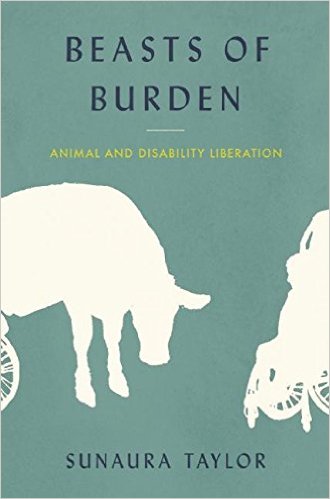 “Dependency has been used to justify slavery, patriarchy, imperialism, colonization, and disability oppression. The language of dependency is a brilliant rhetorical tool, allowing those who use it to sound compassionate and caring while continuing to exploit those they are supposedly concerned about.
In many ways the thinking behind the humane meat movement is a philosophy built on the idea of independence. Domesticated animals and human being shave evolved together to be interdependent—animals help human beings, and we in turn help the animals—or so the argument goes… Instead a disability perspective on interdependence recognizes that we are all vulnerable and receive care (more often than not doing both at once) over meat conversation is a much-needed analysis of what it means to be accountable to beings who are vulnerable.
…
People also justify it through ableist conceptions of the natural and of dependency, which suggest that there is a depoliticized thing called ‘nature’ that determines what kinds of bodies and minds are exploitable and killable, and that excuses uses those who are weaker and dependent for our own benefit. When animal commodification and slaughter is justified through ableist positions, veganism becomes a radical anti-ableist position that corporeality—socially, politically, environmentally, and in what we consume. In other words, veganism is not just about food-it is an embodied practice of challenging ableism through what we eat, wear, and use and a political position that takes justice for animals as integral to justice for disabled people… Veganism is an embodied act of resistance to objectification and exploitation across difference—a corporeal way of enacting one’s political and ethical beliefs daily.” – Sunaura Taylor, Beasts of Burden.
‘Netflix is also home to a thriving subgenre of films aimed at adults that expose the dark side of meat-eating. Documentaries like Blackfish, The Cove, Cowspiracy, and Food Incare all available to stream on the service, and have developed a cult following as a result. All expose the systematic horrors at the heart of human relationships with animals: the extreme cruelty of the industrialised meat industry, or the corruption that reaches even the highest levels of government when big corporations stand to profit from animal mistreatment. Many end up as intimate portraits of corporate hypocrisy – a thread that runs throughout Okja.
Okja is just as concerned with this aspect of human-animal relations as it is with zooming in on the sad eyes of the superpig herself. It opens with a speech from Lucy Mirando (a blonde Tilda Swinton in girlish braces), the CEO of the “Mirando Corporation”, who is trying to change the face of a toxic company. She talks of “reclaiming” the space of her factory “now the rotten CEOs are gone”, ties her company mission (selling meat?) to the problem of global hunger, and repeatedly uses vague terms like “natural” and “traditional”. “It’s Mirando’s new era with me,” she says warmly, “and with new core values: environment and life.”
When Okja escapes the Mirando Corporation’s clutches and runs riot in Seoul, Okja satirises how seriously corporations take their PR with a shot modelled on the Osama Bin Laden “Situation Room” photograph. The funniest dialogue in the movie comes from the following crisis meeting, where Lucy Mirando wrings her hands over the state of the company, defending her decision to attend a course called “Unleash Your Calling” (“at a highly-respected institute for the advancement of human potential where many a forward-looking CEO go!”), criticising her sister for dumping toxic waste in “Moose Lake” with (“the only lake ever to explode – well done, Nancy”), and quoting decade-old Slate thinkpieces about her brand (“I mean, these are journalists that never write about pigs!”) Her obsession with insincere branding – “I was visualizing ways of turning the most hated agrochemical company in the world into the most likable miracle pig-rearing company!” – feels grimly familiar.

But the most searing parallels with real-life animal cruelty come in the film’s final 20 minutes, set at the superpig superslaughterhouse. We see Okja’s ovine cousins crowded in a concentration camp-esque paddock, before being shot with a bolt gun, decapitated, strung from the ceiling and sliced into pieces. It’s bloody and haunting – and has caused some controversy thanks to unsuspecting parents sitting down to watch Okja with their young children.
But we have seen this before. Really, the most fruitful comparison is for Okja is Watership Down: cute animals, a less-than-subtle message about the horrors of human evil and our impact on the natural world, the screams of traumatised children echoing in the distance. And what scarring children’s classic is Netflix remaking in the very near future? Watership Down. So next time you switch on the streaming service, make sure you spit out the sausages first.’
[Via]