We knew that people hated prologues and sometimes never read them. We therefore inserted ours in the middle of our novel so it would be harder to ignore. And, at that point, we think readers are ready for a little context. They’re like, WTF is going on?!?
There’s an ongoing debate about prologues. Do you need them? Are they superfluous? Do they set up the story, or should you cut ’em and get to chapter one already?
Plenty of opinions exist, and many opinions have to do with taste. So, before we jump on the “prologues never contribute to the story” bandwagon, I think the first step is to identify what kind of prologue one is writing and the objective of that prologue. We need to know what we’re writing and why, before we let the opinions of what’s “in vogue” influence our writing decisions.
Let’s take a look at four different kinds of prologues.
1) Future Protagonist
This prologue is written in the same voice and style as the main story and from the POV of the same protagonist. When done really well, this kind of prologue changes everything the reader thought. As the reader continues with the story…
The story of a woman who claimed to be the medium for a prolific ghost with talent. Was it really a ghost? Was it just her pen name? Or was it something more?:
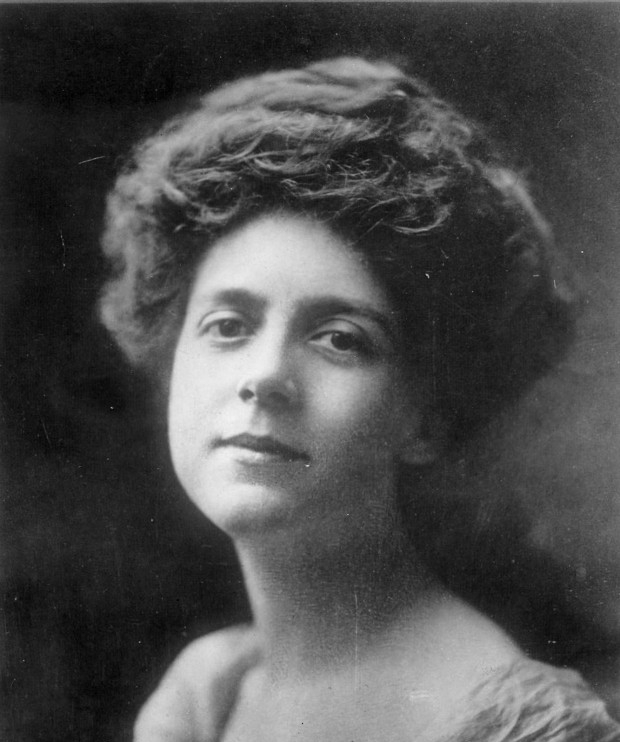
Pearl Curran, “medium” for the New England Puritan ghost of Patience Worth.
“Curran’s output prompts us to ask some fundamental questions about history, genre, intention, affect, authorship, and why we choose to read what we read. Furthermore, her writings are a fascinating curio of an era in American literary history when academics and quacks, the rational and the occult, scholarship and magic all mingled together in popular discourse…
Between the possibilities of Patience Worth’s reality and Pearl Curran’s duplicity there exists a third option: that Pearl Curran transcribed these works believing Patience Worth to be real, a creation of her own mind communicating these words back to her. An internal muse if you will, whose existence serves to reevaluate the simple individual models of authorship we conventionally hold to. As such, her corpus provides an occasion for thinking about where inspiration comes from, how authors generate their writings, and the ways in which something as seemingly well understood as writing still contains a kernel of mystery at its core.
…[T]here is much literary merit in Curran’s work – so why then this neglect? The bizarre origin of the writings shouldn’t be an impediment to a reasoned study of their structural qualities. After all, William Butler Yeats attributed several of his lyrics to a spirit named Leo Africanus whom he encountered through the use of a Ouija board while a member of the Hermetic Order of the Golden Dawn. Without suggesting that the writings of Curran and Yeats are of similar artistic value, it would seem that dismissing them entirely on the grounds that there is a connection to the occult is unfair if a similar standard isn’t applied to Yeats…
A heteronym is a particularly complicated pen-name; in addition to a false name there is an entirely false identity, a fictional writer where literariness is extratextual to the poem or book itself. These concepts, of the heteronym and the muse, inspiration and authorship raise interesting questions about the epistemology and ontology of literature. Where does literature ultimately come from? What is legitimate as an object of reading and study? Can a literary hoax still be read as literature?”
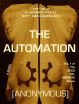
10 things you might not know about THE AUTOMATION – a dark fantasy novel about ancient Automata invading our modern world:
There are Automata (uppercase-A, yes, thank you) in this novel. They’re divine as fuck and not made by men – and they’re often mistaken for human. Here’s a lowercase-a automaton to illustrate what they are NOT like:
Those Automata can only function with a human soul. Thus, they need a human “Master” to wind them up. This makes for some awkward situations for some of the characters.
The Greco-Roman gods Vulcan and Venus have small roles in the novel. Though they play a bigger part later on in the series and will likely eff more shit up for the poor human characters.
One of the characters is a cat. Don’t ignore the cat. Though the cat can ignore YOU.
One character’s sexuality is changed in the novel. Because the gods Vulcan and Venus need him to like girls instead of boys. And it’s not fair.
The Narrator (whose abbreviated name is B.L.A.) and the Editor (Gabbler, whose contributions show up as footnotes) are also characters in the story. It’s actually B.L.A.’s memoir, you could say (though Gabbler is of the mind it’s – ahem – obviously embellished). [But just to be clear: the novel is written by one person, not two, despite what they tell you. PAY NO ATTENTION TO THE MAN BEHIND THE CURTAIN].
It is for readers who like sf novels set in “this” world like:Vicious, The Magicians, Jonathan Strange & Mr Norrell, American Gods, The Just City.
It claims to be Epic Poetry, but it’s written in prose. Thus “Prose Epic” is apparently applicable.
The novel breaks the fourth wall. It knows it’s a novel. Meta to the max.
You can read the first chapter online for free.Be our guest. Enjoy the show.
THE AUTOMATION is available in paperback and for DRM-free Kindle download. In all countries. Maybe. Probably. WE DON’T KNOW, OK?
[“BLA and GB Gabbler” (really just a pen name – singular) are the Editor and Narrator behind THE AUTOMATION, vol. 1 of the Circo del Herrero series. They are on facebook, twitter, tumblr, goodreads, and Vulcan’s shit list.]
“My aphorism is ‘only begin.’ It’s hard to do if you have a job, but if you can find the time to write a number of days or nights a week, even if it’s just five hundred words – that process will help free up your subconscious. And that’s where so many good ideas come from, so many good characters, so many good connections between characters, so many great plot ideas. You’ve got to use your conscious mind to refine it all, but a lot of good material comes from the unconscious, and to engage the unconscious you have to write a number of times a week to get the sub-conscious stirred up. I’ve got this idea that all the great stories are in our subconscious somewhere and they’ll come out if only we give them a chance. Getting it published in the present climate is the heartbreak, but there’s always Amazon.” -Thomas Keneally from here.
“Footnotes allow us not only to see the prejudices of old sources, but the biases and convictions of the footnoter himself.They provide readers with the intellectual map that the writer has used to arrive at her conclusions. If some see footnotes as tiresome road blocks, others more fairly view them as serendipitous detours that can lead to delightful and unexpected stops not on the original itinerary. Footnotes gave birth–after an extended gestation, mind you–to the hypertext links that are the vis vitae, the life force, of the Internet.”

 There’s an ongoing debate about prologues. Do you need them? Are they superfluous? Do they set up the story, or should you cut ’em and get to chapter one already?