GABBLER RECOMMENDS: Strong Women

“Sometime in the late 1800s the appearance of strong women became more prevalent in sporting events and were also a common attraction in circuses where they would showcase their superhuman strength. This in turn paved the way for other rule-breaking girls such as female wrestlers and bodybuilders….

Another notable strong woman Kate Roberts went by the intimidating name “Vulcana.” In addition to her muscular build and ability to lift heavy weights (allegedly 181 lbs with one arm) she has some fascinating superhero-style folklore attached to her. In addition to saving a couple of drowning kids, Roberts dragged an unfortunate would-be purse snatcher who tried to steal her handbag all the way to the police station by herself. According to various historians Roberts also freed a wagon that had become stuck in a ditch in front of a crowd of awestruck Londoners.”

[Via]

“Frankenstein’s Monster was vegetarian.”

“Frankenstein’s Monster was vegetarian… Frankenstein was indebted to the vegetarian climate of its day…In its associations of feminism, Romantic radicalism, and vegetarianism, Mary Shelley’s book bears the vegetarian word.

For a work that has received and unusual amount of critical attention over the past twenty years, in which almost every aspect of the novel has been closely scrutinized, it is remarkable that the Creature’s vegetarianism has remained outside the sphere of commentary…

The Creature includes animals within its moral codes, but is thwarted and deeply frustrated when seeking to be included within the moral codes of humanity. It learns that regardless of its own inclusive moral standards, the human circle is drawn in such a way that both it and the other animals are excluded from it.

….

Literary critics identify in Frankenstein a distillation of Mary Wollstonecraft Shelley’s life and learning, an interweaving of biography and bibliography. Through her father, William Goodwin, Mary Shelley met many notable vegetarians, such as John Frank Newton, author of The Return to Nature; or, A Defense of the Vegetable Regimen, Joseph Ritson, his publisher Sir Richard Phillips, and, of course, Percy Shelley, who had authored A Vindication of Natural Diet and the visionary and vegetarian Queen Mab.

Romantic radicalism provided the context for the vegetarianism to which Mary Wollstonecraft Shelley was exposed while growing up.

They argued that once meat eating had redefined humanity’s moral relationship with animals, the floodgates of immorality were opened, and what resulted was the immoral, degenerate world which they and their contemporaries lived.

The ideas to which Mary Shelley and the Romantic vegetarians gravitate tantalizingly overlap: each rewrote the myths of the Fall (especially Genesis 3) and the myth of Prometheus. Each ponders the nature of evil and visions of utopia. In the Creature’s narrative, Mary Shelley allies herself with Romantic vegetarians who uncoded all tales of the primeval fall with the interpretation that they were implicitly about the introduction of meat eating. She precisely situates the vegetarian position concerning these two myths in the Creatures’s narrative. The two preeminent myths that frame her Frankenstein, the myth of Prometheus and the story of Adam and Eve, had both been assimilated into the Romantic vegetarian position and interpreted from a vegetarian viewpoint by Joseph Ritson, John Frank Newton, and Percy Shelley.

Both Mary Shelley and the Romantic vegetarians weave another myth of the Fall into their writings: the myth of Prometheus who stole fire, was chained to Mount Caucasus, and faced the daily agony of having his liver devoured by a vulture, only to have it grow back each night. Besides the standard Romantic view of Prometheus as a rebel against tyranny, Mary Shelley knew of an additional interpretation of the myth. For Romantic vegetarians, the story of Prometheus’s discovery of fire is the story of the inception of meat eating. They accepted Pliny’s claim in Natural History that ‘Prometheus first taught the use of animal food…’ Without cooking, meat would not be palatable. According to them, cooking also masks the horrors of a corpse and makes meat eating psychologically and aesthetically acceptable. Percy Shelley provides the Romantic vegetarian interpretation of this myth: ‘Prometheus (who represents the human race) effected some great change in the condition of his nature, and applied fire to culinary purposes; thus inventing an expedient for screening from his disgust the horrors of the shambles. From this moment his vitals were devoured from the vulture of disease.’

That Victor goes to slaughterhouses not only incorporates into the novel the anathema with which vegetarians beheld it, but suggestively implies the Creature is herbivorous. Since it is only herbivorous animals who are consumed by humans, the remnants gathered by Victor from the slaughterhouse would have been parts from herbivorous bodies.”

-Carol Adams, The Sexual Politics of Meat

GABBLER RECOMMENDS: ‘It’s the End of the World as We Know It’ by Randy Malamud


‘But now it’s time to accept our impending demise. Those are profoundly difficult words to write, but they are necessary: Our times demand a new rhetorical honesty. It is deceitful and irrelevant to sustain the charade that things may improve. Instead, it’s time to start talking about how we will die.

“The progress narrative” that has undergirded Western culture for millennia was nice while it lasted, but it’s also responsible for getting us where we are today, as it stoked the fantasy that we were invincibly moving ever forward, and that our rampantly voracious overdevelopment (exploration, imperialism, conquest, growth, “civilizing” nature) had no costs, no limits, no consequences.

As an English professor, I find it exciting to consider the possibilities for a new voice, a new style, a new writerly consciousness that may accompany and chronicle the winding down of our sound and fury.

Other cultures at similar points in their trajectory — past the zenith, clearly waning yet close enough to the glories of the past — have often produced keenly insightful literature and art. Being on the cusp of decline provokes incisive self-reflection — as the Greeks called it, anagnorisis: recognition.

Cervantes achieved this in Don Quixote toward the end of Spain’s Golden Age, as did T. S. Eliot in “The Waste Land,” his report from the front lines of the cultural disintegration that accompanied the collapse of European imperialism and the War to End All Wars: “These fragments I have shored against my ruins.”

On a personal level, we have lately begun to do a better job of dying, and of accepting death — writing “death plans,” forsaking heroic measures of resuscitation. So too as a species we may learn to accept the inescapability of our impending ecological fate. We can celebrate the bright spots from our past human heritage, acknowledge our follies, and finally, deal with it: It is what it is.

There will be a limited future audience for this brave new art, since we’re hovering on the verge of extinction, but it will leave an interesting time capsule for whoever might come to recolonize the planet after we’re gone.’

[Via]

See also: what we talk about when we talk about post-apocalyptic stories.

GABBLER RECOMMENDS: B.L.A.’s Twitter Rant About Vulcan’s Representation in American Gods

So BLA recently went on a tangent about how Vulcan is (seemingly going to be) represented in the new American Gods Starz adaptation:


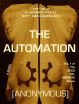
[“BLA and GB Gabbler” (really just a pen name – singular) are the Editor and Narrator behind THE AUTOMATION, vol. 1 of the Circo del Herrero series. They are on facebook, twitter, tumblr, goodreads, and Vulcan’s shit list.]

all yellowB&N | Amazon | Etc.

GABBLER RECOMMENDS: Books’ Fragile Bodies by John Kaag

“As a philosopher, I was long acquainted with the word ‘corpus,’ a body of work written by a particular author. I knew, at least in theory, that corpora grow slowly in tandem with the lives of writers; that certain ones are more coherent and well-functioning than others; that they deserve to be carefully dissected; that they can be abused or desecrated when they aren’t; and that they constitute the literary remains of a person when he or she is long gone. Most scholars share this vague respect for ‘the body of work,’ but with the advent of e-readers and digital-only publications it is increasingly difficult to fully grasp writing’s corporeal nature…

If they are precious to us it is, at least in part, because their physical forms, so appealing and vulnerable, mirror ours in their inevitable decay. We smell them, run our fingers down their backs, page through them, and share our homes and lives with them. No wonder Borges couldn’t sleep, and Jefferson couldn’t live, without their paper bodies.”

[Via]