GABBLER RECOMMENDS: Get Out

Finally got around to watching this. Was worth it.

“There are few more frightening monsters to conjure than racism, after all. It’s a topic the genre has brushed up against—with the black protagonist of Night of the Living Dead, a rare sight in 1968, or in Bernard Rose’s 1992 classic Candyman, in which the titular figure in part represented America’s history of slavery and repression. But racism is still a surprisingly uncommon subject matter, and Peele addresses a more insidious fear—of the fallacy of America being a post-racial society, and of the nightmares one can imagine under that benign surface.” [Via]

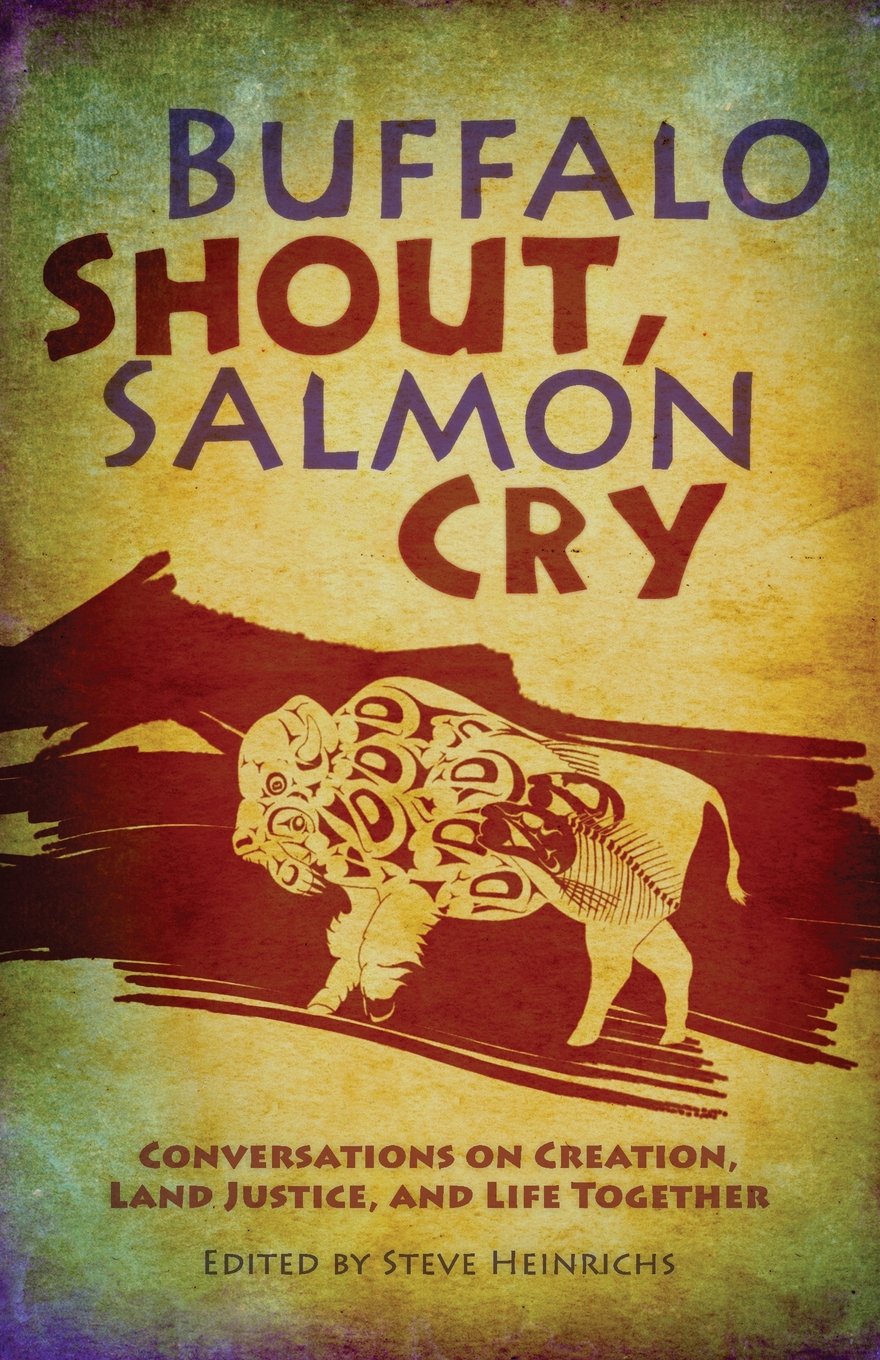
“Why I do not believe in a creator,” from Buffalo Shout, Salmon Cry.

‘What is your word for God? What do you mean you have no word for God? Everyone believes in a Creator don’t they? Our more liberal minded White friends always want to know more about us, so they naturally come with questions Thirty-five years ago, a Native elder from northern California told us a creation story. Long ago, Coyote was floating through the air and wanted some place to rest. So he created the earth- although it was just an accident. So is coyote God? The Creator?

As we have learned from the world of physics, even scientific observation changes what is being observed (i.e., the “’observer effect”). In this case, the very question that any White person (say, an anthropologist) asks a Native person shapes her answer in decisive ways. Whatever the Native person has to say about the matter must now use the language categories of the colonizer. In this case, the key problematic words are god, creator, and believe. The question itself shapes the reality that the Native person must try to describe. Now she must struggle to use colonial language of god, creator, and belief to interpret her own world back to the well-meaning colonizer, who seems to assume that everyone in the world is similar to himself. The more these euro-christian friends hear about Coyote, however. the clearer they are that crazy Old Man Coyote is not exactly what they mean by the word god — even if he created something.

Here, I am not simply objecting to the language of god and creator as language embedded in a european worldview or christian ideology. It is much more crucial to notice that imposing these religious metaphors of a hierarchical divine as an overlay on Indian cultures irredeemably distorts the Native culture and destroys the intricacies and the beauty, that is, the coherence, of the Native worldview. An up-down Linguistic cognitive image functions to structure the social whole around vertical hierarchies of power and authority.

While all Indian people have stories of origin – called “creation stories” in euro-talk-these stories differ significantly from the eurowest’s. Osages remember that the dry-land portion of this world
was made in the long ago by o’po to’ga, the bull elk. So, why can’t we just say that Bull-Elk is the Creator and leave it at that? The first problem with that choice is that human people and, at least, elk already elk already existed. So did the earth. When the sky people/humans came down from the stars, they were brought down to earth by the eagle (another creator figure?0 but found it covered with water. It was Elk who then created the dry ground and all kinds of living things to help the humans to be able to survive…then they discovered another community of humans, the earth people, who were already here. So, Elk shared a role and responsibility in making the world – as did Eagle. But neither one is the sort of monotheistic “creator” like the one brought over the waters with the christian european invasion. Indeed, recall that the world and people already existed — particularly the oak tree in which the sky people first landed. Namely, there are no credible, historical American Indian stories that tell of a creation ex nihilo, a creation from nothing. Nor is there a super-personality who is ultimately in charge. This same structuring of beginnings plays out in all Indian traditions.

…Since our experience of the world is one of interrelationship, we cannot conceive of a human superiority to any of the other living things of the world. They are all “relatives.” And to put ourselves somehow in charge seems to Indian peoples to be a very dangerous move, which puts the balance of the whole in great jeopardy.

Experiencing all non-human persons as relations generates an affect or way of life in which there can be no hierarchy of being, either among a human community or between the different categories of persons in the world: two-leggeds, four-leggeds, flying ones, or what we call the living-moving people, for example, tress, corn, river, and mountains…

Disruptions of balance (from personal or cosmic) occur daily, so they must be mitigated with ceremonial reciprocity. Whatever we human beings acquire or receive, we must give something back.’

-Tink Tinker, “Why I do not believe in a creator,” from Buffalo Shout, Salmon Cry.


GABBLER RECOMMENDS: Nina Paley on The Gaia Hypothesis

“The Gaia Hypothesis posits the Earth’s biosphere is a single living organism. Living organisms by definition reproduce. How would a planet’s biosphere reproduce?

By sending reproductive cells of some sort to other planets.

Much (possibly most) of the Earth’s biosphere consists of bacteria. In fact most animals, including humans, consist largely of bacteria. Animals are mobile housing units for bacteria.

Humans are a peculiar animal. We’re creating our own extinction event. We seem hellbent on exploiting and destroying “nature,” yet we are part of nature, produced by nature. Why would the biosphere produce homo sapiens?

An extremely popular belief of our time is that humans will colonize other planets. Many humans consider this a more worthy goal than preserving biodiversity on Earth. Humans are willing to trash this planet in order to reach others.

It is vanishingly unlikely humans will survive on other planets. But it is likely we will reach other planets. We will not colonize other planets with humans, but with bacteria.

Humans are Gaia’s way of sending bacteria to other planets, thereby reproducing.

…Over billions of years, these pioneering bacteria will evolve, growing a new biosphere of diverse life forms. A new, living planet – another Gaia – is born.”

[Via]

See also:

Is The Girl With All The Gifts antinatalist?

Gods in our machines. 

What we talk about when we talk about post-apocalyptic stories.

Kristine Kathryn Rusch on indie books:

In that old book of criticism, Lewis was justifying the fiction that he wrote. He didn’t like the terms “highbrow” and “lowbrow” fiction, choosing instead to label readers “unliterary” or “literary” depending on the kind of attention they pay to the texts in front of them. (If the reader read solely for pleasure, and did not reread books, they were generally unliterary.)

This snobbishness permeated the industry. The snobbishness went all the way into business practices and marketing, in contracts and in expectations. Paperbacks were considered disposable. Hardbacks were not. The returns system in the U.S. was predicated on that. Hardbacks required full copy returns, and if the books were damaged, then they would not count against a bookstore’s bill. Paperbacks were mutilated, the covers returned only, so that the book could be thrown away.

Contracts and deals reflected the perceived ephemeral nature of the material, and writers often fell prey to it. They signed deals that would be ludicrous if anyone had thought more than two years head.

The attitude was that nothing good could come from disposable products, even though the paper books often outsold hardcovers by literary (and accepted) writers by ten to one (and sometimes by 100 to one).

Here’s the thing, though: the only way to become a remembered author who survives the test of time is to influence a lot of readers. If a “good” novel has a 5,000 copy print run and sells out, and a “bad” novel has a 50,000 copy print run and sells out, guess which one has the better chance of being remembered? The one with tens of thousands of readers, not the one with only 5,000.

Books with a lot of readers tend not to be the critical darlings of the day. They tend to be the books that get the most word of mouth, books that are passed from hand to hand to hand or written up the most in blogs or discussed by savvy readers everywhere.

How do you become one of those writers?


The thing is…the books that often stick in the memory of the reading public are books that surprise in some way or counter expectations or make the reader lose a few hours of sleep because the reader can’t put the book down.

Those books aren’t manufactured and fussed over and edited to death. They weren’t written to be judged, as literary novels often are. Those books weren’t written to impress. They were written because they had to be, or because the author needed to eat. The author wrote it, someone published it, and then both moved on—even though the readers didn’t.

Indie writers are doing the same thing right now. They’re writing what they love. A few are still writing what they think will sell, although that trend seems to be moving past us now. (Thank God). Most writers are simply trying to put food on the table so they don’t have to go back to the day job.

Traditional publishers, whose sales are continuing to decline and whose revenue is spiraling downward, keep trying to justify their curation services. Want to know if your book is any good? The traditional publishers say. We’ll let you know that—forgetting, of course, that readers decide what’s good and what’s not.

It’s very threatening to someone “in charge” to see that others, unapproved others, are more successful, particularly if they’re publishing or writing or creating in a method that’s hard to control. Indie writers are very hard to control. They can put up their own books. They can write against the prescribed rules. They can fly in the face of popular wisdom.

[Via]

#BLAThoughtOfTheDay: Neil Gaiman implies that Norse Gods are more popular than Greek and Roman gods?

“I didn’t get any Greek and Roman gods in, because at the time I couldn’t convince myself there was any particular reason to bring Greek and Roman gods in. Now, a few years ago I read about the discovery of some ancient Roman coins in the mud of the Ohio River, and they’re definitely ancient Roman coins. There are differences of belief as to whether they were coins that somebody hid there and they got lost or whether they date back 2,000 years. But I don’t need any kind of proof on this. All I need is to be able to point to something in the way I could point to the Egyptian stuff. Now I have something that I can hold onto and go, “Well, there is a case now for ancient Romans knocking around America which gives me the whole panoply of Roman gods, too.”

Having said that, the other reason I never used them was at the time I felt they were overused, and I like the idea of using ones that were a little bit underused and was proud of myself for having done so.”


-Neil Gaiman

[Via]

So is Neil Gaiman saying that, though Greco-Roman gods are “overused” they are not as popular as the Norse? The fact there would be no appearance of them in American Gods seems to imply that Americans don’t favor them as much as Norse–that they do not have as many worshipers to make them relevant or prevalent. Which is illogical due to the the fact that 1) we know more about the Greco-Roman myths and 2) the entire West is built upon or around their mythos (philosophy, the Arts, arguably Christianity). So the reason they aren’t seen in his book seems to imply something about their status. The biggest fan base for Norse myth stems from the comic book craze (read: Thor). I still wouldn’t say it overshadows the following of Greco-Roman gods, though.

It seems like a weak argument — something overlooked when he was trying to build a mythos. He may have highlighted some marginal gods, but at the cost of his mythos.