How the internet is changing art:

Miller: As someone who is primarily interested in books, this idea does trouble me. The form of the book hasn’t changed. It might be delivered electronically but it is still a text narrative, good or bad. I don’t really care whether a novelist is charming or is adept at pitching their work in a video or website. When it comes to the David Foster Wallaces of the future, what I want is their books. That’s it. I’m concerned that I won’t get those books if the authors also have to be good at marketing themselves to have any career at all.

Doctorow: But that’s always been the case. It’s just who you’re marketing yourself to, and how you conduct yourself. My one certainty is that there is and always have been so many people who want to make art for reasons that are innate to the human condition. Whatever factors favor which artists, there will be more art than I can ever consume that I will love and that will uplift me. That just seems axiomatic to me. There is more beautiful, wonderful work being published today than ever before. And I can access it more readily than ever before. My concern as a working artist and someone who cares about the fortunes of the people who make the art that I love is that whatever money is in the system preferentially is diverted to them. And that in the process of making marketplaces for art we don’t set up the conditions for totalitarianism.

From here.

We will say it would be much harder to do our own art if we could not maintain a veil of anonymity. It is kind of the point.

all yellow

In other news, we have a giveaway going on for the above book (^^^) and Ursula K. Le Guin’s THE LATHE OF HEAVEN. (Enter here!)

[“BLA and GB Gabbler” (really just a pen name) are the Editor and Narrator behind THE AUTOMATION, vol. 1 of the Circo del Herrero series. They are on facebook, twitter, tumblr, and goodreads.]
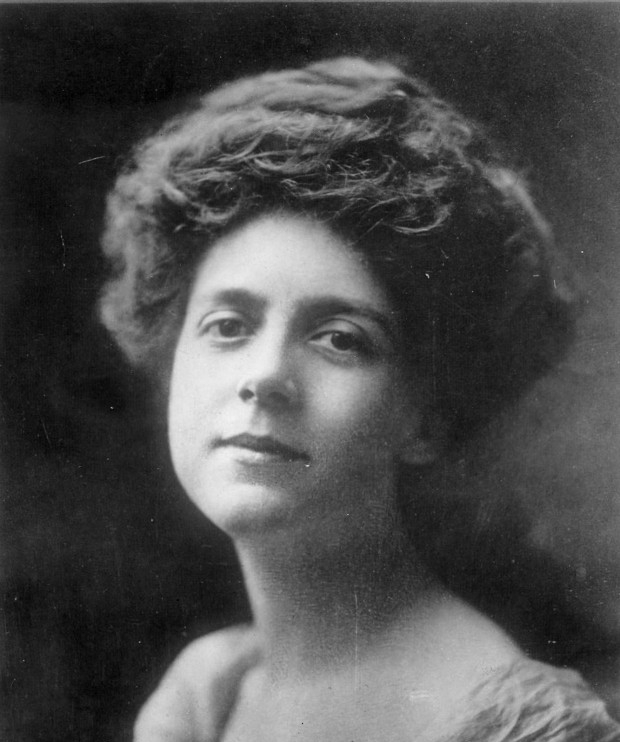
“[T]he relationship between who is a real person and who is a fictional person becomes more ontologically uncertain.”

The story of a woman who claimed to be the medium for a prolific ghost with talent. Was it really a ghost? Was it just her pen name? Or was it something more?:

Pearl Curran, “medium” for the New England Puritan ghost of Patience Worth.

“Curran’s output prompts us to ask some fundamental questions about history, genre, intention, affect, authorship, and why we choose to read what we read. Furthermore, her writings are a fascinating curio of an era in American literary history when academics and quacks, the rational and the occult, scholarship and magic all mingled together in popular discourse…

Between the possibilities of Patience Worth’s reality and Pearl Curran’s duplicity there exists a third option: that Pearl Curran transcribed these works believing Patience Worth to be real, a creation of her own mind communicating these words back to her. An internal muse if you will, whose existence serves to reevaluate the simple individual models of authorship we conventionally hold to. As such, her corpus provides an occasion for thinking about where inspiration comes from, how authors generate their writings, and the ways in which something as seemingly well understood as writing still contains a kernel of mystery at its core.

…[T]here is much literary merit in Curran’s work – so why then this neglect? The bizarre origin of the writings shouldn’t be an impediment to a reasoned study of their structural qualities. After all, William Butler Yeats attributed several of his lyrics to a spirit named Leo Africanus whom he encountered through the use of a Ouija board while a member of the Hermetic Order of the Golden Dawn. Without suggesting that the writings of Curran and Yeats are of similar artistic value, it would seem that dismissing them entirely on the grounds that there is a connection to the occult is unfair if a similar standard isn’t applied to Yeats…
A heteronym is a particularly complicated pen-name; in addition to a false name there is an entirely false identity, a fictional writer where literariness is extratextual to the poem or book itself. These concepts, of the heteronym and the muse, inspiration and authorship raise interesting questions about the epistemology and ontology of literature. Where does literature ultimately come from? What is legitimate as an object of reading and study? Can a literary hoax still be read as literature?”

Read the rest at: The Public Domain Review.